Supreme Court

How the Supreme Court Decision on DOMA Will Impact Immigration Law
Family unity is one of the driving forces in our immigration system. United States citizens and lawful permanent residents can obtain immigrant visas for their spouses. Many foreign nationals who come to the United States on employment-based visas bring their spouses and children with them. And some waivers and forms of relief from removal are available only to those with close relatives living in the United States. Read More

Including LGBT Immigrants in Immigration Reform Helps Protect Vulnerable Individuals
Roughly 11 million unauthorized immigrants live in the United States, and their backgrounds and stories are incredibly diverse. DREAM activists helped to change the picture of the 11 million by shining light on young people affected by our broken immigration system, while grassroots movements are highlighting the stories of families. But a new report from the Williams Institute adds another facet to this picture: an estimated 267,000 undocumented adults identify as LGBT. Even more compelling, the report highlights the other struggles LGBT individuals face when dealing with the legal immigration system. Read More

Immigrants Deserve Basic Miranda-Like Warnings When Arrested
As anyone who has watched an episode of Law and Order knows, police officers must give certain warnings to anyone placed under arrest, including that they have the right to an attorney and that the statements they make can be used against them in court. In the 1966 decision Miranda v. Arizona, the Supreme Court explained that providing these warnings prior to police questioning ensures that criminal suspects are aware of their rights and therefore are better protected against the intimidation inherent in police interrogations. Read More

SCOTUS Narrows Protections For Noncitizens Who Received Poor Legal Advice
Almost three years ago, in the landmark decision Padilla v. Kentucky, the Supreme Court acknowledged the severity of deportation and that our current immigration laws make “removal nearly an automatic result” for many noncitizens convicted of crimes. Consequently, the Court held that a criminal defense attorney must advise noncitizen clients about the risks of deportation if they accept a plea bargain. If the defense attorney fails to provide this advice, the noncitizen can seek to have the conviction set aside. Such recourse brings integrity to the criminal justice and immigration systems and ensures that immigrants who reasonably rely on advice from their lawyers are not unfairly held accountable for their lawyers’ mistakes. Read More

Putting the White House Immigration Reform Proposal into Perspective
Over the weekend, the press reported on a leaked draft of portions of the White House’s immigration proposal, and the coverage since then has been largely a frenzied discussion of whether the leak will kill Senate negotiations. There shouldn’t be much chance of that, given the immense pressure on the Senate to not only come up with a proposal, but actually draft legislation that can be debated and voted on this year. Now that at least some of the Administration’s ideas are out in the public eye, it’s useful to treat them as what they are: basic discussion points on what might be in an eventual bill. In the long run, the draft proposal may help to encourage the constructive conversation that the Administration has sought to have on reform. Read More

Shoddy Court Process Behind the Record Number of Deportations
The Obama Administration is on record for pursuing the toughest immigration enforcement policies in U.S. history, mostly evidenced by its record numbers of deportations. These numbers speak volumes: last year, nearly 400,000 people were deported from the United States. While these numbers are shockingly high and there has been much discussion about how these actions tear families and communities apart, there has also been an under-reporting of the unfair and often expedited process that leads to the deportation of hundreds of thousands of people each year. In fact, two-thirds of the individuals removed are done so without ever seeing the inside of an immigration courtroom and are not accorded many other basic due process protections. Read More

New Report Shows That Border Benchmarks Already Have Been Met
As the components of what should be included in an immigration reform bill take shape, border security, along with enforcement, is proving to be a key part of the framework. Eight senators released a bipartisan proposal earlier this week that included a path to citizenship for the 11 million unauthorized immigrants currently living in the United States. The catch is that implementation of this provision is “contingent upon our success in securing our borders and addressing visa overstays.” The day after the senators presented their framework, President Obama laid out his vision of what should be included in immigration reform legislation during a speech to labor leaders in Nevada. The president called for a clear path to citizenship that’s not contingent on securing the border, but he said the nation needs to stay focused on immigration enforcement. “That means continuing to strengthen security at our borders,” Obama said during his speech. “It means cracking down more forcefully on businesses that knowingly hire undocumented workers.” Read More
Why Silicon Valley Needs Immigration Reform
Fox Business January 31, 2013 … The U.S. could keep graduate students here to create new jobs, new companies and, in some cases, new industries, said John Feinblatt, chairman of the Partnership for a New American Economy. “We’ve got to face the fact that other countries are rolling out… Read More

Senators Unveil Framework for Effective Immigration Reform
Eight Senators today released a “Bipartisan Framework for Comprehensive Immigration Reform” which proposes an overhaul of our legal immigration system while expanding border security measures and hardening current employment verification procedures. Most notably, the proposal would give unauthorized immigrants already in the country a chance to earn U.S. citizenship. Although the framework is only a very rough outline of what comprehensive immigration reform legislation might look like, the principles it espouses constitute an excellent starting point for the legislative negotiations that will now being in earnest. The Senators involved in the negotiations—Democrats Chuck Schumer (NY), Dick Durbin (IL), Bob Menendez (NJ), and Michael Bennet (CO); and Republicans John McCain (AZ), Marco Rubio (FL), Lindsey Graham (SC), and Jeff Flake (AZ)—outlined four “legislative pillars” for immigration reform: Read More
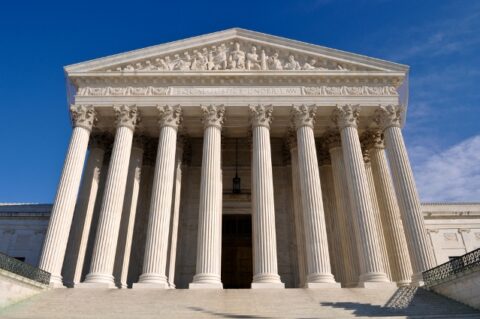
Out of Legal Options, Alabama Files Petition at Supreme Court
Nearly five months ago, a federal appeals court in Atlanta issued a set of opinions that invalidated numerous provisions of Alabama HB 56, the most pernicious state immigration law in the country. After Alabama asked the full court to reconsider its rulings, the active judges unanimously rejected its request. Out of other legal options, the state filed a petition with the Supreme Court on Wednesday seeking to revive some (though not all) of the invalidated provisions. While the odds remain small that the Justices will take up the case, granting the petition could set up another legal showdown similar to the case over Arizona SB 1070. Read More
America's story is an immigrant story.