Immigration Legislation

Pro-Immigrant Measures Make Gains At The State Level
As we reach the midpoint in state legislative sessions, 2013 is shaping up to be a year where most states are moving in a more positive direction when it comes to immigration policy. Lawmakers from both parties have become more inclined to support pro-immigrant measures, shifting away from the anti-immigrant policies that swept across states in previous years. Read More

Facebook Founder “Likes” Comprehensive Immigration Reform
While immigration reform has long been important to Silicon Valley, for the most part the advocacy has focused on high tech issues such as expanded immigration for workers in science and technology fields and increased access to H-1B temporary visas. The breadth of support for more comprehensive reform, however, has been growing, as it becomes increasingly clear that issues like family-based immigration, enforcement, training the next generation of Americans for the next generation of jobs, and a pathway to citizenship for unauthorized immigrants are actually deeply connected. Read More

Hundreds of Detained Immigrants Held in Solitary Confinement
Every day, out of more than 30,000 detainees, roughly 300 immigrants are held in solitary confinement at the nation’s 50 largest detention centers overseen by Immigration and Customs Enforcement (ICE) officials, according to federal data. Solitary confinement is one of most expensive forms of detention, the New York Times reports, and nearly half of immigrant detainees held in solitary confinement are isolated for 15 days or more – “the point at which psychiatric experts say they are at risk for severe mental harm.” About 10 percent are held for more than 75 days. According to the New York Times, immigrants were regularly placed in isolation for breaking rules but also for protection: Read More

Immigration Watchdogs: Keep Calm and Press On
We’ve hit a point in the life cycle of the long awaited Senate immigration reform bill that a lot of parents will remember well. It’s those last few days before the baby is born, when anxiety and excitement are present in equal measure. Rather than speculating about the baby’s eye color or who the baby will resemble, however, speculation on the Senate immigration bill revolves around the bill’s substance. Will it carry through on the promise of a reasonable path to citizenship for the undocumented? How will it balance the interests of business and labor in a temporary worker program? Will there be additional STEM visas? Are there really going to be cuts to the family system in favor of some new mechanism for admitting employment and family based immigrants? There have been a host of media reports this past week fueling speculation on these questions and others, but the bottom line is that we simply won’t know until we see the text of the bill. Read More
Hearing and Report Highlight Lack of Due Process in Immigration System
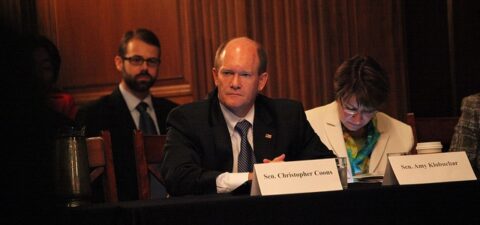
This week, Senator Christopher Coons of Delaware presided over a public hearing to discuss what so many of us know: the immigration courts are failing to provide a fair, efficient, and effective system of justice. Many of the concerns raised by Senator Coons, as well as some of the witnesses, during Wednesday’s Senate Judiciary Committee hearing, “Building an Immigration System Worthy of American Values,” are discussed in more detail in a report issued by the American Immigration Council this week, Two Systems of Justice: How the Immigration System Falls Short of the Ideals of Justice. Read More

Supporting STEM Education Where It’s Most Needed
Geography is a topic often lost in national-level immigration policy and the ensuing conversations around comprehensive reform. We frequently hear statistics cited at the national level. However, all too often, data at the metropolitan and local level – where the challenges and opportunities of immigration policy play out – are overlooked in policy debates. Read More

Including LGBT Immigrants in Immigration Reform Helps Protect Vulnerable Individuals
Roughly 11 million unauthorized immigrants live in the United States, and their backgrounds and stories are incredibly diverse. DREAM activists helped to change the picture of the 11 million by shining light on young people affected by our broken immigration system, while grassroots movements are highlighting the stories of families. But a new report from the Williams Institute adds another facet to this picture: an estimated 267,000 undocumented adults identify as LGBT. Even more compelling, the report highlights the other struggles LGBT individuals face when dealing with the legal immigration system. Read More

Cato Report Finds Poor Immigrants Use Fewer Public Benefits than Natives
Among the most contentious debates surrounding national immigration reform concerns immigrant use of welfare programs. Opponents of immigration routinely assert low-skilled immigrants consume more public resources than natives, thereby imposing an unfair fiscal burden on U.S. taxpayers. Read More

Recognizing Immigrant Women’s Needs in Immigration Reform
While the recent debate over reauthorization of the Violence Against Women Act and the Trafficking Victims Protection Act may have reminded the nation that there are “women’s issues” in immigration law, it doesn’t necessarily follow that most people regard immigration reform as a woman’s issue. Despite the fact that immigrant women make up a growing share of workers, entrepreneurs, single heads of households, and new voters—while remaining primary caregivers in families—the laws we craft to reform our broken immigration system have often been insensitive to the obstacles and challenges immigrant women face in applying for immigration status. Read More

State Level Immigration Legislation and the Essential Economy
We often take for granted the important role “behind the scenes” workers – farm labor, restaurant work, and home health care – play in driving our economy. That’s one of the many conclusions of a new report from the Essential Economy Council, which studied the economic and social value of industries that make up what they have coined the “essential economy.” The report identifies six industrial sectors important to our daily way of life, including: agriculture and poultry; hospitality and restaurants; light construction and landscaping; personal care and assisted living; building maintenance and facilities service; and distribution and logistics. For the state of Georgia, the essential economy is a significant component of the state’s overall economy. In particular, the essential economy contributed 12 percent ($49 billion) to Georgia’s GDP in 2010; contributed over $114 million in sales tax in 2011; employed just under one million out of 3.7 million workers in Georgia in 2011; and is present in every country in the state. Read More
America's story is an immigrant story.