Immigration Law

Immigration Law Curbs Foreign Student Entrepreneurship
Nearly everyone agrees that the U.S. immigration system should provide visas for entrepreneurs who want to start businesses in the U.S. and employ American workers. However, convoluted immigration laws make it difficult for some entrepreneurs to launch their business while they’re in school and remain lawfully in the U.S. after they graduate in order to run them. A new report by the Kauffman Foundation entitled Reforming Immigration Law to Allow More Foreign Student Entrepreneurs to Launch Job-Creating Ventures in the United States describes the obstacles student entrepreneurs’ face. Read More

Alabama Ruling Yet Another Rebuke to State Immigration Laws
As with the Supreme Court’s recent opinion on Arizona SB 1070, initial media coverage portrayed the (technically) mixed rulings on the Alabama and Georgia immigration laws as a split decision. But do not be fooled: yesterday’s opinions from the U.S. Court of Appeals for the Eleventh Circuit represent a sweeping win for the immigrants’ rights movement and a crushing blow to the legal crusade led by Kris Kobach. While yesterday’s victory was not unqualified, the provisions struck down by the Eleventh Circuit were far more significant than those that were upheld. Read More

BREAKING: Federal Court Strikes Down Major Provisions of Alabama, Georgia Immigration Laws
In a series of decisions issued Monday afternoon, a federal appeals court in Atlanta struck down major portions of controversial immigration laws passed by Alabama and Georgia—including a provision requiring public school officials to determine the immigration status of newly enrolling students. As the first decisions to be issued… Read More

How Deportations Devastate Families and Communities
It goes without saying that unauthorized immigrants live in constant fear of deportation. After all, any chance encounter with U.S. immigration officials can leave an unauthorized immigrant behind bars and in removal proceedings. Less obvious, perhaps, is the impact that deportations have on families and communities. A mother can be left to provide for the family alone when the father is deported. U.S.-born children can wind up in foster care when their parents are deported. And the more frequently such deportations occur, the greater is the pall of fear which hangs over entire immigrant communities. Read More

Immigrant Entrepreneurs are Jet Fuel to the U.S. Economy
The mountain of evidence on the economic importance of immigrant entrepreneurs just keeps growing. Last year, the Partnership for a New American Economy released a report which tallied the number of Fortune 500 companies founded by immigrants (and the children of immigrants). Last month, the Fiscal Policy Institute issued a report which quantified the economic value of immigrant small businesses. And now, the Partnership for a New American Economy has put out another report demonstrating the scale of the economic contributions made by immigrant business owners. As the report points out, “in addition to creating jobs, the businesses that immigrants start also create revenue to boost our GDP, exports to alleviate our trade imbalance, taxes to fund our deficit, and new consumption that fuels our economy.” Read More

BREAKING: Deferred Action Request Forms Now Available Online
Earlier this afternoon, the Obama administration officially released the forms to request deferred action that may be filed by undocumented immigrants who arrived in the country as children and meet various other requirements. Beginning tomorrow, August 15, applicants may mail their requests to specified facilities maintained by U.S. Citizenship and Immigration Services (USCIS), an agency within the Department of Homeland Security (DHS). While many questions about the initiative remain to be answered, the basic filing requirements are now clear. Read More

Can Deferred Action Beneficiaries Get Driver’s Licenses?
As the Deferred Action for Childhood Arrivals (DACA) initiative begins accepting applications this week, many are wondering whether beneficiaries of the program will be eligible to obtain a state driver’s license. At this point the answer is: it depends. Read More
Why Deferred Action is Not Amnesty
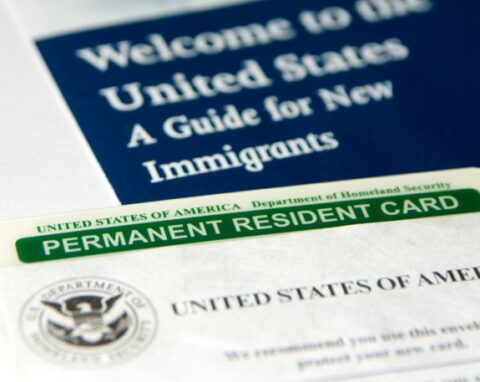
Long before President Obama announced his plan on deferred action for childhood arrivals, immigration restrictionists were arguing that any exercise of prosecutorial discretion benefitting undocumented immigrants was equivalent to “amnesty.” Consequently, it’s no surprise that one of the biggest myths supporters of the program have had to address is that deferred action is a type of amnesty. Read More

Courts Weigh Issuance of Law Licenses to Undocumented Attorneys
The highest courts of Florida and California are considering a legal question of great importance to many DREAMers: whether the lack of valid immigration status prevents states from issuing law licenses to applicants who are otherwise qualified to become attorneys. To some, the answer may seem obvious—that immigrants should not be permitted to practice law in a country where their presence violates the law. But as with most issues concerning immigration, the answer is more complex than may initially appear. Read More
Administration Releases Details on Deferred Action for Childhood Arrivals
The Department of Homeland Security today released details on its plan to grant “deferred action” to immigrant youths who were brought to the country as children. The announcement, which was accompanied by an updated FAQ and other materials on how to apply, comes eight weeks after DHS Secretary Janet Napolitano revealed the initiative, which could immediately benefit more than 900,000 immigrants. The new guidance from DHS addresses many questions about the application process—the answers to which appear below—but leaves others unresolved. Read More
America's story is an immigrant story.