Executive Branch

Day 4 of Senate Immigration Mark-up Goes Late into Night
Monday, the Senate Judiciary Committee began its fourth day—and likely last week—of the immigration reform bill’s mark-up. After spending most of the day finishing the Title 3 (interior enforcement) amendments, the senators began on the last part of the bill, Title 2 (legalization), which includes the path to citizenship. They considered 50 amendments and approved 30 of them; five were withdrawn. Read More

Social Security Administration Says Immigration Reform Will Increase Tax Revenue, Boost Economy
Will the immigration reform bill create millions of jobs, boost GDP, and help balance the budget? A new report by the Social Security Administration says that it will, by putting undocumented immigrants on the tax rolls and allowing them to participate fully and legally in the U.S. economy. Read More

President Obama’ Trip to Latin America Highlights Important Mutual Economic and Security Ties
President Obama spent three days last week traveling to Mexico as well as Costa Rica—his first second-term trip to Latin America. Mexico is the United States’ third largest trading partner, behind Canada and China, in terms of total goods, and the U.S. is Mexico’s largest trading partner. In addition, the largest share of immigrants who come to the U.S. are from Mexico. The President’s trip is a reminder of what an important partner Mexico, and much of Latin America, is to the U.S. Keeping these dynamics in mind is key particularly at a time when some in Congress want to spend more and more at the southern border in an attempt to seal the U.S. off completely from one of our largest economic partners. It’s no wonder then that the President used the trip to discuss both the economic and immigration ties between our nations. Read More
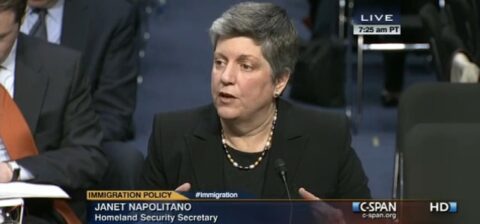
Napolitano Hearing Points the Way Forward on Immigration Reform
At an April 23rd hearing of the Senate Judiciary Committee, Homeland Security Secretary Janet Napolitano delivered two messages on behalf of the Obama administration. First, the administration strongly supports the Senate immigration reform bill—S.744, “The Border Security, Economic Opportunity, and Immigration Modernization Act.” Secondly, the administration has, contrary to the claims of its critics, significantly ramped up border security in particular and immigration enforcement in general. In other words, the administration has proven that it can be tough on enforcement even as it advocates the formulation of new immigration laws that are more effective and just than those currently on the books. Read More


Why Are Some Still UnDACAmented?
The latest USCIS DACA numbers from March show that the agency has received roughly 470,000 applications, which means that just under half of those estimated to be eligible have applied. While the success reflected by the 470,000 figure is not to be downplayed, the new numbers beg the question: What about the other half million? Why are they still unDACAmented? Read More

Despite Governor’s Best Efforts, New Mexico Keeps Driver’s Licenses for the Undocumented
By Joan Friedland, Senior Advisor to the National Immigration Law Center. New Mexico Governor Susana Martinez has failed in her fourth attempt to persuade the New Mexico legislature to repeal the state’s driver’s license law. The law, in effect since 2003, provides access to driver’s licenses for eligible applicants, regardless of their immigration status. This year’s legislative session ended in New Mexico on March 16, after the House and Senate committees considered and rejected driver’s license restrictions. Read More

Labor and Business Strike Immigration Deal on Worker Program
Over the weekend, the U.S. Chamber of Commerce and the AFL-CIO reached an agreement on a new type of immigrant worker program that has the potential to reshape the way temporary and permanent immigration visas contribute to American immigration policy. Although this is commonly referred to as future immigration flow, it should not be confused with other debates over increasing visas for high skilled workers or increasing employment based green cards. Instead, the agreement represents an attempt to reshape how business and labor will deal with the incredibly complex issues that are part of filling the demand for less-skilled labor in the United States. In the short term, it sets up a series of concepts that both sides would be willing to support in comprehensive immigration reform—but the Gang of Eight still has to convert those concepts into workable legislation. Read More

Hundreds of Detained Immigrants Held in Solitary Confinement
Every day, out of more than 30,000 detainees, roughly 300 immigrants are held in solitary confinement at the nation’s 50 largest detention centers overseen by Immigration and Customs Enforcement (ICE) officials, according to federal data. Solitary confinement is one of most expensive forms of detention, the New York Times reports, and nearly half of immigrant detainees held in solitary confinement are isolated for 15 days or more – “the point at which psychiatric experts say they are at risk for severe mental harm.” About 10 percent are held for more than 75 days. According to the New York Times, immigrants were regularly placed in isolation for breaking rules but also for protection: Read More

Budget Cuts Led ICE To Release Immigrants From Detention
Along with every other government agency, on March 1, U.S. Immigration and Customs Enforcement (ICE) officials had to begin making mandatory cuts to their budget as a result of sequestration. ICE’s choice to shift some of its detainees from expensive detention facilities to non-detention alternatives was questioned yesterday by Members of Congress, but more importantly the decision demonstrates that alternatives to detention are a feasible choice—regardless of sequestration. Read More
America's story is an immigrant story.