DREAM Act
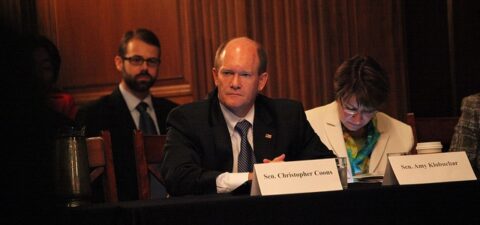
Hearing and Report Highlight Lack of Due Process in Immigration System
This week, Senator Christopher Coons of Delaware presided over a public hearing to discuss what so many of us know: the immigration courts are failing to provide a fair, efficient, and effective system of justice. Many of the concerns raised by Senator Coons, as well as some of the witnesses, during Wednesday’s Senate Judiciary Committee hearing, “Building an Immigration System Worthy of American Values,” are discussed in more detail in a report issued by the American Immigration Council this week, Two Systems of Justice: How the Immigration System Falls Short of the Ideals of Justice. Read More

Republican Party Officially Backs Immigration Reform
Today, the Republican National Committee formally endorsed comprehensive immigration reform, bringing its position back in line with the Republican Party platform of 2004. Championing immigration reform was among the suggestions offered in a report released today about how the RNC can reinvent itself as part of a $10 million plan to reach out to minority groups. "We must embrace and champion comprehensive immigration reform," says one recommendation in the 100-page report, according to the Associated Press. "If we do not, our party's appeal will continue to shrink." Read More

Bibles, Badges, Business and Bush + DREAMers Make Immigration Reform Demands Known
While some thought the immigration reform talk immediately after the election was just chatter, a series of convenings and speeches this week demonstrate that the topic of broad immigration reform is on plenty of tables. From DREAMers to President Bush, the call for reform goes on. Read More

This Week’s Immigration Proposals: Old News, Old Ideas
If you follow immigration, but are returning from a month-long, news-free vacation, there’s only one conclusion you would draw from the legislation Republicans offered up this week in Congress: Mitt Romney must have won the presidential election. After all, the ACHIEVE Act, introduced yesterday by retiring Senators Jon Kyl (R-AZ) and Kay Bailey Hutchison (R-TX), which offers temporary legal status but no path to citizenship to DREAMers, is surely the bill they were preparing to offer in the event that a Romney Administration was in the wings. And on the House side, a slightly revised version of the STEM Jobs Act—which failed on the suspension calendar before the election—is back on the floor at the end of this week without changing any of the problems that led to its defeat before. Surely, this suggests that the predictions that immigration would play a decisive role in the presidential election didn’t pan out and that self-deportation as an immigration reform strategy worked. Except, none of this is true. Read More

Kris Kobach Continues Digging Immigration Hole
Despite a general consensus that adopting “self-deportation” as immigration policy helped sink Mitt Romney’s White House aspirations, the architect of this philosophy, Kansas Secretary of State Kris Kobach, isn’t ready to give in. Kobach doesn’t seem to care that most in his party have awakened to the fact that they are in a “death spiral” with Latino voters because of intolerant rhetoric around immigration. Nor does he seem fazed that dozens of young DREAM activists in his state protested at his office last week, demanding his resignation. Read More
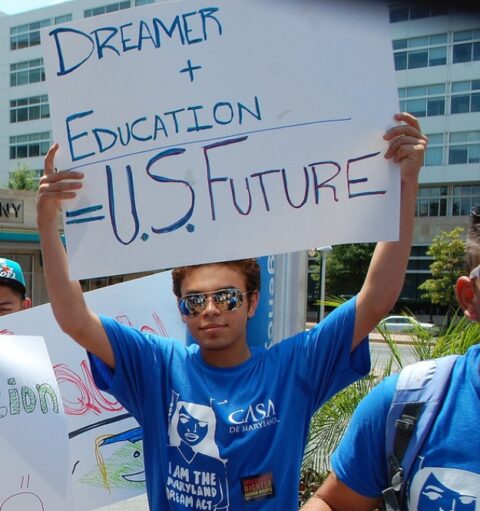
Understanding the Important Symbolism of the Maryland DREAM Act Victory
While much of last week’s energy was focused on Latino voter turnout in the Presidential race— and the subsequent recognition that immigration reform was all but inevitable—there was another major victory for immigration policy that came out of Maryland. Voters in the state supported through referendum their legislature’s decision to provide in-state tuition to undocumented students. This was the first vote of its kind in the nation and one where African-American voters were an important voting bloc in support of the measure. Read More

Tracking the Immigration Agencies’ Actions Amidst Hurricane Sandy
Update (11/2): USCIS has posted this reminder of special services and temporary relief that may be available to individuals affected by Hurricane Sandy, including expedited processing of employment authorization documents and extensions of certain non-immigrant status designations. In its discretion, USCIS will also take it into account requests from individuals who were unable submit evidence or attend an appointment due to the impact of the hurricane. USCIS is also extending the deadline by thirty days for submission of materials for persons who have received Requests For Evidence (RFEs) or Notices of Intent to Deny (NOIDs) with deadlines between October 26th and November 26th. Except for appointments that were automatically rescheduled as a result of USCIS office closures or the automatic extension of certain deadlines, it’s important to note that the burden remains on the applicant to establish that the hurricane affected the need for special services or the inability to meet application requirements. Up and down the East Coast, the impact of Hurricane Sandy is still being felt and its aftermath will continue to affect people and businesses for days. In the past, in some of the most severe storms, such as Hurricane Katrina, the Department of Homeland Security (DHS) immigration agencies have issued widespread information on dealing with the immigration consequences of the storm. Thus far, basic information is available regarding U.S. Citizenship and Immigration Services’ (USCIS) plans; virtually nothing has been said about Customs and Border Patrol (CBP) and Immigration and Customs Enforcement (ICE). Read More

Immigrants Play Key Role in Virginia’s Economy
Recent state-level immigration battles are often characterized by a great deal of negative attention and not enough positive information about immigrants living in those states. Unfounded claims about the costs of immigration overlook the benefits and contributions immigrants make to American communities. Fortunately, some organizations are dedicated to pushing back on the negativity and publishing accurate data about the role immigrants play in state economies. Read More

ICE Scaling Back 287(g) Program
The 287(g) program has been controversial and criticized for years, and immigrant advocates have demanded that US Immigration and Customs Enforcement (ICE) terminate the program. Section 287(g) of the INA allows the Secretary of Homeland Security to enter into agreements that delegate immigration powers to local police, but only through negotiated agreements, documented in Memoranda of Agreement (MOAs). The task force model deputizes police to enforce immigration laws in the course of their regular activities on the streets, and the jail model places deputized police officers within jails. A recent development raises questions about the future of the program. Read More
Maryland DREAM Act is a Smart Economic Investment
Education is an investment that yields sizeable dividends over time. Well-educated students go on to become well-educated workers who earn more, pay more in taxes, and are less likely to rely upon public benefits. This is why the DREAM Act, and all of the state-level bills that bear its name, make so much sense. Allowing unauthorized children to graduate from high school and go on to college isn’t simply an act of compassion; it is enlightened self-interest. These children will prove to be far more costly to the state in the long run if they are less educated and living in poverty. Read More
America's story is an immigrant story.