Department of Homeland Security

A Closer Look at Immigration Reform Legislation in the New Year
Everyone pulled out the sports analogies last week when Congressman Luis Gutierrez and his 91 co-sponsors introduced H.R. 4321, the Comprehensive Immigration Reform for America’s Security and Prosperity Act of 2009—and rightly so, as this bill marks the opening bell in the 2010 immigration debate. It is not only the first major piece of comprehensive reform legislation introduced in the 111th Congress, but the first since the last debate on immigration reform, which took place in May and June of 2007 in the Senate. Read More

Greyhound Lines, Inc. Accused of Racially Profiling Latino Passengers
Traveling home for the holidays might not be as cheerful as you may think if you plan on taking a Greyhound bus. According to a recent article in the Contra Costa Times, an immigrant rights group in San Bernardino, CA, is accusing Greyhound Lines, Inc. of racially profiling their Latino customers. The rights group, Immigration Raids Response Network, alleges that Greyhound Lines Inc. targets Latino riders by allowing Border Patrol agents—along with Greyhound employees—to “conduct immigration checks of passengers upon their arrival at the San Bernardino Greyhound bus station.” The rights group is now urging Latinos not to ride Greyhound buses nationwide. Read More

The BIA Has the Chance to Prevent the Wrongful Deportation of Immigrant Children
While there is no question that Congress needs to step up to the plate and repair our broken immigration system through legislative reform, there are some fixes that can be made now without waiting for Congressional action. If the Department of Homeland Security (DHS) and the Board of Immigration Appeals (BIA) would stop narrowly interpreting existing immigration law, many noncitizens would be eligible to complete applications for legal status in the manner Congress intended. Read More

ICE Will Halt Detention of Asylum Seekers on January 4
According to the Associated Press, the Obama Administration said today that it will no longer detain asylum seekers who, in addition to other criteria, have displayed a credible fear of persecution in their home countries. According to the article: Immigration and Customs Enforcement director John Morton says beginning… Read More

Napolitano Looks for Comprehensive Way Forward
Department of Homeland Security (DHS) Secretary Janet Napolitano testified in an oversight hearing today before the Senate Judiciary Committee. While reinforcing her commitment to securing our borders and enforcing our immigration laws in smart and effective ways, Napolitano also reaffirmed her commitment to immigration reform as a way to strengthen our immigration enforcement policies—a commitment that includes, as Secretary Napolitano notes, responsibility and accountability from everyone involved: Read More
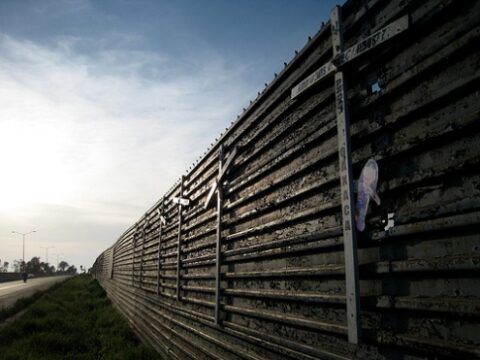
Transforming the Role of Immigration Enforcement through Immigration Reform
For years, the U.S. government has tried and failed to curb undocumented immigration through enforcement-only tactics at the border and interior raids. The number of Border Patrol Agents has increased substantially over the past years—as have budgets and technological investment at the border—yet none of these increases have resulted in a significant decline in the undocumented population. In fact, we have the largest undocumented population in our nation’s history. Simply enforcing the woefully outdated and ineffectual immigration laws currently on the books is not working. Many immigration enforcement experts—including DHS Secretary Janet Napolitano—agree that the only way to solve our immigration enforcement problems is through comprehensive immigration reform. Read More

ICE Transferring Detainees Impedes Their Access to Counsel and Limits Their Right to Present a Defense to Deportation
Two recent reports draw attention to yet another defect in the government’s problem-ridden detention system: ICE’s practice of regularly transferring immigration detainees from one jail to another, often far from where ICE initially arrested them. Transfers have a devastating effect on a person’s ability to retain counsel and maintain an attorney-client relationship; present a defense to deportation; and obtain release from detention. The government should take immediate steps to eliminate these effects and ensure that people who are detained are afforded a fair hearing. Read More

Post Postville, Immigrants Still Vital to Iowa’s Economy
Postville, Iowa—home to one of the largest immigration raids in U.S. history—made headlines again this month when Sholom Rubashkin, owner of Agriprocessors Inc., was convicted of “all but five of the 91 business fraud charges listed in a 163-count indictment.” Although the 72 immigration charges were dropped (since they would have little impact on his final sentence), Rubashkin still faces a total maximum sentence of up to 1,255 years, according to the Des Moines Register. Justice served? Perhaps. But the people of Postville may have a different take on “justice” given the current state of Postville’s crippled economy—an economy that once, like many across the U.S. currently do, depended on immigrants. Read More

Republican Playbook on Immigration Debate Long on Emotions, Short on Facts
Senate Republicans have “thoughtfully’ provided immigration advocates with their strategy for opposing immigration reform in 2010, courtesy of a letter sent to Secretary Napolitano protesting her recent statements that immigration reform is both necessary for DHS to do its job and good for the economy. The letter, signed by twelve Republicans— including Sens. Orrin Hatch of Utah, Charles Grassley of Iowa, and Jeff Sessions of Alabama—was described by Sen. Hatch’s press statement as “taking Napolitano to task” for her remarks. It’s a playbook for the coming year, showing how to make points that are long on emotion and short on facts. Read More

DHS Interprets Law to Detain Refugees Across the Country
Last month, President Obama authorized the admission of 80,000 refugees into the U.S. in fiscal year 2010, something every President has done annually since passage of the Refugee Act of 1980. The United States has long recognized the importance of providing a safe haven for refugees. Beginning with laws granting refugee status to displaced persons after World War II and culminating with the comprehensive Refugee Act of 1980, the U.S. has sought to safeguard those who are unwilling or unable to return to their homeland based on a “well-founded fear of persecution on account of race, religion, nationality, membership in a particular social group, or political opinion.” Read More
America's story is an immigrant story.