Department of Homeland Security

DHS Creates Obstacles for Small Businesses Seeking High-Skilled Immigrants
Politicians love small businesses. They also love high-skilled workers. One might assume, then, that entrepreneurs and start-up companies would have a relatively easy time hiring immigrant professionals through the H-1B program. Not so. In fact, a recently released memo confirms that far from receiving preferential treatment, small businesses are singled out for heightened fraud investigations by the Department of Homeland Security (DHS). Read More

President Obama Issued a Directive, Not an “Executive Order” or “New Law”
Immigration hardliners were predictably quick to criticize President Obama’s recent announcement that DHS will use discretion to halt the deportations of eligible immigrant youth. They wasted no time hurling some base-stirring claims—“administrative amnesty,” “end-runs around Congress,” “executive fiat.” However, while folks are free to criticize the President, they should at least strive for accuracy. The President did not create a new law, sign an executive order or grant anyone citizenship or amnesty, he merely directed DHS to exercise discretion to grant deferred action to qualified immigrant youth—an action that is well within his power as President. Read More

A Breakdown of DHS’s Deferred Action for DREAMers
While today’s headlines assess the significance of President Obama’s deferred action announcement on Friday, many are still sorting through the news to get answers to basic questions about who is covered under the new program. Prior to President Obama’s statement that DHS would halt the deportation of immigrant youth who met criteria similar to the DREAM Act, DHS Secretary Janet Napolitano released a memo and a set of questions and answers that outline eligibility and a basic timeline for implementing the new directive . Read More
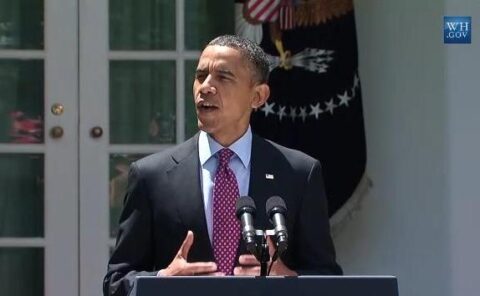
President Obama to Halt Removal of DREAMers
The Obama administration announced today that it will offer indefinite reprieves from deportation for young immigrants who were brought to the country as minors and meet other specific requirements. The move, hailed by immigration advocates as a bold response to the broken immigration system, temporarily eliminates the possibility of deportation for youths who would qualify for relief under the DREAM Act, giving Congress the space needed to craft a bipartisan solution that gives permanent residence to qualifying young people. In a statement from the White House, President Obama said the policy was “the right thing to do,” calling DREAMers “Americans in their hearts, in their minds, in every single way but one: on paper.” Read More

After 30 Years, Plyler v. Doe Decision Survives but Remains Under Attack
Thirty years ago today, the Supreme Court issued its landmark decision in Plyler v. Doe, holding that states cannot deny a free public education to students for lack of valid immigration status. The decision has since opened the schoolhouse doors to untold numbers of children who might otherwise be deprived of a basic education. Yet today, the decision remains under continued attack from critics who—as part of an ongoing effort to put the issue back before the Justices—appear willing to sacrifice the welfare of U.S. citizens. Read More

Advocates Call on Obama Administration to Protect Immigrant Families, Not Deport Them
Nearly a year ago, ICE Director John Morton issued a memo on prosecutorial discretion which led to the review of 300,000 immigration cases currently in removal proceedings. Advocates initially applauded this announcement, hoping that the administration would move quickly to close low-level, non-criminal immigration cases. But today, disappointed by the program’s low closure rate, advocates and community leaders called on the Obama administration to make good on its promise of using of prosecutorial discretion to protect DREAMers and immigrant families from deportation. Read More

Lawmakers Attempt to Gut Census by Defunding American Community Survey
How can you make good policy in the absence of good information? That seems to be a question that some Republicans in the House and Senate have not asked themselves. In recent months, these lawmakers have proposed that funding for the Census Bureau’s annual American Community Survey (ACS) be cut entirely from the federal budget, or that the ACS be scaled back to a “voluntary” program. Given that the data generated by the ACS is used to guide the distribution of more than $400 billion in federal funding each year, this would be an ill-advised move. Read More

Updated Figures Highlight Shortfalls of Prosecutorial Discretion Program
As reported in today’s New York Times, the Department of Homeland Security has reviewed nearly 300,000 pending deportation cases over the past seven months in search of low-priority immigrants deserving prosecutorial discretion. While immigrant advocates cheered the policy when it was announced, figures released yesterday suggest that the program is not only falling short of initial expectations, but that the numbers are heading in the wrong direction. Read More
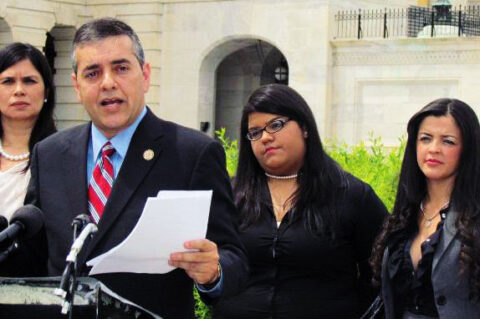
STARS Act Highlights Potential Pitfalls of Rubio DREAM Proposal
When news broke yesterday that a Florida congressman introduced an alternative version of the DREAM Act, many assumed it was Sen. Marco Rubio, who has been promising for months to introduce such legislation. In fact, the bill in question—dubbed the STARS Act—was introduced by Rep. David Rivera, a member of the House who introduced similar legislation (the ARMS Act) last January. Although Rivera’s proposals would benefit fewer people than the original DREAM Act, they would put qualified applicants on a path that would ultimately lead to permanent residency. From that perspective, they differ significantly from the proposal Senator Rubio has been discussing, which reportedly does not include a dedicated path to permanent residency. Read More

Law Professors Push White House to Grant Administrative Relief to DREAMers
In the absence of Congressional action on the DREAM Act, advocates and DREAMers have increasingly turned to the White House to help them secure temporary protection from removal. This week, DREAMERS got a huge boost from 96 law professors who sent a letter to President Obama outlining the extensive authority under law that his administration holds to halt deportations of DREAMers. Read More
America's story is an immigrant story.