Department of Homeland Security

Secretary Napolitano Clarifies President’s Deferred Action Plan…Again
Today, DHS Secretary Janet Napolitano testified before the House Judiciary Committee and, as expected, defended the administration’s use of prosecutorial discretion and recently announced deferred action policies for qualified DREAMers—fielding questions and accusations from those who would rather take Napolitano to task than focus on creating smart, humane, and effective immigration policies. Read More

Critics Try to Sink Obama’s Deferred Action Program Before It Even Begins
Secretary Janet Napolitano is set to testify before the House Judiciary Committee tomorrow and the number one topic is likely to be the June 15 announcement of Deferred Action for Dreamers. Now that a majority of the Supreme Court has blessed the use of prosecutorial discretion as a legitimate function of the executive branch, critics of deferred action for DREAMers have moved on to a golden oldie: raising the specter of fraud in order to defeat or delay the program. In a recent letter to ICE Director John Morton, Judiciary Chair Lamar Smith argued that the new initiative will invite thousands of undocumented immigrants to fake documents proving that they meet the requirements of the program, likening it to the Special Agricultural Worker legalization program of 1986. By conjuring up ghosts of the past, Congressman Smith not only confuses the nature of legalization and deferred action, but ignores the dramatic changes in immigration adjudication and enforcement that have taken place since 1986. Read More

How Overburdened Immigration Courts Can Be Improved
By Naike Savain. Immigration courts are notorious for significant backlogs and lacking sufficient resources to timely and justly adjudicate the hundreds of thousands of removal cases pending before them. And, despite recent announcements that the Department of Homeland Security (DHS) is exercising prosecutorial discretion in some removal cases, immigration courts throughout the country struggle to manage their caseloads. In fact, some courts are scheduling hearings as far out as 2015, yet Congress seems unwilling to appropriate additional funding. A recent study commissioned by the Administrative Conference of the United States, however, addresses the gap between immigration courts’ workload and resources and recommends several improvements to the system. Read More

Some States Attempt to Move Forward on Immigration Laws Following Supreme Court Decision
Prior to the Supreme Court’s recent decision on Arizona SB 1070, other states that passed immigration laws were also embroiled in complicated legal battles. Alabama, Georgia, South Carolina, and Utah all passed restrictive immigration laws, parts of which were challenged in court and subsequently enjoined pending the Supreme Court’s ruling on Arizona. Now that the Supreme Court has ruled, however, each state is now attempting to interpret that ruling in an effort to implement its immigration law. Read More
With H-1B Visa Cap Reached, U.S. Still Hungry for Skilled Workers
The Examiner July 7, 2012 By mid-June, less than halfway through 2012, federal officials announced that the United States had reached the cap set by Congress for H-1B visas issued to foreign born workers. The H-1B visa program is a crucial tool used by employers in this country to attract… Read More

How Should Obama Administration Proceed with Deferred Action Program?
In a June 15th memo announcing deferred action for immigrant youth, DHS Secretary Janet Napolitano gave USCIS 60 days to come up with a process that will allow these young people to affirmatively apply for the chance to work, study, and live in the U.S. without fear of deportation. To be sure, USCIS staff and their counterparts at ICE, CBP, and DHS, have been entrusted with a difficult job—one that requires balancing legal and practical implementation issues against high expectations and years of built up frustration over the lack of immigration reform. But the real challenge is acknowledging that every single decision they make about the program has the chance to make it harder or easier for young people to realize their dreams. Read More

How the President’s Deferred Action Initiative Will Help the U.S. Economy
President Obama’s June 15 “deferred action” announcement is good not only for the 1.4 million unauthorized children and young adults who have been granted a temporary reprieve from deportation, but also good for the U.S. economy. Each year, tens of thousands of unauthorized students graduate from primary or secondary school, often at the top of their classes. They have the drive and intelligence to become doctors, nurses, teachers, and entrepreneurs, but their lack of legal status has prevented them from attending college or working legally. The President’s deferred action initiative has finally provided them with an opportunity to live up to their full potential and, in the process, earn more, spend more, and pay more in taxes. Read More

Clearing the Air on Immigrants, the Military, and Deferred Action
President Obama’s June 15 announcement on deferred action for DREAMers raised a number of questions about what it means and how it will be administered. One of the biggest questions is regarding military service. According to the DHS memo, among those eligible to be granted deferred action are an individual who is an “honorably discharged veteran of the Coast Guard or Armed Forces of the United States.” Then, during his speech to NALEO, GOP presidential candidate Mitt Romney stated that he would support a path to legal residency for “those who have risked their lives in defense of America.” The language of the DHS memo compounded by Romney’s remarks led some to believe that undocumented immigrants could serve in the military and therefore qualify for deferred action or some sort of legalization program. But this is not the case. Read More
DHS’s NSEERS Program, While Inactive, Continues to Discriminate
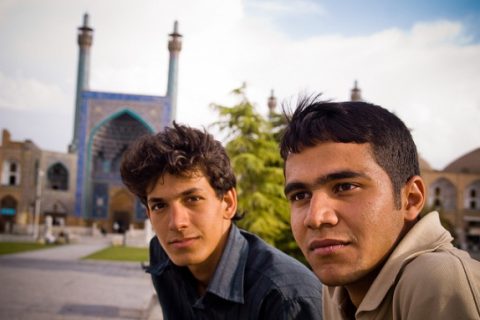
For a long time after 9/11, immigration reform was only discussed as a national security issue, and many policies were put in place aimed at stopping terrorists from entering the country. Unfortunately, some of these policies—such as the National Security Entry-Exit Registration System (NSEERS) program—targeted particular ethnic groups, promoted profiling, and resulted in discrimination and civil rights violations. In recent years, the Obama administration has made efforts to end the NSEERS program, but NSEERS still exists and the impact of these policies is still being felt in immigrant communities. In fact, the Rights Working Group, a coalition of civil rights organizations, recently released a report, The NSEERS Effect: A Decade of Racial Profiling, Fear, and Secrecy, which analyzes the continuing impact of this post-9/11 policy. Read More

DHS Rescinds Part of Controversial 287(g) Program in Arizona
The Obama administration suspended part of its controversial 287(g) program in Arizona this week following the Supreme Court’s ruling in Arizona v. United States. DHS announced that it was ending its “287(g) task force agreements” in Arizona —agreements which deputize certain local police to enforce immigration laws. Other state immigration programs, however, like Secure Communities and the 287(g) jail agreements (which allow deputized arresting officers to enforce immigration laws in jails), will remain in effect. Read More
America's story is an immigrant story.