Department of Homeland Security

‘Fast 4 Families’ Moves to Next Phase as New Fasters Take the Mantle
On the National Mall today, the four core fasters leading the “Fast 4 Families” ordained new fasters and ended their 22-day, water-only fast. Members of Congress, the faith community and civil and immigrant rights groups turned out to witness the four fasters passing the baton over to others who will continue the fast until House Speaker John Boehner schedules a vote on immigration reform. Read More

Will New USCIS Memos Confuse House Judiciary Committee Again?
One of the significant lessons of 2013 is that good immigration policy matters to the American public. It’s unfortunate, then, that the House Judiciary Committee is choosing to end its year focusing not on immigration reform, but on how best to take the President to task for making use of executive authority. Read More

Talking Turkey on Immigration 2013
In an effort to preserve harmony at the Thanksgiving table, we have for the last several years offered up tips on making the case for immigration reform in front of, what is for many, the most hostile audience of all—their families. Even in the most congenial of families, there’s likely to be someone who can push your buttons on the immigration issue. But you can, and should, engage them, armed with this year’s advice on talking turkey about immigration reform. Read More

Keeping CBP In Line With Proposed Reforms
In May 2010, Congress submitted a request to the Department of Homeland Security (DHS) for a review of U.S. Customs and Border Protection’s (CBP) policy on the use of force by border patrol agents. Drawing on recommendations from a hard-hitting report by DHS’s Office of Inspector General, as well as an internal review and an independent evaluation by the Police Executive Research Forum (PERF), CBP announced compliance with a handful of proposed reforms to its use of force policy. Read More

Report: ICE Officers Fail to Report Some Sex Abuse Claims
Immigration and Customs Enforcement (ICE) officers failed to report numerous allegations of sexual abuse over the last four years, according to a recent report from the Government Accountability Office (GAO). Between October 2009 to March 2013, ICE headquarters received reports of 215 allegations of sexual abuse and assault, but a GAO audit of 10 of those facilities found an additional 28 allegations—40 percent more than the 70 allegations reported by these facilities. Read More

Will Filipinos Be Granted Temporary Protected Status in the Wake of Typhoon Haiyan?
In the wake of the devastating Typhoon that hit the Philippines, the Department of Homeland Security should consider providing Temporary Protected Status (TPS) to Filipino nationals in the U.S. TPS is an immigration status for nationals of certain countries. The Secretary of Homeland Security designates a country for TPS due to ongoing armed conflict, an environmental disaster or epidemic, or for other “extraordinary and temporary conditions” within that country. TPS gives foreign nationals in the United States protection from deportation, travel authorization, and the ability to work legally while in the United States. As the name states, their status is temporary and does not lead to a green card. Among others, Haiti, Syria, and Somalia are some of the countries currently designated with temporary protected status. Only individuals who can demonstrate continuous physical presence during a period specified by the Department of Homeland Security (DHS) are eligible, as this program is designed for foreign nationals who were already in the United States. Read More

New York’s Highest Court Says that Noncitizens Must Be Warned of Deportation Risk Before Pleading Guilty
The highest court in New York ruled on Tuesday that due process compels state court judges to warn defendants in criminal proceedings who are not U.S. citizens that pleading guilty to a felony may result in their deportation. The court noted that “deportation is a plea consequence of such tremendous importance, grave impact and frequent occurrence that a defendant is entitled to notice that it may ensue…Due process compels a trial court to apprise a defendant that, if the defendant is not an American citizen, he or she may be deported as a consequence of a guilty plea to a felony.” Read More
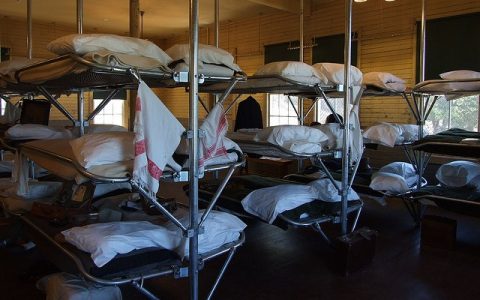
Detention Bed Mandate is Just One Example of How Immigration is Being Criminalized
For more than a century, study after study has confirmed two simple yet powerful truths about the relationship between immigration and crime: immigrants are less likely to commit serious crimes or be behind bars than the native-born, and high rates of immigration are not associated with higher rates of either violent or property crime. Unfortunately, immigration policy is frequently shaped more by fear and stereotype than by empirical evidence, which is why immigrants are so often treated like dangerous criminals by the U.S. immigration system. Whole new classes of “felonies” are created which apply only to immigrants, deportation is viewed as a just punishment for even minor crimes, and policies to end unauthorized immigration become more and more punitive rather than more rational and practical. In short, immigration itself is being criminalized. Read More

ICE Will Not Use Health Care Application Information for Immigration Enforcement Purposes
Last Friday U.S. Immigration and Customs Enforcement (ICE) issued a clarification stressing that information provided by those applying for insurance under the Affordable Care Act will not trigger immigration enforcement. Undocumented immigrants are not eligible for health care under the Affordable Care Act (ACA); however, this clarification should bring peace of mind to mixed-status families. Eligible members of those families will now be able to seek coverage under the ACA without fear of placing some family member at risk of deportation. Read More

President to Nominate Jeh Johnson as DHS Secretary
According to news reports, President Obama will nominate Jeh Johnson, a former top Pentagon lawyer, as secretary of the Department of Homeland Security on Friday. He will replace former DHS Secretary Janet Napolitano, who resigned to become president of the University of California system. The Daily Beast… Read More
America's story is an immigrant story.