DACA
STARS Act Highlights Potential Pitfalls of Rubio DREAM Proposal
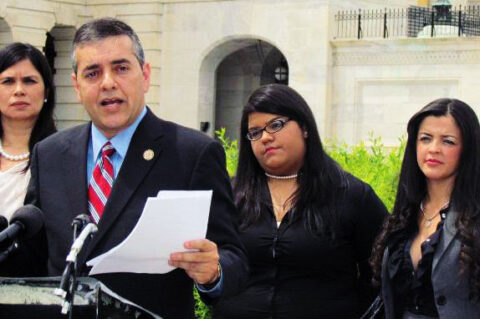
When news broke yesterday that a Florida congressman introduced an alternative version of the DREAM Act, many assumed it was Sen. Marco Rubio, who has been promising for months to introduce such legislation. In fact, the bill in question—dubbed the STARS Act—was introduced by Rep. David Rivera, a member of the House who introduced similar legislation (the ARMS Act) last January. Although Rivera’s proposals would benefit fewer people than the original DREAM Act, they would put qualified applicants on a path that would ultimately lead to permanent residency. From that perspective, they differ significantly from the proposal Senator Rubio has been discussing, which reportedly does not include a dedicated path to permanent residency. Read More

Law Professors Push White House to Grant Administrative Relief to DREAMers
In the absence of Congressional action on the DREAM Act, advocates and DREAMers have increasingly turned to the White House to help them secure temporary protection from removal. This week, DREAMERS got a huge boost from 96 law professors who sent a letter to President Obama outlining the extensive authority under law that his administration holds to halt deportations of DREAMers. Read More
New Bill Welcomes High-Tech Entrepreneurs to the U.S.
Mashable May 23, 2012 After the JOBS Act legalized crowdfunding-based investments in new businesses, the startup community set its sights on a new legislative goal: granting visas to foreigners who are pursuing a high-tech degree or building a business in the United States. The Startup Act 2.0, introduced to… Read More

New Border Patrol Strategy Changes Rhetoric More than Substance
The U.S. Border Patrol’s newly released strategic plan is a decidedly mixed bag when it comes to border security—just like the Border Patrol’s last strategic plan, released in 2004. On the plus side, both documents advocate an intelligence-driven, risk-based approach to border security which focuses on the greatest security threats. Both plans also call for disruption of the smuggling networks which bring unauthorized immigrants, drugs, and other contraband into the United States. On the down side, each plan embraces the simplistic “prevention through deterrence” mentality in which it is believed—or hoped—that heightened border enforcement will scare off unauthorized immigrants and smugglers alike. More broadly, both documents are a reflection of the federal government’s continued misguided emphasis on securing the territory between ports of entry, even though most smuggling now occurs through ports of entry. Read More

Immigrants without Legal Representation Not Benefitting from Prosecutorial Discretion
After ICE Director John Morton issued a memo last June outlining how and when ICE officials should exercise prosecutorial discretion in immigration cases, many were optimistic that the memo’s implementation would relieve backlogs and help the agency focus on higher priority immigration cases. Months later, however, folks are finding that one large group of people has limited access to this review process—immigrants without legal representation. In fact, nearly half of all immigrants in removal proceedings appeared without legal representation in 2011, also known as “pro se.” While immigration attorneys often explain the effect of these prosecutorial discretion policies to their clients, pro se immigrants may be unaware that new policies are even in effect. Read More

Rubio Proposal Overlooks Obstacles Ahead For DREAMers
Though it has yet to be introduced in Congress, Senator Marco Rubio’s alternative to the DREAM Act received an appraisal from the Washington Post this week, which noted that it represents an effort to shake the hard-line anti-immigrant sentiment voiced by many leading conservative politicians. The editorial also noted, however, that the outlines of his proposal promote what’s tantamount to “permanent second-class status.” Read More

Young, Professional DREAMers Deserve Recognition
Earlier this week, numerous media outlets covered the story of Jose Godinez-Sampiero, a DREAM Act-eligible law school graduate whose application for a law license is currently pending before the Florida Supreme Court. Similar stories are playing out in California and New York, as young people brought to this country as children are now law school graduates, trying to make use of their professional degrees. The problem isn’t just for young lawyers, however, but is faced by many DREAMers, such as Dulce Matuz, an engineer turned DREAM Act advocate, who made Time Magazine’s Top 100 list this week. Read More

Colorado, Hawaii and Delaware Progress on Tuition Equity for Undocumented Students
Legislation intended to make college education more affordable for undocumented students continues to work its way through state legislature across the U.S. Last week, the Colorado Senate approved SB 15 (or ASSET), a tuition equity bill that would provide a standard tuition rate to qualifying students regardless of immigration status. Likewise, bills in Hawaii and Delaware which provide in-state tuition and financial aid to eligible students regardless of status are also moving through their respective legislatures. Currently, twelve states have laws on their books that permit certain undocumented students who have attended and graduated from their primary and secondary schools to pay the same tuition as their classmates at public institutions of higher education. Read More

DREAM Advocates Begin a 3,000-mile March from California to Washington
Jose Gonzalez was born in Guadalajara, Mexico in 1987, but he has called California home for almost all of his 25 years. A community college graduate, as well as a youth minister in his church, Jose wants to attend a four-year university, but his family cannot afford tuition, and he cannot work to pay his own way. Like many others in his situation, Jose grew up as an American—speaking English, attending school, thinking about college and careers—only to learn one day that his presence here is not legal. Read More

Crunching—and Clarifying—the Numbers on Prosecutorial Discretion
Late last year, the Department of Homeland Security (DHS) instructed its attorneys to review matters pending before immigration courts in search of low-priority cases warranting prosecutorial discretion. But of the approximately 300,000 immigrants now in deportation proceedings, how many stand to potentially benefit from the initiative? In recent days, immigrant advocates have fretted the figure could be as low as 1 percent—a fear based on the number of cases that had been officially suspended as of the start of last week. In truth, the actual figure presently appears closer to 10 percent. While the government bears the blame for much of the confusion, it now seems certain that advocates’ initial fears were unwarranted. Read More
America's story is an immigrant story.