
Key Findings
- More than 46 percent of Fortune 500 companies in 2025 (231 out of 500) were founded by immigrants or their children, including:
- 109 companies founded by immigrants;
- 122 companies founded by children of immigrants.
- Among the 14 companies that appeared on the Fortune 500 list for the first time this year, 10 were founded by immigrants or their children.
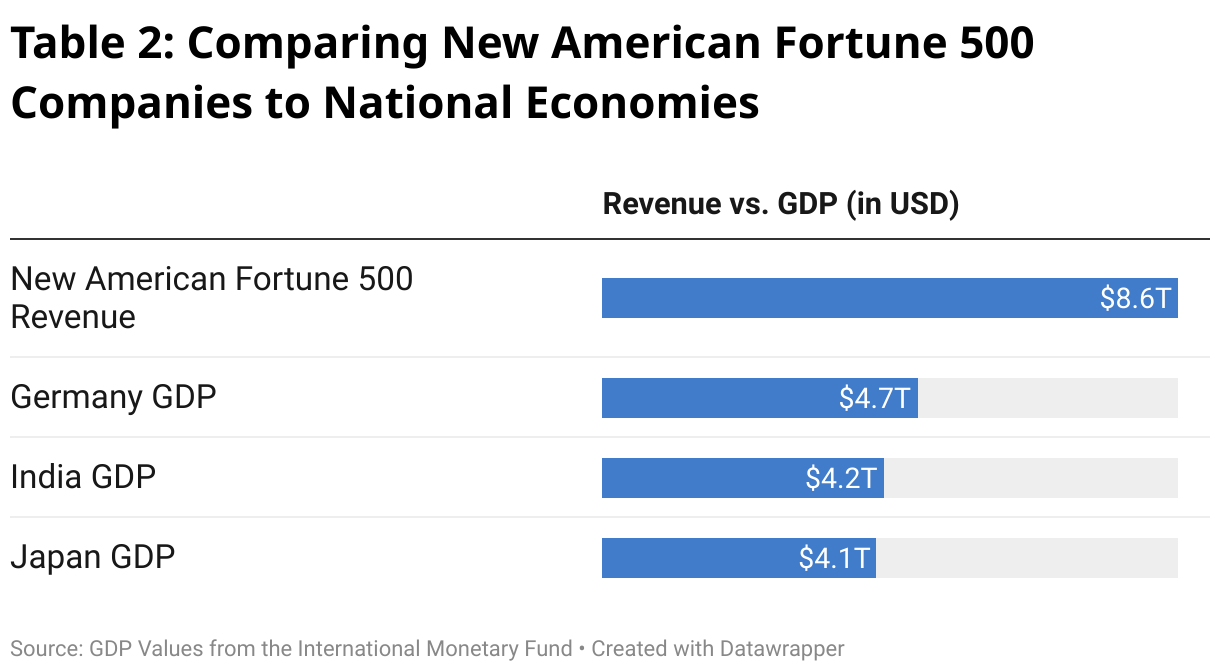
- In fiscal year 2024, these 231 Fortune 500 companies generated $8.6 trillion in revenue—an amount that, if compared with national GDPs, would rank as the third-largest economy globally.
- These 231 Fortune 500 companies employed over 15.4 million people worldwide, a number that’s comparable to the population of the fifth-largest U.S. state.
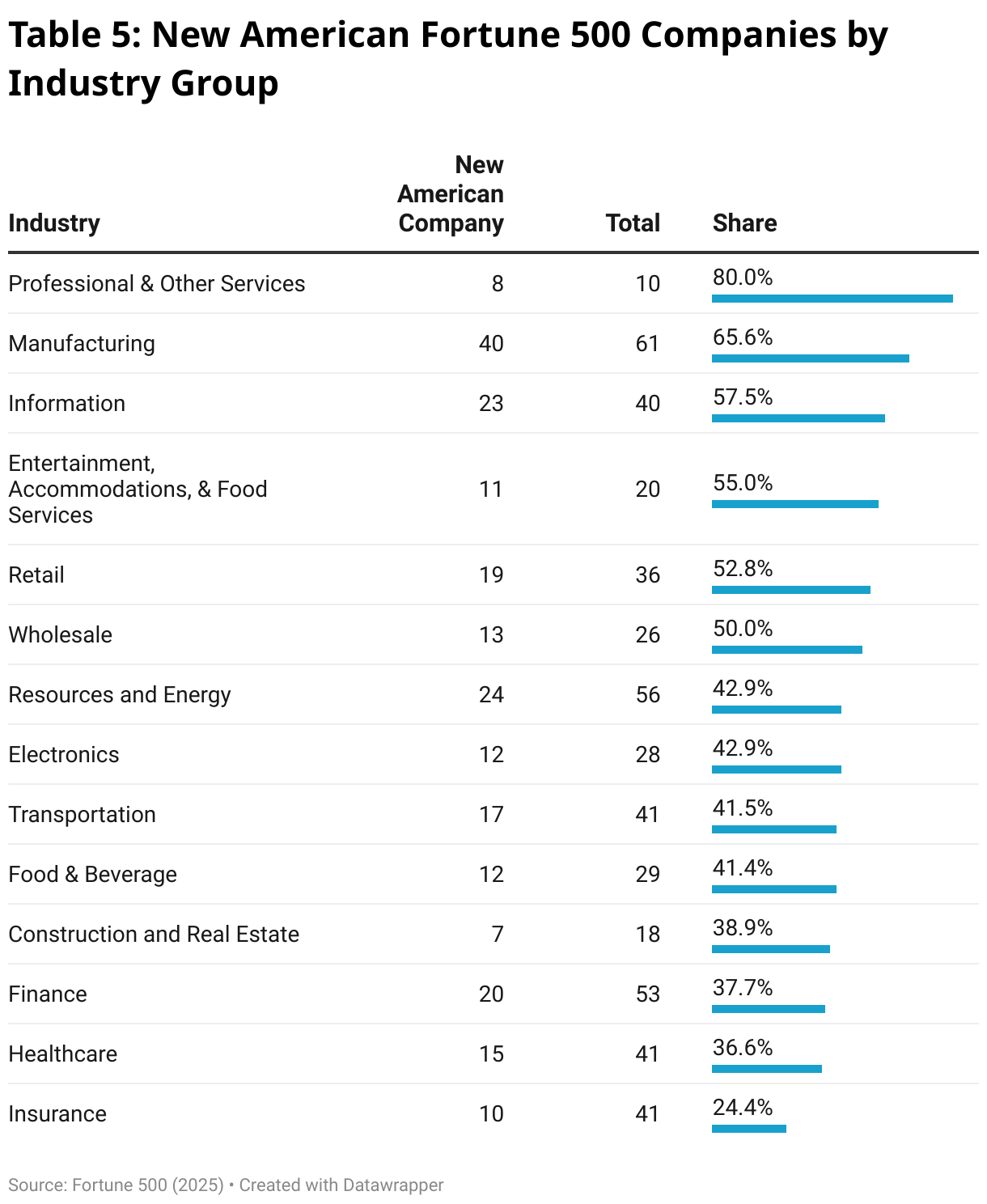
- Immigrants and their children founded 80 percent of the Fortune 500 companies in professional and other services, 65.6 percent in manufacturing, and 57.5 percent in information.
Built by Immigrants: The Legacy of Innovation in America’s Fortune 500


Immigrant entrepreneurs have long played a crucial role in building America’s success. Many of the country’s most well-known and influential companies were started by immigrants or their children. For this report, we refer to these businesses as “New American” companies. This group includes widely recognized brands like Amazon and Apple, as well as rising stars on the Fortune 500 list, such as Sirius XM Holdings and Ace Hardware. Immigrants have consistently been a driving force of business innovation and growth in America.
Since we released the first New American Fortune 500 report, in 2011, our analyses have consistently found that more than two out of every five Fortune 500 companies—the 500 largest corporations in the United States by revenue—were founded by immigrants or the children of immigrants. This year, the percentage of New American companies has reached a new high: 46.2 percent of Fortune 500 companies in 2025 were founded by immigrants or the children of immigrants.
These New American Fortune 500 companies are clear proof of not only immigrants’ contributions to the country, but also the extraordinary potential that exists for all Americans to innovate, create jobs, and shape the nation’s future.
How Many Fortune 500 Companies Were Founded by Immigrants or Their Children?
Looking at the New American companies that made the 2025 Fortune 500 list, we find that 46.2 percent, or 231 companies, were founded by immigrants or their children—109 by immigrants and 122 by children of immigrants. This year, among the 14 companies that appeared on the Fortune 500 list for the first time, 10 were New American companies, half of which were founded by immigrants. (see Table 1).
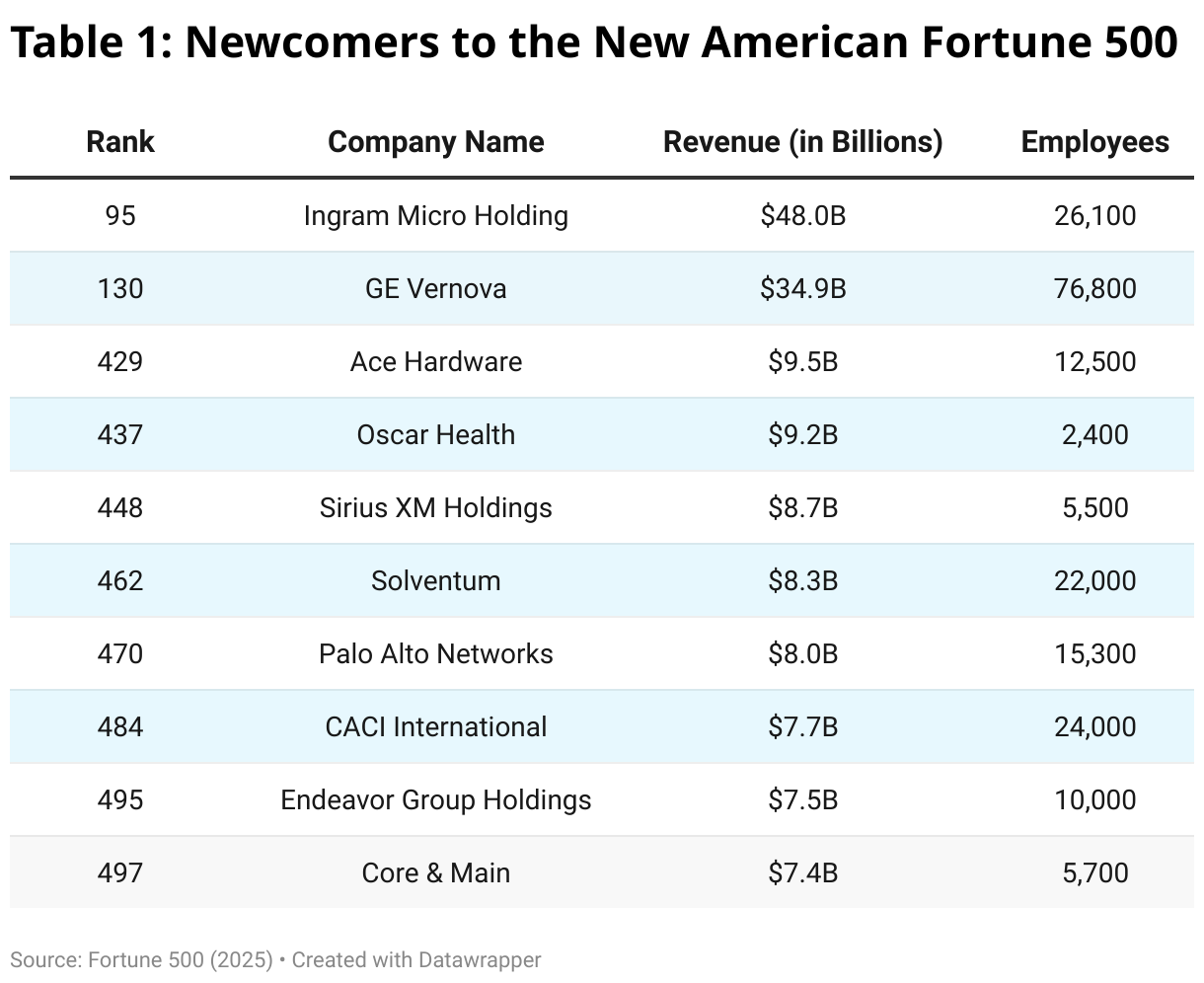
Additionally, 10 out of 22 companies that were either new to the list or returning after a previous appearance were founded by immigrants or their children.
These New American firms make important contributions to both the U.S. and the global economies. In fiscal year (FY) 2024, they collectively generated $8.6 trillion in revenue—an amount that exceeds the GDP of many countries, including Japan, Germany, India, and the United Kingdom. In fact, a country with a GDP equal to the combined revenues of the New American Fortune 500 firms would be the third largest economy in the world, behind only the United States ($28.5T) and China ($18.7T).
It’s well-known that Fortune 500 companies are historically powerful job creators. In FY 2024, the New American companies employed an average of 66,798 workers apiece. Together, they employ over 15.4 million people worldwide—a population that would rank as the fifth largest state in the United States, just after New York but larger than Pennsylvania.
Table 3: New American Fortune 500 Employee ComparisonWhat Is the Economic Impact of the New American Fortune 500 Companies?
Fortune 500 companies are huge drivers of the U.S. economy, representing about two-thirds of the country’s gross domestic product.
States where these Fortune 500 companies are headquartered experience additional benefits as well. Those with high concentrations of Fortune 500 headquarters, such as New York, Texas, and California, tend to function as central “business hubs”—places where professionals can gather and engage in industry discussions, foster new business formation and generate economic activity.
The New American Fortune 500 headquarters are concentrated in several states, and provide a similar positive economic impact. New York, America’s original immigrant gateway, leads the pack with 34 firms from the 2025 list. California comes in second, with 30 New American Fortune 500 companies, followed by Texas, Illinois, Florida, and Virginia.

Among the key industries, professional & other services had the highest share of New American Fortune 500 companies: 8 out of the 10 firms were founded by immigrants or their children. The manufacturing industry also had a high share of New American companies, at 65.6 percent of those on the Fortune 500 list. The information industry had the third highest share, with 57.5 percent of the Fortune 500 companies founded by immigrants or their children.
Immigrant Entrepreneurs Behind America’s Largest Companies
Immigrant entrepreneurs are a crucial part of the broader U.S. economy, making up 23.6 percent of all entrepreneurs nationwide—with even higher shares in certain industries. For example, immigrants comprise one-third of entrepreneurs in the accommodations and food service sector.
As new immigrant-founded businesses grow and begin to scale, many become major corporations—some making their way to the Fortune 500—spurring even greater innovation and job creation for American workers. The significant presence of New American companies on the Fortune 500 list underscores the profound economic impact of immigrants and their children, highlighting their vital role in shaping the future of American business.
Interactive: New American Economy Fortune 500