 The American Immigration Council is a non-profit, non-partisan organization.
 The 2026 FIFA World Cup kicks off in exactly 50 days when Mexico takes on South Africa in Mexico City, one of 16 host cities across Mexico, the United States, and Canada. For the 78 games being played in the U.S. — three-quarters of all the tournament’s matches — several of the Trump administration’s immigration policies pose major challenges to players and fans alike.
Here is everything you need to know before the biggest sporting event on the planet begins on June 11:
Coming to the U.S. from abroad: Travel bans and visa bonds put up roadblocks
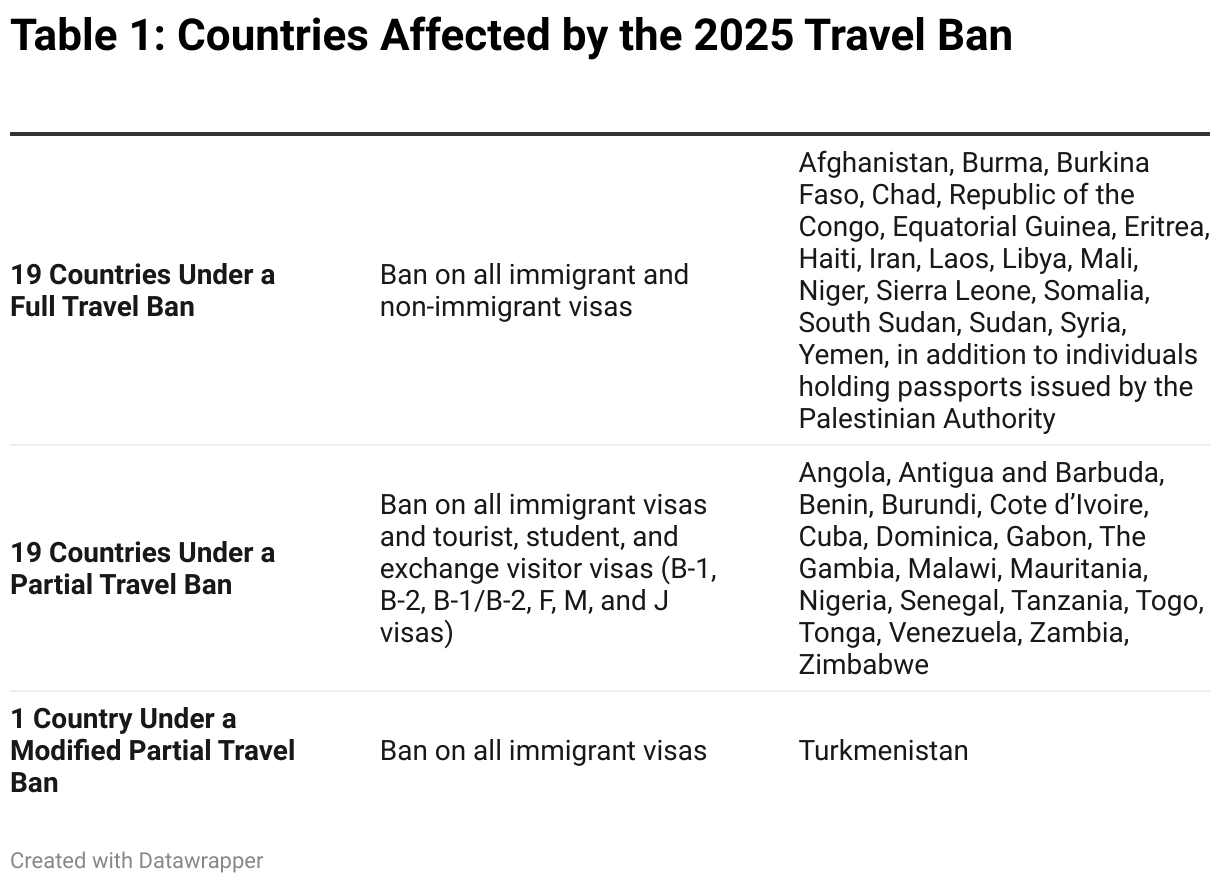
Last year, the Trump administration issued two proclamations restricting or limiting the entry of nationals from 39 countries. As a result, fans from those nations will be unable to attend any World Cup matches in the United States, unless they had already obtained visas prior to the travel ban’s enactment or manage to qualify for one of two narrow exceptions.
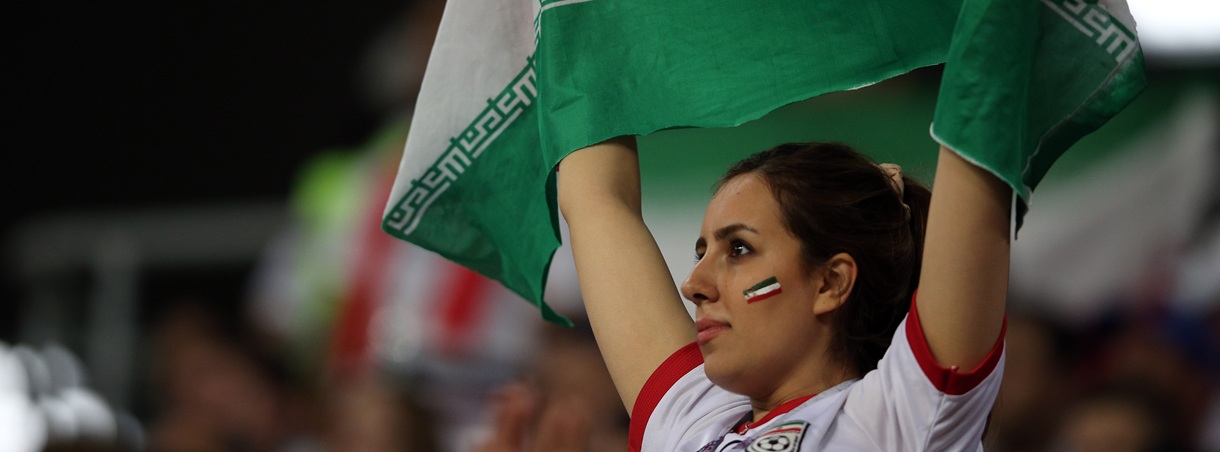
Of the 48 nations that have qualified for the tournament, fans from Côte d’Ivoire, Haiti, Iran, and Senegal are all subject to the ban.
As of April 2, 2026, the U.S. State Department implemented an expansion of its “Visa Bond Program.” The program requires citizens or nationals from 50 countries to pay a bond of up to $15,000 before traveling to the U.S. temporarily for business or pleasure. Five World Cup qualified countries, Algeria, Cabo Verde, Côte d’Ivoire, Senegal, and Tunisia, are impacted, though reporting indicates FIFA is pushing for exemptions for players and staff competing this summer.
There is also uncertainty about whether the Iranian soccer team will play in the World Cup. Normally, national teams are exempt from travel bans and given a carveout for athletes, coaches, and their immediate relatives. However, due to the ongoing war between the United States, Israel, and Iran — and a recent Truth Social post from President Donald Trump calling the Iranian players’ safety into question should they travel — the team’s participation remains up in the air. The Iranian federation formally asked FIFA to move its three World Cup group games from the United States to Mexico, but their request was denied.
Upon arrival: Spector of immigration enforcement hangs over the World Cup
For some players and fans, getting to the United States may only be half the battle.
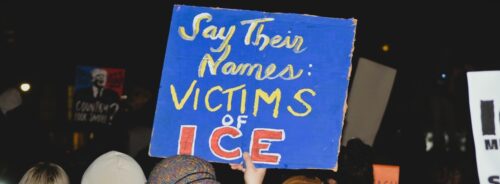
Those traveling from abroad could encounter immigration agents as soon as they arrive. U.S. Customs and Border Protection (CBP) agents are searching travelers’ phones at an increasing rate at ports of entry, including their social media activity, with over 55,000 searches in fiscal year 2025 alone. Meanwhile, Immigration and Customs Enforcement (ICE) agents remain deployed at certain major U.S. airports as its umbrella agency, the Department of Homeland Security (DHS), faces its longest-ever shutdown. DHS Secretary Markwayne Mullin even said that customs officials could stop processing international travelers at airports in so-called “sanctuary cities,” which would be disaster for tourism, commerce, and certainly the World Cup. At least six of the 11 U.S. host cities could be considered “sanctuary” jurisdictions.
At home, ICE Acting Director Todd Lyons previously said his agency would play a “key part” in security during the World Cup, similar to their role in other major sporting events. It remains to be seen whether Lyons’ impending departure, scheduled for May, will prompt a change in policy or rhetoric before the tournament begins.
The threat of ICE is impacting U.S. workers too. UNITE HERE Local 11, which represents 2,000 workers at SoFi Stadium in the Los Angeles area, filed a formal complaint to the National Labor Relations Board calling on FIFA and the stadium’s owners to restrict ICE’s access to the stadium during the tournament. The union is also threatening to strike over a new bargaining agreement, putting in jeopardy the eight World Cup games scheduled to be played at SoFi, including the U.S. Men’s National Team home opener on June 12.
What is FIFA doing about this?
Despite projecting public confidence that the World Cup will remain unaffected by the Trump administration’s immigration policies, FIFA is privately showing concern.
FIFA President Gianni Infantino is reportedly considering asking President Trump for a moratorium on ICE raids across the country during the month-long tournament. Infantino has developed a close relationship with the president in recent years, including attending Trump’s second inauguration and presenting him with the FIFA Peace Prize during the World Cup draw in Washington DC last December.
FIFA and the White House allegedly made a deal that ICE would not conduct enforcement during the FIFA Club World Cup last summer, considered to be a dress rehearsal for this year’s tournament.
Asked at the Semafor World Economy Summit whether the travel ban and other restrictive immigration policies could hurt the tournament, Infantino said, “We will make sure that all the teams, the players, the officials, can come…family members, even fans.”
The takeaway
With reports of declining tourism numbers, astronomical ticket and transportation prices, and the real risk of empty seats, it is no surprise that FIFA is trying to secure last-minute concessions from the White House to assuage fans’ concerns and boost World Cup attendance. But with just 50 days to go, it may be too little, too late.