 The American Immigration Council is a non-profit, non-partisan organization.
 Over 150 years ago, with the embers of the Civil War still smoldering, members of Congress gathered to write the 14th Amendment. In its very first clause they wrote a single, straightforward sentence: “All persons born or naturalized in the United States, and subject to the jurisdiction thereof, are citizens of the United States and of the State wherein they reside.” In the generations since, this basic rule has been acknowledged to be as simple as it seems on its face; under the 14th Amendment, subject to only narrow exceptions, any person born in the United States is a citizen, no matter their parents.
President Trump wants to ignore all that. In January 2025, he issued an executive order which instructed the federal government to deny citizenship to any child born to parents who were neither citizens or lawful permanent residents (people with green cards). This executive order was swiftly blocked in every single court that heard a case against it. Today, the Supreme Court heard oral arguments in Trump’s final attempt to revive this effort to rewrite the accepted understanding of the 14th Amendment — and the justices sounded deeply skeptical of the Trump administration’s position.
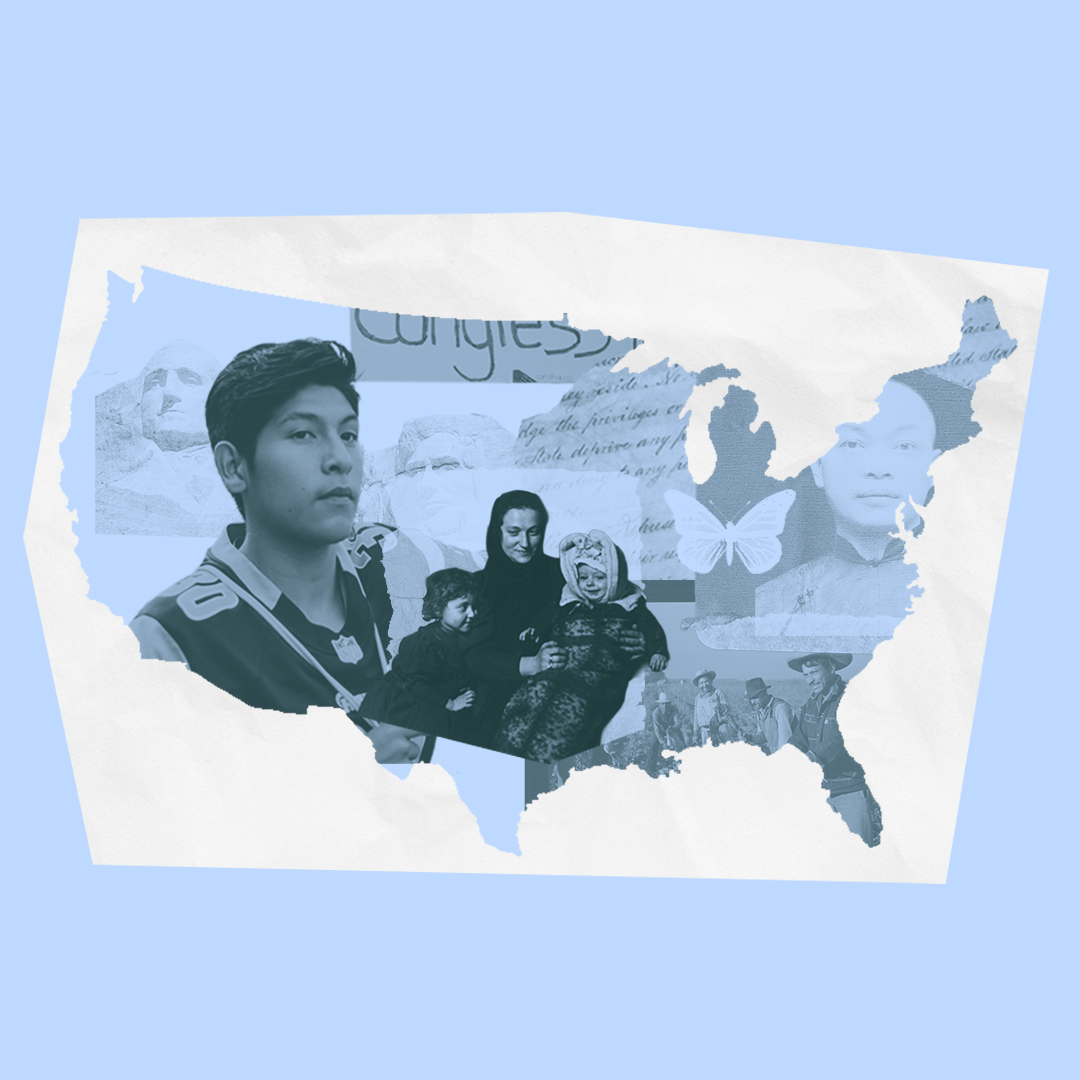
The first major test of the simple words in the 14th Amendment came 30 years after it was drafted, at the height of anti-Chinese sentiment. In 1895, Wong Kim Ark, a young man born in San Francisco to Chinese immigrant parents — who were, under existing U.S. law, ineligible ever to become citizens themselves — returned to the United States after a short trip to China. On his return, a customs inspector in San Francisco refused to admit him and detained him instead. In a historic parallel to the Trump admin’s efforts to narrow the 14th Amendment, this government decision came after years of lobbying by anti-Chinese advocates who argued that children born to Chinese parents were “at the moment of birth subject to a foreign power” and therefore not covered by the 14th Amendment.
This 19th century effort to rewrite the 14th Amendment to exclude children of immigrants failed. A judge released Mr. Wong soon after, and in 1898, the Supreme Court affirmed in a landmark 6-2 decision that the plain text of the 14th Amendment meant what it said; all persons born in the United States are U.S. citizens, unless they fall within one of the narrow exceptions; children of diplomats who receive diplomatic immunity, children born to hostile soldiers of an occupying army, or children born to sovereign Native American tribes). Anyone else can gain citizenship at birth only through laws passed by Congress (for example, Congress made Native American birthright citizens in 1924).
This understanding of the law has persisted for 125 years, and during oral arguments on Wednesday, the Supreme Court expressed significant concerns with the Trump administration’s attempt to replace it with its own preferred interpretation.
President Trump’s Department of Justice resurrected a legal theory which was relegated to the legal fringes after its defeat in the Wong Kim Ark case over 100 years ago. Specifically, the Trump administration argues that to be “subject to the jurisdiction” means to be within the full “political” jurisdiction of a nation. Thus, in their view, the babies of undocumented immigrants and any lawfully present immigrants without green cards are not entitled to birthright citizenship, because their parents’ presence in the country is either temporary or banned.
During oral arguments, the government, represented by Solicitor General John Sauer, claimed that the drafters of the 14th Amendment sought only to offer birthright citizenship to children of enslaved people who for years had been denied citizenship under the pre-Civil War Dred Scott decision, in which the Supreme Court held that children of enslaved people born in the United States were not citizens by birth.
Sauer argued that the drafters of the 14th Amendment deliberately steered the United States away from the prevailing common-law rules of birthright citizenship that pre-dated the Dred Scott decision and instead aimed to limit birthright citizenship only to those whose parents were legally “domiciled” in the United States.
Domicile is a legal term; generally, it refers to someone’s intent to live somewhere permanently. Sauer argued that people living in the United States with nonimmigrant visas and undocumented immigrants who are in violation of civil immigration laws cannot legally become “domiciled” because their long-term presence is restricted by law, and therefore, their children should not acquire citizenship at birth in the United States.
This position was met with pushback, including from the more conservative justices. Chief Justice Roberts, the second justice to weigh in, suggested that the Trump administration’s arguments were “quirky,” and that the exceptions they were trying to carve out didn’t seem to follow from the exceptions that the Supreme Court acknowledged in Wong Kim Ark. When Sauer later argued that modern policy reasons like “birth tourism” justified a restriction on birthright citizenship, Roberts quipped, “It’s a new world, [but] it’s the same Constitution.”
Throughout his time at the lectern, Sauer also faced skepticism from Justice Gorsuch, who said that it was “striking” to him how infrequently the concepts of allegiance and domicile — the keys to Sauer’s arguments — were discussed during the congressional debates around the 14th Amendment. Gorsuch later drew attention to a lecture by Justice Marshall Harlan — years after he dissented in Wong Kim Ark — in which he expressly said that the court’s ruling in the case covered temporary visitors to the United States.
While most of the debate focused on the Trump administration’s claim that parents had to be “domiciled” for their children to acquire citizenship at birth, justices also pressed the government on the practical ramifications. Justice Barrett asked how babies dropped off at hospitals without any knowledge of who their parents are would be covered under the government’s rule, and seemed unsatisfied with the government’s response that the baby would be a citizen thanks to a law passed by Congress, asking “Yeah, but what about the Constitution?” Justice Jackson also asked Sauer to explain how it would be determined at birth whether a child was a citizen or not, with Sauer responding that Social Security systems would make a first determination and if any parent believed a mistake was made, they could sue.
Only Justice Alito seemed to openly support the government’s position, pushing Cecillia Wang of the ACLU on the fact that the Wong Kim Ark decision mentions domicile over 20 times. In response, Wang argued that this was limited to the facts of the case. Justice Jackson also pointed out that the repeated references to Wong’s parents as having been domiciled in the country may have been an effort by the justices to assuage fears of many Americans at the time who held anti-Chinese attitudes and believed no Chinese person could ever assimilate.
While the justices asked tough questions of both sides, more of them appeared skeptical of the government’s position. Justice Kavanaugh opined that he might agree as a policy matter that children of undocumented immigrants should not be birthright citizens, but also noted that other countries’ practices don’t directly impact U.S. law, and agreed that if the Court were to accept the traditional understanding of Wong Kim Ark — in line with the general principle of letting precedent stand — then “this is a short opinion.” (That line got a laugh from the audience.)
If the Supreme Court were to agree with President Trump’s theories, the ramifications would be severe. Every year, hundreds of thousands of children are born to undocumented immigrants and people present on nonimmigrant visas (such as H-1B visas). These children would no longer be citizens. Some might even be rendered stateless, depending on the status of their parents. Without citizenship, they would be born undocumented and even potentially deportable immediately on birth. This would even be true of children born to parents here lawfully on nonimmigrant visas, as immigration status does not pass down at birth and their parents would have to file new paperwork to get a visa for their baby. This could create a permanent American underclass of millions of immigrants.
The impacts would be felt by American citizens as well. After every birth, parents would have to gather their own paperwork and prove their own citizenship or immigration status to the federal government to have their child registered as a citizen. No longer would a birth certificate be the sole proof necessary. And the status of tens of millions of American citizens born since the 14th Amendment passed would also be thrown into question. After all, even though President Trump’s executive order itself only applied to people born after it went into effect — and the solicitor general denied that the administration was trying to strip existing citizens of their status — if the Supreme Court were to rule that the 14th Amendment didn’t cover them, they would be legally vulnerable to a future policy change.
For those who don’t want to see this parade of horrible come to pass, the justices’ skepticism of the administration’s arguments this morning was heartening — although nothing is certain with the Supreme Court, and oral arguments don’t always reflect the direction the court ultimately takes (a decision is expected by the end of June). But for many, the fact that this topic was even up for debate was itself a danger to basic constitutional rights, and a sign of how far the Trump administration wants to go in its war on immigrants.