 The American Immigration Council is a non-profit, non-partisan organization.
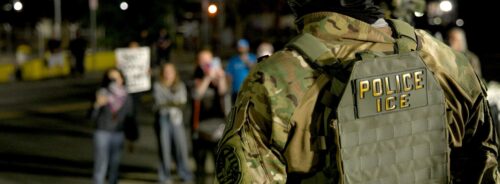
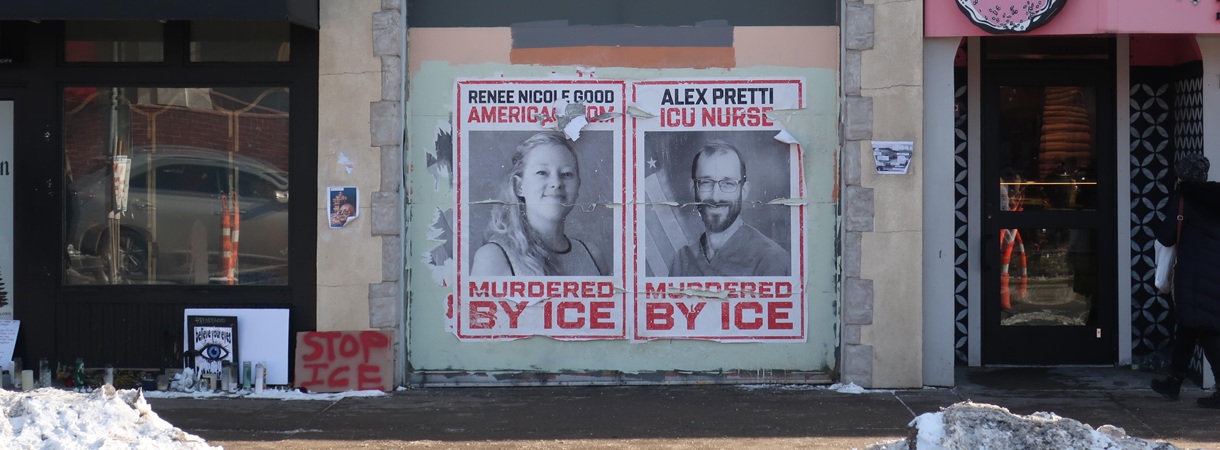
Last December, thousands of agents descended on the Minneapolis metro area in a pair of federal immigration enforcement operations. What followed was chaos: federal officers arrested thousands of immigrants (some here lawfully), violently clashed with protestors, deployed tear gas in residential communities, and shot and killed two U.S. citizens, Alex Pretti and Renee Good. The operations, targeting Minneapolis’ Somali community, would turn out to be two of the largest federal enforcement operations in U.S. history.
Minnesota Governor Tim Walz signed Executive Order 26-05 in March 2026, which called for establishing a council whose aim would be to build a historical record of what happened during “Operation Metro Surge” and “Operation PARRIS.” The Truth Council’s mandate was to document the actions of federal immigration agents, the impact on the residents of Minneapolis, and the ways local organizations and individuals supported each other and protested during the operation, often at great personal risk.
The Truth Council has met 13 times since June, collecting data and hearing direct testimony from impacted community members. The interim reports released by the Truth Council paint a picture of a city thrown into chaos and dramatically disrupted for months, imposing severe economic costs not only on individual residents, but on businesses, schools, and the local government. They also make clear that this innovative effort to hold the Department of Homeland Security accountable for its actions during the operations have been valuable and could be replicated by other states facing widespread impacts of mass deportation.
Economic impact of Operations Metro Surge and PARRIS
In early September, the Truth Council published its first reports on the impacts of the federal surge. A September 9 report on the impact on wages and labor markets found that workers in the Twin Cities metro area lost $244 million in wages as the federal operation closed businesses and forced many employees to remain home. Businesses lost $445 million in revenue as they either shut their doors or saw dramatically fewer customers. In total, 60% of businesses reported a measurable drop in revenue, with restaurants and retail seeing the biggest impact.
The impact of Operations Metro Surge and PARRIS on children
Another report released on September 9 tracked the impact of the federal operations on children in the Twin Cities metro area. In total, more than 70 Minnesota children were detained between December 1, 2025, and March 10, 2026, many of whom were detained for weeks and some deported.
Children’s education in particular was impacted. 80% of public school leaders statewide reported that the federal operations “negatively impacted students’ ability to learn,” with more than 75% of schools reporting that absences increased during the surge. One school district reported that nearly 30% of its students avoided going to school in the week after federal agents detained a student.
Many children also missed healthcare appointments during the surge, as they remained at home out of fear of leaving the house, with an 80% increase in missed pediatric care for Spanish-speaking families.
Food insecurity also increased during this time, as students missed meals that they would have received at school. In total, Minneapolis schools served over 183,000 fewer meals in January than compared to the previous year. A separate report released by the Truth Council drives home this impact, revealing that requests for food assistance from the Twin Cities United Way nearly doubled in January.
Widespread use of force and threats by federal officers
On September 29, the Truth Council published a report collecting crowd-sourced volunteer data testimony on federal misconduct. The report brings together nearly 4,200 individual reports of actions taken by federal immigration officers during the two operations and in the months after. In 431 of these actions — more than 10% — observers reported threats or other hostile actions made by federal agents, with 287 of those directed at the observers themselves. In 55 cases, the officer drew their gun, and in 60 cases, their officer drew a weapon such as a taser or a pepper ball gun.
This latter finding comes just as Minnesota seeks to hold ICE officer Gregory Moran Jr. for an incident in February where the state alleges that he drew his weapon and pointed it at a Minnesota man in an accused road rage incident, after he was blocked from driving on the shoulder in his unmarked rental SUV.
Measuring the groundswell of opposition to the federal surge
The reports also highlight the ways in which the Minneapolis volunteers came together to support individuals impacted by the federal surge. According to another report released on September 29, three organizations alone (Faith in Minnesota, MN Unidos, and the Immigrant Defense Network) carried out over 100,000 trainings for volunteers seeking to help. Mutual Aid networks helped provide over $21 million for rent relief in the Twin Cities metro area, with 42 separate faith, school, and neighborhood funds providing immediate rent relief.
Faith in Minnesota, a faith-based community organization, testified that it alone raised $7.7 million in mutual aid and trained 6,500 people. Amazingly, just 1% said they would not volunteer again in the future, despite “threats and other significant challenges faced.” Of their volunteers, 81% said “protecting my community” was a top motivation for volunteering, followed by “faith or spiritual calling” at 69% and “anger or urgency” at 65%. This level of volunteer engagement fueled the groundswell of opposition that the Trump administration faced during Operations Metro Surge and PARRIS.
Educating the public on the federal government’s actions
Finally, on September 29, the Truth Council also published a data report collecting information on the immigration policies and systems which led to the harms of Operations Metro Surge and PARRIS One portion of that report examines the claim made by federal officials that the operation targeted “the worst of the worst.”
The Truth Council found that DHS listed 677 people on its “worst of the worst” website from the Minnesota operations. However, the Minnesota Department of Corrections audited each case, and determined that 72% (487) had never served time for a felony in Minnesota, and that 27% were in fact directly transferred to ICE through existing procedures. The Truth Council’s final meeting occurred on October 13 and a final report is forthcoming.
This experiment in accountability – following the Illinois Accountability Commission’s documentation of “Operation Midway Blitz – has proven that local communities have a vital role in building a historical record of the impact of mass deportation operations. And while the Trump administration has since abandoned the mass raids that characterized Operations Metro Surge and PARRIS (opting for ramping up enforcement more “quietly”), the harm that was caused remains visible in Minneapolis.