 The American Immigration Council is a non-profit, non-partisan organization.
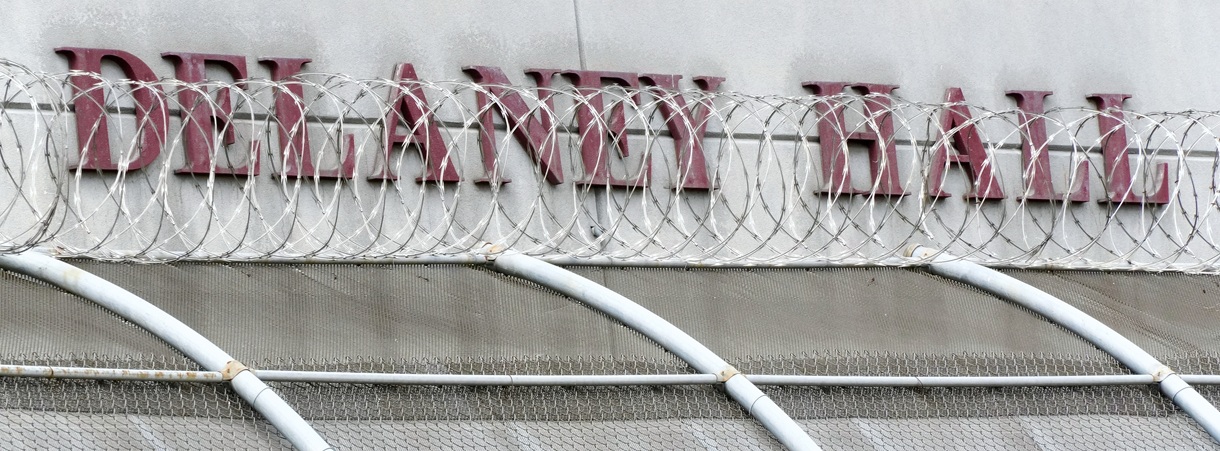
 U.S. Immigration and Customs Enforcement (ICE) often uses secrecy to conceal its own shortcomings. The latest example of the agency’s elusive behavior came this week, as ICE restricted lawmakers’ access to Delaney Hall, a detention center in Newark, New Jersey. ICE turned away the New Jersey governor and others during an ongoing hunger strike while pepper spraying hundreds of protestors.
Though aggressive, this behavior is nothing new. Since taking office, the Trump administration has repeatedly tried to block congressional oversight into immigration detention. On May 11, ICE issued a memo that again seeks to restrict oversight by members of Congress and their staff at ICE’s detention facilities.
The memo states that ICE will facilitate meetings between people in detention and the requesting congressional office only if the individuals in detention are specifically identified by the office requesting the meeting. ICE will also require the office to submit valid proof of consent from the detained person and two-days advanced notice for any visit.
These new requirements once again block members of Congress from freely speaking to people in detention and obtaining crucial information about the conditions of their confinement. Previous efforts by former Department of Homeland Security (DHS) Secretary Kristi Noem to restrict congressional access have led to multiple court orders against the administration. Congressional oversight is crucial at this moment considering ICE’s rapid expansion of immigration detention.
Obstructing visits from elected officials to detention facilities has become ICE’s calling card. In a well-publicized event last year, federal agents arrested three members of New Jersey’s congressional delegation, along with the mayor of Newark after they were denied access to Delaney Hall. This week’s clash at the ICE facility escalates that pattern.
The latest ICE memo highlights that members of Congress often provide lists of specific individuals in detention they wish to meet, ask to meet with individuals who are part of specific demographic groups or have been arrested in specific operations, or post sign-up sheets to find individuals to meet them. These meeting procedures make it easier for members of Congress to focus on the issues they are investigating; something which ICE seems eager to restrict.
Congressional visits to ICE detention centers are a useful tool for the public to know what happens to detained people. For example, Congressman Jason Crow has provided periodic reports from his unannounced visits to the Aurora Detention Center in Colorado, a detention facility run by a private prison company that is notorious for its dismal conditions. And in January, Senator Jon Ossoff issued a report on human rights abuses at ICE detention facilities based on an inquiry that included dozens of interviews with people detained at different centers throughout the country.
Members of Congress sued ICE to challenge the agency’s June 2025 policy requiring they provide seven-day notice before inspecting ICE facilities. Senator Ossoff’s report noted that ICE had attempted to obstruct congressional oversight by temporarily denying access to a facility based on arbitrary changes in notice requirements. In February a federal court judge ruled that the policy violated parts of the law that appropriated funding for the U.S. Department of Homeland Security, which prohibits DHS from using funds to prevent members of Congress access to facilities for the purposes of conducting oversight.
These visits also provide crucial information to the public on ICE’s ballooning budget and expanding detention apparatus. ICE received $75 billion in 2025 through the One Big Beautiful Bill Act, $45 billion of which is specifically for detention. Earlier this month, both chambers of Congress agreed to provide an additional $70 billion to ICE’s funding, although the bill has yet to be finalized.
The public needs to know what the government is doing with these unprecedented levels of tax-payer funding, particularly when oversight reports such as those published by Senator Ossoff have found systemic medical neglect and abuse, and denials of adequate food and water.
This increased funding undercuts one of ICE’s claims that the visits are resource intensive. As one of the most highly funded law enforcement agencies in the federal government, with a budget that rivals some nation-states, it is difficult to fathom that ICE cannot find the resources to accommodate unannounced visitors.
The latest memo also claims that congressional oversight activities like taking pictures or filming inside facilities disrupt operations. This underscores the administration’s resistance to transparency and oversight, since recordings shed light on the treatment of individuals and conditions inside facilities.
Unannounced visits provide members of Congress with access on behalf of the public so that they can see and experience what is happening behind closed doors without giving ICE an opportunity to provide a sanitized version. It also protects against the possibility that individuals are transferred to different facilities before they can speak to their members of Congress. These concerns are not idle speculation; ICE has been accused at least twice of emptying out detention centers just 24 hours before members of Congress were set to visit.
Congresswoman LaMonica McIver, one of the members of Congress arrested last year while trying to access Delaney Hall, recently introduced a bill that would secure access to detention facilities by members of Congress. At the very least, ICE should ensure that people in detention have access to information in their native languages to facilitate meetings with members of Congress.
Oversight into detention facilities is extremely important at this moment, especially as the system has become deadlier and larger than ever. While the Freedom of Information Act (FOIA) can provide some glimpses into these conditions, relying exclusively on FOIA is ineffective due to the lengthy delays requesters experience when seeking records from ICE, as well as limits on the information ICE is required to provide. Given these concerns, Congress must enact measures to ensure its oversight role on behalf of their constituents is not usurped by this administration.