State and Local

Arizona’s SB1070 Champion, State Senator Russell Pearce, Loses in Recall Election
Arizona state senator Russell Pearce, the leading force behind Arizona’s SB 1070 and other anti-immigrant legislation, was defeated in a recall election Tuesday. Fellow Republican Jerry Lewis—a moderate on immigration issues—won with 54% of the vote. Citing Pearce’s narrow anti-immigrant agenda and the damage SB 1070 inflicted on the state, a group called Citizens for a Better Arizona began the recall effort back in January. Today, many in Arizona and across the U.S. celebrate Pearce’s defeat as a victory for practical solutions over extremist rhetoric and anti-immigrant proposals. Pearce is believed to be the first Arizona state legislator to face a recall election. Read More
Bad for Business: How Alabama’s Anti-Immigrant Law Stifles State Economy
Although key provisions of Alabama’s HB 56 are on hold while its constitutionality is being tested in the courts, evidence is mounting of the growing fiscal and economic impact of the new law. State economic experts and business leaders agree that the law has already caused hardship for Alabama’s businesses and citizens. Read More

Provisions in Alabama’s Immigration Law Go Further Than You Think
It’s no stretch to call Alabama’s new immigration law (HB 56) extreme—especially the provision (since enjoined) which required schools to check the immigration status of students and made it a criminal misdemeanor for an unauthorized immigrant to fail to carry immigration documentation. Two provisions that may have flown under the radar, however, are the contract and business transaction which infringe on individuals’ ability to navigate everyday life (such as access to water) and leave them vulnerable to exploitation and abuse. Sadly, this is exactly what the law’s author had in mind. A new report, Turning Off the Water: How the Contracting and Transaction Provisions in Alabama's Immigration Law Make Life Harder For Everyone, analyzes just how far these provisions go. Read More
Checklist for Estimating the Costs of SB 1070-Style Legislation
(Updated November 2011) - Arizona’s infamous anti-immigrant law, SB 1070, has spawned many imitators. In a growing number of state houses around the country, bills have been passed or introduced which—like SB 1070—create new state immigration crimes and expand the power of police to enforce immigration laws. Some state laws would make E-Verify mandatory for all businesses, require schools to check students’ immigration status, or make it a crime to “harbor or transport” unauthorized immigrants. State legislators who are thinking of jumping on the immigration enforcement bandwagon, however, would be wise to consider the costs of such legislation. State immigration enforcement laws impose unfunded mandates on the police, jails, and courts; drive away workers, taxpayers, and consumers upon whom the state economy depends; and invite costly lawsuits and tourist boycotts. These are economic consequences which few states can afford at a time of gaping budget deficits. Read More
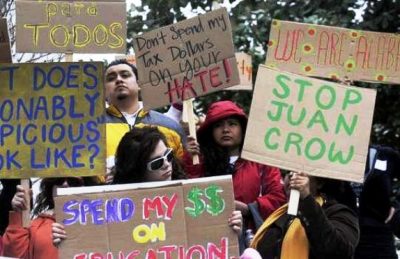
Congressional Members to Join Civil Rights Groups in Fight Against Alabama’s “Juan Crow” Law
In the days following passage of Alabama’s extreme immigration law (HB 56), many business, religious and civil rights leaders spoke out about the law’s damaging impact on immigrant communities, farms, businesses, and schools. Since then, many notable community and civil rights leaders have stepped forward to add their voice to those demanding a repeal of the law. The Alabama NAACP, for example, recently joined immigrant rights groups to call for an end to what one African American minister described as “Alabama’s worst times since the days of segregation and Jim Crow.” This week, Illinois Congressman Luis Gutierrez met with members of several congressional caucuses—Hispanic, Black, Asian Pacific American and Progressive—to address what he calls Alabama’s “civil rights emergency.” Read More
DOJ’s Lawsuit Against South Carolina Latest Legal Challenge to State Immigration Laws
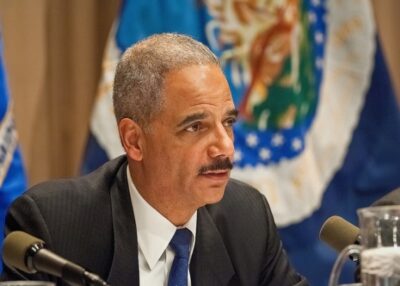
BY KAREN TUMLIN, MANAGING ATTORNEY, NATIONAL IMMIGRATION LAW CENTER Yesterday, the U.S. Department of Justice (DOJ) filed suit against South Carolina, challenging the state’s extreme anti-immigration law (SB 20). With this action, the Department of Justice charges that South Carolina, like Arizona and Alabama, have passed unconstitutional immigration laws. Civil rights groups (including the National Immigration Law Center) agree. Coalitions have filed suit in five states—Utah, Indiana, Georgia, Alabama, and South Carolina—that passed their own Arizona-inspired laws in 2011. Fortunately, most of these states have seen their new, misguided laws lose much of their bite through civil rights coalition-led legal challenges. Here’s a round-up of the status of these legal cases. Read More
Turning Off the Water: How the Contracting and Transaction Provisions in Alabama’s Immigration Law Make Life Harder
Turning Off the Water: How the Contracting and Transaction Provisions in Alabama's Immigration Law Make Life Harder For EveryoneBy Joan Friedland Since passage of HB 56, Alabama’s extreme new immigration law, many are aware of the most immediate consequences of the law—rotting tomatoes, racial profiling, and frightened school children. However, two provisions of the law that have the potential to be extremely damaging to the state’s economy, rule of law, and municipal functioning have received comparatively little attention. These two provisions have been in effect since September 30,, 2011, and are likely to result in an increase of exploitation of workers, erosion of fundamental legal protections, and denial of access to state and local government services and activities. In other words, these provisions will undoubtedly impact the daily lives of all Alabamians. Read More

Alabama Law Enforcement, Courts Implementing New Law in Different Ways Across State
As if things weren’t chaotic enough in Alabama, reports now find that law enforcement and courts vary widely on how they apply the state's new immigration law, creating different rules and consequences for individuals depending on a judge or officer’s understanding of the law. As the controversial law (HB 56) itself continues to change as it makes its way through the court system, many law enforcement officers are unclear about which provisions still stand and have yet to receive the training necessary to implement the law. Judges, too, are on different pages on how to interpret the law, meaning that an individual might receive a different ruling from one judge to the next depending on the judge's understanding of the law. Read More

Restrictionist Lawyer Reveals Long-Term Assault on Immigrant Children
Today, the head of the legal arm of one of the most notorious restrictionist groups in the nation boldly admitted his work on Alabama’s new anti-immigrant law aims to end public education for the children of immigrants. Michael Hethmon of the Immigration Reform Law Institute (IRLI), an offshoot of the Federation for American Immigration Reform (FAIR), made no bones about being the author of the education provision in HB 56—which on its face requires public schools to determine the immigration status of enrolling students and their parents, but in reality chips away at children’s ability to get an education. Read More

How Will DHS Continue to Partner on Existing State Enforcement Programs Given Legal Challenge to Alabama’s Law?
Today, several newspapers reported on DHS Secretary Janet Napolitano’s statement that the federal government is not going to help Alabama implement its new immigration law, leaving many to wonder how the federal government will continue running existing state and local immigration enforcement programs like Secure Communities. On one hand, the federal government has sued Alabama claiming that its immigration law (HB 56) is unconstitutional. On the other, the federal government regularly partners with state and local police agencies to identify unauthorized immigrants for potential deportation. Secretary Napolitano now faces the difficult decision of what DHS will do with unauthorized immigrants in Alabama who may have been picked up under the new law. Read More
America's story is an immigrant story.