Interior Enforcement
Bringing Fairness to the Immigration Justice System
Washington D.C. – Thursday, the Senate Judiciary Committee continues mark-up of S. 744, the Border Security, Economic Opportunity, and Immigration Modernization Act. The Committee will complete work on Title Four and then begin to take up amendments related to Title Three, which addresses interior enforcement programs like E-Verify, as well… Read More
Enforcement Without Focus: Non-Violent Offenders Caught in the US Immigration Enforcement System
Since the Department of Homeland Security (DHS) was created in 2003, its immigration-enforcement agencies—Customs and Border Protection (CBP) and Immigration and Customs Enforcement (ICE)—have been officially devoted to the protection of U.S. national security and the prevention of terrorist attacks. However, much of the work done by CBP and ICE on a day-to-day basis involves apprehending and deporting non-violent immigrants who have only committed immigration offenses such as unlawful entry or re-entry into the United States. The highly punitive treatment of these immigration offenders serves no national-security purpose and is not an effective deterrent. A new report released by the University of Arizona’s Center for Latin American Studies identifies three enforcement programs that have contributed significantly to an over-emphasis on low-priority targets: Operation Streamline, the Alien Transfer and Exit Program (“lateral repatriation”), and Secure Communities. The report, In the Shadow of the Wall: Family Separation, Immigration Enforcement and Security, is based on data from the Migrant Border Crossing Study. During 2010, 2011, and 2012, a team of researchers from the United States and Mexico conducted survey interviews with 1,113 recent deportees about their experiences crossing the border, being apprehended by U.S. authorities, and being repatriated to Mexico. The surveys yield new insight into the conduct and consequences of U.S. immigration-enforcement programs. Operation Streamline Read More
Aggravated Felonies: An Overview
This fact sheet provides an overview of “aggravated felonies” under federal immigration law and the immigration consequences of being convicted of an “aggravated felony.” Read More

Recognizing Immigrant Women’s Needs in Immigration Reform
While the recent debate over reauthorization of the Violence Against Women Act and the Trafficking Victims Protection Act may have reminded the nation that there are “women’s issues” in immigration law, it doesn’t necessarily follow that most people regard immigration reform as a woman’s issue. Despite the fact that immigrant women make up a growing share of workers, entrepreneurs, single heads of households, and new voters—while remaining primary caregivers in families—the laws we craft to reform our broken immigration system have often been insensitive to the obstacles and challenges immigrant women face in applying for immigration status. Read More

Immigrants Deserve Basic Miranda-Like Warnings When Arrested
As anyone who has watched an episode of Law and Order knows, police officers must give certain warnings to anyone placed under arrest, including that they have the right to an attorney and that the statements they make can be used against them in court. In the 1966 decision Miranda v. Arizona, the Supreme Court explained that providing these warnings prior to police questioning ensures that criminal suspects are aware of their rights and therefore are better protected against the intimidation inherent in police interrogations. Read More

Putting the White House Immigration Reform Proposal into Perspective
Over the weekend, the press reported on a leaked draft of portions of the White House’s immigration proposal, and the coverage since then has been largely a frenzied discussion of whether the leak will kill Senate negotiations. There shouldn’t be much chance of that, given the immense pressure on the Senate to not only come up with a proposal, but actually draft legislation that can be debated and voted on this year. Now that at least some of the Administration’s ideas are out in the public eye, it’s useful to treat them as what they are: basic discussion points on what might be in an eventual bill. In the long run, the draft proposal may help to encourage the constructive conversation that the Administration has sought to have on reform. Read More
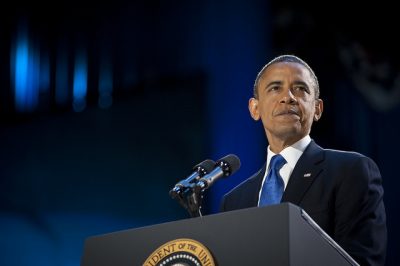
President Lays Out His Vision For Immigration Reform
After eight Republican and Democratic senators yesterday released their framework for comprehensive immigration reform, President Obama laid out his administration’s vision today of what he thinks should be included in the bill to overhaul the nation’s immigration system. He praised the bipartisan principles, which mirror the White House’s 2011 blueprint for immigration reform. “At this moment, it looks like there’s a genuine desire to get this done soon,” he said in his speech from Nevada. “And that’s very encouraging.” Read More
Removals Remain the Starkest Measure of Immigration Enforcement
For more than a decade, the general thrust of U.S. immigration policy has been aimed at expanding the grounds of removal and the tools for facilitating deportations from the country. Not surprisingly, this has come at an enormous cost. Although the figure has been disputed by restrictionists, a report from the Migration Policy Institute recently found that the federal government spent $18 billion last year on immigration enforcement. Dollars are not the only way to measure immigration enforcement, however, as the number of removals has itself skyrocketed in recent years. Read More

The U.S. Has Been Implementing an “Enforcement-First” Immigration Policy for More Than a Decade
Anti-immigrant activists often say that we must first enforce current U.S. immigration laws before even considering any reforms that might grant legal status to unauthorized immigrants already living in the country. However, as the Migration Policy Institute (MPI) documents in a comprehensive new report (and a more condensed Report in Brief), that is what we have been doing for more than a decade. Ever since 9/11, the expansion and intensification of immigration enforcement has been the one approach to immigration policy that the majority of lawmakers on both sides of the aisle have whole-heartedly endorsed. This suggests that the “let’s wait a while” approach advocated by anti-immigrant groups is completely unjustified, and has been for a long time. Read More
A Decade of Rising Immigration Enforcement
With roughly 11 million unauthorized immigrants living in the United States, some question whether the nation’s immigration laws are being seriously enforced. In truth, due to legal and policy changes in recent years, the immigration laws are enforced more strictly now than ever before. The Department of Homeland Security (DHS) has reported record numbers of removals during the Obama administration, especially of noncitizens with criminal convictions. Meanwhile, fewer noncitizens are trying to enter the country illegally, and those caught by the Border Patrol are now regularly charged with federal crimes. Together, these trends reflect a sweeping and punitive transformation in U.S. immigration enforcement. Click Here for PDF Version “Removals” & “Returns” When noncitizens who violate the immigration laws are forced to leave the United States, their departure is classified as a “removal” or a “return.” (See the glossary for definitions of these terms.) DHS reported 391,953 “removals” during the 2011 fiscal year, slightly below the record set in 2009. Meanwhile, DHS reported 323,542 “returns” in 2011, the lowest number since 1970 {Figure 1}. Figure 1: DHS “removals” & “returns” FY 2002-2011 Read More
America's story is an immigrant story.