Interior Enforcement

States Drive Positive Change on Immigration While House Is Stuck in Low Gear
Despite the slow pace of immigration reform in the House of Representatives, it has been a banner year for legislation at the state level to help undocumented immigrants living in the U.S. As the National Immigration Law Center (NILC) explains in a new report, “Inclusive Policies Advance Dramatically in the States,” state legislatures approved laws allowing undocumented immigrants to obtain driver’s licenses, qualify for in-state tuition, and expand worker’s rights. And states and local governments considered measures to limit involvement with immigration enforcement. This was a sharp change from previous years when officials debated measures with provisions that mimicked Arizona’s SB-1070. In the wake of record numbers of Latino and Asian voters participating in the 2012 elections, several state legislatures by and large moved in a more positive direction as lawmakers from both parties supported pro-immigration measures. Read More

Newark Police Department Latest to Push Back on ICE Detainer Requests
The Newark Police Department is the most recent local law enforcement agency to announce that it will refuse requests by Immigration and Customs Enforcement to detain people who have been picked up for minor criminal offenses. Newark is the first city in New Jersey to stop honoring detainer requests from ICE, and the announcement follows news that New Orleans has also adopted a similar policy. Newark Police Director Samuel DeMaio signed the policy change on July 24: Read More

New Orleans Latest Locality to Shift Costly Immigration Enforcement Burden Back to Feds
New Orleans has stopped honoring detainer requests from Immigration and Customs Enforcement (ICE) officials—the first Southern city to do so—now that the Orleans Parish sheriff’s office will no longer detain people who are suspected of being undocumented immigrants. According to The New York Times, the sheriff’s office will “decline all ICE detention requests except when a person is being held on certain specific serious charges.” For individuals with those charges, the sheriff will defer to the recommendation of the criminal court. The parish sheriff will no longer investigate an individual’s immigration status. ICE may not conduct investigations into civil violations of immigration law in the jail. If ICE wants to conduct a criminal investigation in the jail, ICE must provide reasonable notice and opportunity for the individual’s attorney to be present at any interview. Read More
ICE Agrees to Release Thousands of Previously-Withheld Records
Washington, DC – Yesterday, a U.S. District Court in Connecticut approved a settlement in a Freedom of Information Act (FOIA) lawsuit challenging the refusal of Immigration and Customs Enforcement (ICE) to release tens of thousands of documents about the Criminal Alien Program (CAP), one of the agency’s largest enforcement… Read More
The Criminal Alien Program (CAP): Immigration Enforcement in Prisons and Jails
The Criminal Alien Program (CAP) is an expansive immigration enforcement program that leads to the initiation of removal proceedings in many cases. While CAP has existed in one form or another for decades, there is still much to be learned about the program, how it is organized, and how it works. What is known is that CAP extends to every area of the country and intersects with most state and local law enforcement agencies. For years, the CAP program has operated with little public attention and many of its elements have only recently come to light following FOIA litigation against Immigration and Customs Enforcement (ICE). The information obtained through the lawsuit regarding CAP’s current organization and staffing suggests CAP is not a single program, but a loose-knit group of several different programs operating within ICE. Other than a small number of staff responsible for the administration of CAP at ICE headquarters, there is no dedicated CAP staff. Rather, ICE pulls personnel and resources from across the agency to perform CAP-related functions. The ICE declarations and deposition also explain how CAP functions within prisons and jails. There appears to be little consistency in, and little or no policy governing, how CAP cooperates with state and local law enforcement agencies in different regions and in how CAP interacts with detainees in different facilities. Instead, CAP appears to function as an ad hoc set of activities that operate differently across the country and across penal institutions, raising questions about the adequacy of oversight, training, and accountability of the personnel implementing CAP. This information confirms that there is still much about CAP that remains unknown or unclear. Given the breadth of CAP, the centrality of its role in immigration enforcement, and its large impact on the immigrant community, it is critical that ICE clarify how CAP operates. Read More

TRUST Act Makes Progress in California
Just before the Fourth of July, the California Senate Public Safety Committee approved the TRUST Act by a vote of 4-2.. The state Assembly previously passed the measure in May, so now the bill heads to the Senate floor. It is the third version of the California TRUST Act considered by the state legislature, which “would limit who state and local police can hold for deportation.” Gov. Jerry Brown (D) vetoed a previous version of the bill last fall. Read More
Spotlight Moves to House After Senate Approves Immigration Bill
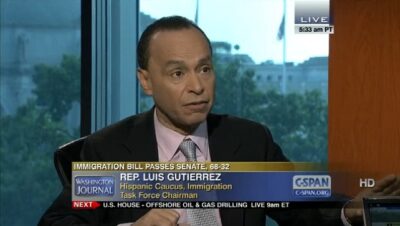
Now that the Senate has passed a sweeping measure to improve U.S. immigration policies, the attention turns to the House of Representatives, where it is unclear exactly when or how they will take up an immigration bill. The Associated Press reported that President Obama called House Speaker John Boehner (R-OH) and House Minority Leader Nancy Pelosi (D-CA) after the Senate vote to urge them to have the House act on an immigration bill. Earlier this week, Boehner said the House would not take up S. 744 and would do its own bill instead. If the House passed a separate immigration measure, then a conference committee with members from both chambers would meet to reconcile the differences. Read More

States Work To Improve Immigration Policies As Senate Immigration Bill Debate Begins
State legislatures are mostly winding down their 2013 legislative sessions after several states made huge strides on immigration reform. While Congress continues to debate how to overhaul the nation’s immigration system, several states have moved to make qualified undocumented immigrants eligible for in-state tuition rates and to allow undocumented immigrants to drive legally. These and other reforms at the state and local level are helpful changes to complement the national debate. Read More

Subtle but Dramatic Progress on Immigration Reform
Yesterday was day 3 of the Senate Judiciary Committee’s mark-up on S. 744, the Gang of Eight’s immigration bill. While it wasn’t as exciting as the first two days—no dramatic speeches or vocal disagreement—several important votes were taken to modify the mandatory E-verify program, adding and subtracting protections, safeguards, and reporting requirements. This lack of drama was a good thing, however, because there was far less posturing and far more legislating going on. Read More

Senate Committee Debates W Visas and E-Verify on Day Three of Immigration Bill Mark-up
For the third day of the Senate Judiciary Committee’s mark-up of the “Border Security, Economic Opportunity, and Immigration Modernization Act,” committee members continued to work through Title Four (specifically regarding the W visa program) and began debating Title Three (about interior enforcement). The senators considered 21 amendments and passed 11 of them with mostly bipartisan support. Four amendments were withdrawn. The adopted changes included Sen. Chuck Grassley’s (R-IA) amendment to protect children’s social security numbers from identity theft and Sen. Sheldon Whitehouse’s (D-RI) proposal to help immigrant entrepreneurs. And they approved multiple changes to the E-Verify language in the Senate immigration bill to both strengthen the program and help small businesses comply with the new regulations. Read More
America's story is an immigrant story.