Immigration Reform
The last time Congress updated our legal immigration system was November 1990, one month before the World Wide Web went online. We are long overdue for comprehensive immigration reform.
Through immigration reform, we can provide noncitizens with a system of justice that provides due process of law and a meaningful opportunity to be heard. Because it can be a contentious and wide-ranging issue, we aim to provide advocates with facts and work to move bipartisan solutions forward. Read more about topics like legalization for undocumented immigrants and border security below.In the Spotlight

Restoring Credibility and Humanity
- Interior Enforcement
- May 12, 2026
A new framework for U.S. immigration enforcement that prioritizes public safety, fairness, accountability, and humane, proportionate consequences. Read More
Read More
Overhauling Immigration Law: A Brief History and Basic Principles of Reform
For more than a decade, efforts to systematically overhaul the United States immigration system have been overshadowed by other events—from foreign wars and national security concerns to the financial crisis that threatened to bring down the world economy. In addition to this ever-changing list of national crises, years of partisan political fighting and the resurgence of a volatile restrictionist movement that thrives on angry rhetoric have made opportunities for advancing genuine reform few and far between. As a result, many in both parties opted for a political strategy that emphasized immigration enforcement over immigration reform, holding to the argument that efficiently deporting non-citizens would reduce illegal immigration and pave the way for more sensible outcomes in the future. Instead, the unprecedented spending on immigration enforcement, the extraordinary rise in deportations, the passage of state anti-immigrant laws, and the almost daily anecdotes of separated families and discrimination finally took their toll. Voters signaled in the 2012 federal elections that they were tired of enforcement-only immigration policies and the senseless pain they caused. Now more than ever, the opportunity to craft immigration laws that reflect American values and needs is a distinct possibility. The White House, Members of Congress, and countless organizations have issued new ideas and principles for making the system work. These proposals vary and will likely change even more as proposals translate into legislation, but there are a number of common themes that exist. This paper lays out an overview of the underlying legal system, the most basic principles of reform, the reasons behind them, and how they are likely to be reflected in coming legislation. Read More

Senate Likely Will Pass Expanded Violence Against Women Act Today
Senate Judiciary Chairman Patrick Leahy (D-VT) promised that the Violence Against Women Act (VAWA) would be the first bill he pushed in the 113th Congress after the House failed to vote on a version of VAWA that the Senate passed last year. The Senate version expanded protections for immigrant, LGBT, and Native American victims, which House Republicans opposed. Instead, the House passed a bill that failed to expand important protections and even rolled back protections for immigrants that have existed for decades. Ultimately, Congress failed to reauthorize the law, making it the first time since VAWA went into effect in 1994 that the measure to protect domestic violence victims had been allowed to expire. Read More
The Dividends of Citizenship: Why Legalization Must Lead to Citizenship
The most concrete proposals for immigration reform thus far in 2013 include earned legalization with a path to U.S. citizenship for unauthorized immigrants already living in the United States. This is a process that essentially permits unauthorized immigrants to come forward and receive a provisional legal status that—after paying taxes, proving they understand English and civics, passing all criminal and other background checks, and showing they are committed to the United States—allows them to become lawful permanent residents (LPRs). From there, like other LPRs before them, they will have to decide whether or not to make the final commitment to their adopted country by becoming American citizens. Some critics of the new proposals argue that citizenship is too good for unauthorized immigrants, or that legal status is really all they need to thrive in this country. But that kind of short-sighted thinking ignores some very important facts: more than half a century ago the U.S. finally abandoned the idea that there should be a second-class status for any group by denying them citizenship and, in fact, today the vast majority of Americans support a path to citizenship. The integration of the 11 million unauthorized immigrants now living in the United States into full citizenship is not only good for those individuals, but the country as a whole. Citizenship, and the quest for citizenship, facilitates integration in myriad ways that legal status alone does not. From the learning of English and U.S. civics to the earning of higher incomes, serving jury duty, and voting in elections, citizens and would-be citizens benefit from a deeper form of incorporation into U.S. society than do legal immigrants who have no hope of ever applying for naturalization. Read More

House Republicans Show Uncertainty About Where the Party Stands On Immigration
For six hours on Tuesday, the Republican-controlled House Judiciary Committee tried to come to terms with a new landscape on immigration reform and where House Republicans will fit into the picture. Despite attempts by committee leadership to paint an earned path to citizenship as an extreme option and questions about whether citizenship was even necessary, there were signs of common ground, signaling opportunities for breaking the logjam on immigration in the House. Read More

New Report Shows That Border Benchmarks Already Have Been Met
As the components of what should be included in an immigration reform bill take shape, border security, along with enforcement, is proving to be a key part of the framework. Eight senators released a bipartisan proposal earlier this week that included a path to citizenship for the 11 million unauthorized immigrants currently living in the United States. The catch is that implementation of this provision is “contingent upon our success in securing our borders and addressing visa overstays.” The day after the senators presented their framework, President Obama laid out his vision of what should be included in immigration reform legislation during a speech to labor leaders in Nevada. The president called for a clear path to citizenship that’s not contingent on securing the border, but he said the nation needs to stay focused on immigration enforcement. “That means continuing to strengthen security at our borders,” Obama said during his speech. “It means cracking down more forcefully on businesses that knowingly hire undocumented workers.” Read More

Why Should We Support a Legalization Program for Unauthorized Immigrants?
As the immigration debate heats up in Congress, the central question for much of the American public will be whether or not to create a pathway to legal status for the 11 million unauthorized immigrants now living in the United States. In formulating an answer to that question, however, it is necessary to ask two others. First, exactly who are the unauthorized immigrants who would be attaining legal status? Secondly, what would the impact be on the U.S. economy were so many unauthorized immigrants to be legalized? The answer to the first question is relatively simple: unauthorized immigrants are just like everybody else; they are adults and children, mothers and fathers, homeowners and churchgoers. The short answer to the second question is that legalization would be a stimulus to the U.S. economy. Workers with legal status earn higher wages, and these extra earnings generate more tax revenue for federal, state, and local governments, as well as more consumer spending, which sustains more jobs in U.S. businesses. Read More
Back to the Future: The Impact of Legalization Then and Now
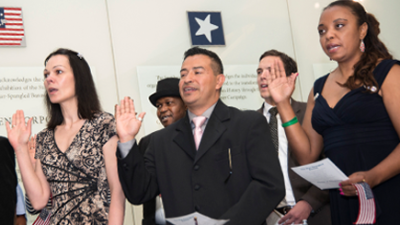
While there are many facets to an intelligent immigration reform package, one thing is clear: legalization for undocumented immigrants helps all of us. Most economists recognize that legalization has worked in the past. After a significant percentage of the undocumented population legalized under the Immigration Reform and Control Act of 1986 (IRCA), information on IRCA applicants was used to assess the legislation’s impact. My own research has shown that IRCA provided immediate direct benefits by successfully turning formerly clandestine workers into higher-paid employees. Other researchers have shown that IRCA provided unexpected indirect benefits to the communities where legalized immigrants resided. After legalization, fewer of these immigrants sent money back to their home countries, and those who sent back money sent back less. More of their earnings were spent in their communities in the United States. Research also showed that the legalized population became participating community members—nearly two out of five people who legalized under IRCA were U.S. citizens by 2001. What we learned from IRCA gives us a bird’s eye view into what we can expect to happen with a new legalization program. By examining three areas of concern: work, family, and community, we can see what economic and social benefits would be derived from a legalization program in 2013. By Sherrie A. Kossoudji, Ph.D. Read More

President Lays Out His Vision For Immigration Reform
After eight Republican and Democratic senators yesterday released their framework for comprehensive immigration reform, President Obama laid out his administration’s vision today of what he thinks should be included in the bill to overhaul the nation’s immigration system. He praised the bipartisan principles, which mirror the White House’s 2011 blueprint for immigration reform. “At this moment, it looks like there’s a genuine desire to get this done soon,” he said in his speech from Nevada. “And that’s very encouraging.” Read More
President Obama Provides Moral Imperative for Immigration Reform
Washington D.C. – Today, in Las Vegas, President Obama urged the country to join him in moving forward on immigration reform, offering a proposal that addresses the pressing economic, cultural, and moral crisis facing the nation over immigration. In doing so, he brought policies and principles down to one very… Read More

Senators Unveil Framework for Effective Immigration Reform
Eight Senators today released a “Bipartisan Framework for Comprehensive Immigration Reform” which proposes an overhaul of our legal immigration system while expanding border security measures and hardening current employment verification procedures. Most notably, the proposal would give unauthorized immigrants already in the country a chance to earn U.S. citizenship. Although the framework is only a very rough outline of what comprehensive immigration reform legislation might look like, the principles it espouses constitute an excellent starting point for the legislative negotiations that will now being in earnest. The Senators involved in the negotiations—Democrats Chuck Schumer (NY), Dick Durbin (IL), Bob Menendez (NJ), and Michael Bennet (CO); and Republicans John McCain (AZ), Marco Rubio (FL), Lindsey Graham (SC), and Jeff Flake (AZ)—outlined four “legislative pillars” for immigration reform: Read More
America's story is an immigrant story.