Immigration Enforcement
Featured Content

Restoring Credibility and Humanity
- Interior Enforcement
- May 12, 2026
A new framework for U.S. immigration enforcement that prioritizes public safety, fairness, accountability, and humane, proportionate consequences. Read More
Read More

House Subcommittee Hearing Underscores Problems with Secure Communities Program
Congressman Steve King (R-IA), Subcommittee on Immigration Policy & Enforcement. Today, the House Immigration Subcommittee held a hearing on the Secure Communities program (S-Comm)—an enforcement program that has been rife with controversy since its inception in 2008. Today’s hearing featured statements from a variety of witnesses and members of Congress which further underscored the problems inherent with the program and immigration enforcement in general. S-Comm is currently active in more than 1,700 jurisdictions and is on target to be nationwide by 2013. Read More
Secure Communities: A Fact Sheet
The Secure Communities Program, which launched in March 2008, has been held out as a simplified model for state and local cooperation with federal immigration enforcement. This fact sheet lays out the basics of Secure Communities program, how it works, key areas of concern and recommendations on how to improve the program. Read More
The Secure Communities Program: Unanswered Questions and Continuing Concerns
This paper describes the Secure Communities program, identifies concerns about the program’s design and implementation, and makes recommendations for the future of the program. Read More

How to Talk Turkey on Immigration: Redux
Washington, D.C. area schools participate in the Urban Debate program, which gives middle school children the opportunity to learn the art of debate. My sixth grader signed up right away. She was surprised to learn, however, at her first tournament that many people have no qualms debating either side of an issue, no matter how they personally feel about it. She also discovered that a few kids had no problems saying whatever they had to say to win. She was in tears because another twelve year old insisted that American lives were more valuable than others in a debate over U.S. military involvement abroad. Read More
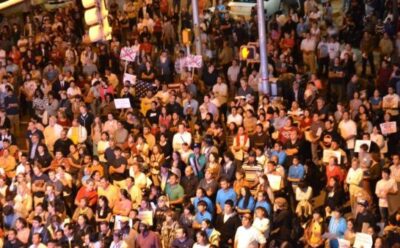
Thousands Rally for Repeal of Alabama’s Extreme Anti-Immigrant Law
Thousands gathered outside the historic 16th Street Baptist Church in Birmingham, Alabama yesterday to demand the repeal of the state’s harsh anti-immigration law, HB 56. Religious, community and civil rights leaders, as well as a special Congressional delegation, urged state legislators to bring an end to Alabama’s immigration law—a law which continues to slow state businesses, separate families and drive immigrants from the state. The Congressional delegation also held an ad hoc hearing at Birmingham City Hall to hear how the controversial law is effecting state residents, especially the Latino and immigrant communities where, according to Rep. Luis Gutierrez, “the feeling of danger and despair is palpable.” One Congressional member, Rep. Al Green of Texas, commented that the law "deserves to be placed on the trash heap of history." Read More

Heads Up, Virginia, Anti-Immigrant Agenda Could Be 2012 Legislative Focal Point
BY CLAIRE GUTHRIE GASTAÑAGA The Virginia General Assembly that convenes in January 2012 will be much changed from the one that it replaces. Effective control of Virginia’s government—a Governor, House of Delegates and Senate— is now in the hands of legislators who have consistently sought to lead Virginia in the direction of states like Arizona and Alabama that boast of how inhospitable they are to undocumented immigrants. For example, one of the Governor's first acts after his election in 2009 was to seek 287g authority for the State Police (a request that is still pending). And this fall's legislative elections resulted in an increase in members of both the House and the Senate who ran on overtly anti-immigrant platforms. Delegate Jackson Miller (R-Manassas), one of the most anti-immigrant legislators, has just been elected as majority whip. Read More

DHS Begins Review of Deportation Cases, Issues Awaited Prosecutorial Discretion Guidelines
Today, the Department of Homeland Security (DHS) directed ICE attorneys to begin a review process of current immigration cases pending before immigration courts in order to close or dismiss those cases warranting prosecutorial discretion. The attorneys also received additional guidance on how to apply discretion in certain low priority cases. At the same time, DHS announced new training modules for all ICE field agents on prosecutorial discretion. The package of initiatives are a follow up to ICE Director John Morton’s June 17th memo which describes how, when, and why ICE officials should exercise prosecutorial discretion in immigration cases. Read More
DHS Issues Awaited Guidance on Prioritizing Deportations, Law Enforcement Letter Praises Approach
Washington D.C. – Today, Immigration and Customs Enforcement’s (ICE) Principal Legal Advisor directed all ICE attorneys to begin a systematic review of immigration cases to determine whether pursuing deportation in each case is consistent with the Administration’s enforcement priorities. This directive follows last summer’s announcement that the Department of Homeland… Read More

Report Reveals Disturbing Truths Behind Border Patrol Transportation Raids
When news broke last month that the Border Patrol would scale back raids on trains and buses near the northern border, the response from Capitol Hill was rather predictable. In a breathless letter to Homeland Security Secretary Janet Napolitano, Sen. Chuck Grassley (R-Iowa) fretted that the policy will “entice potential terrorists, drug smugglers, and illegal immigrants to attempt to enter the country.” But as demonstrated by a comprehensive report released by civil rights groups last week on transportation raids in upstate New York, the Border Patrol’s new northern raid policy was long overdue. Read More

Policing the Enforcers: Criminalizing Alabama Employees Encourages Discrimination
Alabama lawmakers want undocumented immigrants to be so afraid of the consequences of the state’s new anti-immigrant law (HB 56) that they leave the state. However, that’s not the only fear factor built into the law. Under section 6(f), state and local government employees must report violations of HB 56—which includes unlawfully present immigrants even attempting to complete a business transaction with the government—or face criminal penalties. In order to avoid criminal prosecution, government employees are likely to be suspicious of foreign-looking or sounding people. But the new law does not include details or require specialized training for state employees, making discrimination, mistakes and civil rights violations all the more likely. Read More
America's story is an immigrant story.