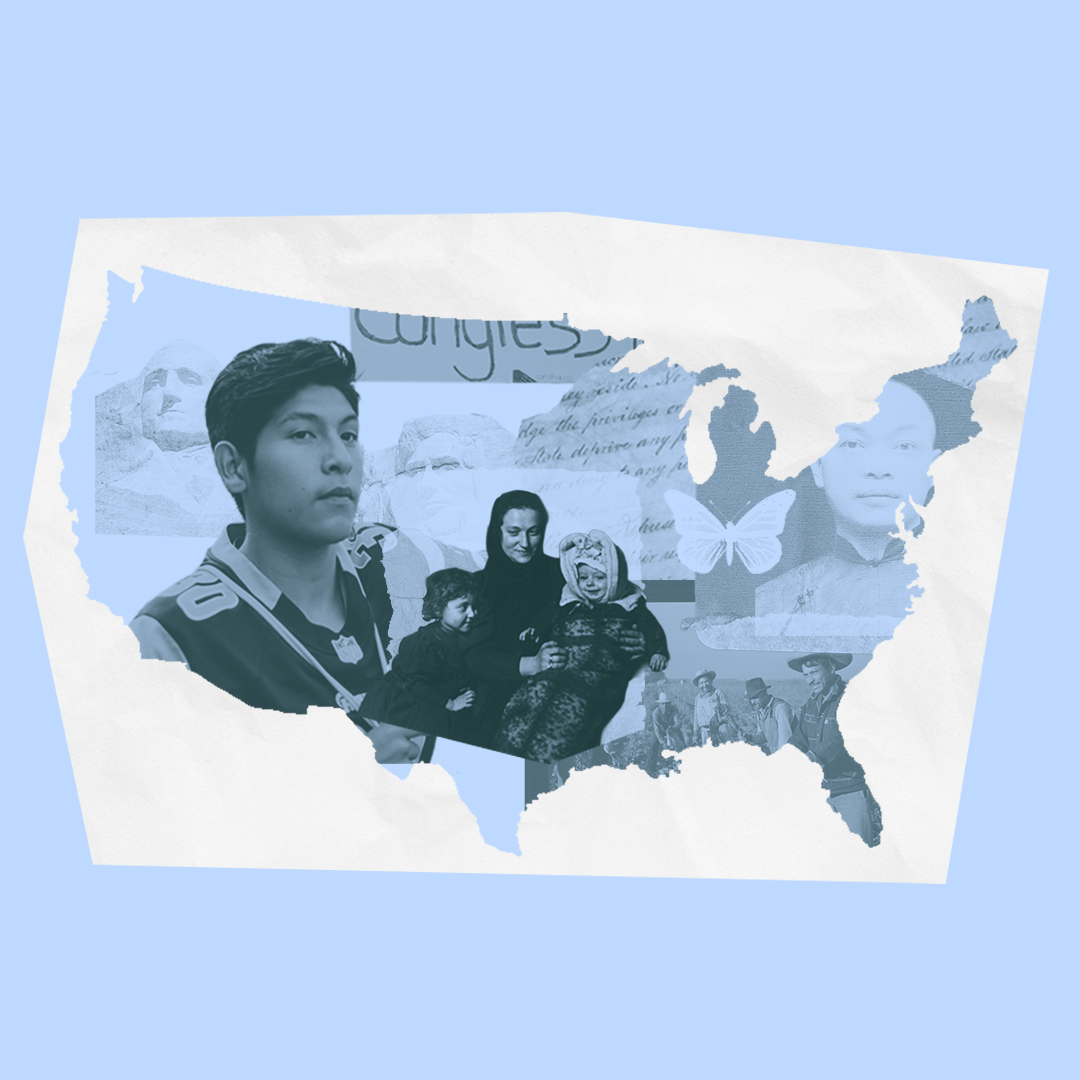
Immigration 101
Immigration in the United States is complex and ever-evolving. Start here to understand the fundamental aspects of immigration policy, its history, and its impact on both individuals and the country at large. Learn commonly used terms about immigration law and how the U.S. immigration system is designed. Explore layered topics like how and whether immigrants can become citizens, as well as what individual protections look like under the law.

How the United States Immigration System Works
- How the Immigration System Works
- June 24, 2024
U.S. immigration law is very complex, and there is much confusion as to how it works. This fact sheet provides basic information…
Read More
Birthright Citizenship in the United States
- Birthright Citizenship
- September 8, 2026
This fact sheet explains birthright citizenship, the Fourteenth Amendment, and its interpretations. Who is…
Read More
Asylum in the United States
- Asylum
- August 27, 2014
Asylum seekers must navigate a difficult and complex process that can involve multiple government…
Read More
Hysterical “Tea Party” Rhetoric on Immigration is Devoid of Facts
The ever-hysterical Tea Party is now hysterical about unauthorized immigrants. In a frenzied email blast to its members, the Tea Party Nation warns that the Obama administration wants to grant “amnesty” to the millions of unauthorized immigrants in the United States, whom the Tea Party alleges have inflicted various “horrors” upon Americans by stealing their jobs and committing unspeakable crimes. Not surprisingly, the Tea Party Nation gets its facts completely wrong. As a litany of evidence-based reports have demonstrated, most native-born workers are not in competition with immigrants for the same jobs, and immigrants are less likely than the native-born to commit serious crimes, regardless of their legal status. Read More
Immigrants in the U.S. Labor Force
New CBO Report Underscores Diverse Contributions of Foreign-Born Workers A recent report from the Congressional Budget Office (CBO) underscores not only the diversity of the foreign-born labor force in the United States, but also the myriad roles that immigrant workers play in the U.S. economy. The report, which analyzes data from the Current Population Survey, finds that 15.5 percent of the U.S. labor force was foreign-born in 2009, up slightly from 14.5 percent in 2004. Moreover, immigrant workers and their native-born counterparts differ significantly in terms of occupation and education, as well as where in the country they live. As other, more detailed analyses have confirmed, this suggests that immigrants and natives are filling different niches in the U.S. labor market and are therefore not in direct competition with each other for most jobs. Read More
Senators Graham and Kyl Buy Tickets to the Birthright Citizenship Dog and Pony Show
Over the weekend, the second-ranking member of the Senate Republican leadership, Senator Jon Kyl (R-AZ) joined Senator Lindsey Graham (R-SC) in considering a repeal of birthright citizenship laws through a constitutional amendment. Birthright citizenship, guaranteed by the Fourteenth Amendment to the Constitution, is the cornerstone of American civil rights and affirms that, with very few exceptions, all persons born in the U.S. are U.S. citizens—regardless of their parents' citizenship. Although the Supreme Court has consistently upheld birthright citizenship, year after year restrictionist groups and legislators trot out the “repeal birthright citizenship” mantra in the hopes of adding a few more immigration extremists to their dog and pony show audience. Read More
More Right-Handed Pot Stirring: Internal USCIS Draft Memo Exploited for Political Gain
Conspiracy theorists hate it when no one pays attention. Witness last month’s letter to President Obama in which eight Republican Senators accused him of planning to circumvent the will of Congress through a regulatory grant of “amnesty” suggesting that plans were afoot in the Department of Homeland Security to make it happen. Despite their mock outrage, the letter barely made a ripple in the immigration debate. And just a few days after his speech on immigration, President Obama unequivocally stated that he wanted a real solution to our immigration crisis, rejecting both a free pass for all undocumented immigrants and a scorched earth, deport them all approach. Read More
Judge’s Decision Doesn’t Stop Arizona from Combating Border Violence
Yesterday, Phoenix district court Judge Susan Bolton enjoined key provisions of Arizona's controversial immigration law, SB1070. The judge recognized that the federal government has primary authority over making and enforcing immigration law, and that while states have limited authority in this arena, they cannot interfere with federal enforcement or undermine federal priorities. The decision acknowledges the complex nature of immigration law and the harmful consequences of local police attempting to make immigration determinations. The judge also recognized the serious strain that the Arizona law would place on federal resources, which would detract from the federal government's ability to enforce immigration laws in other states and target resources toward serious criminals. Read More
New Reports Describe the “Green-Washing” of Nativist Hate
In a new report, the Southern Poverty Law Center (SPLC) describes the rejuvenated efforts of anti-immigrant groups to repackage themselves as environmentalists who are trying to save the United States from the supposed ecological ills of “over-population.” According to the report, entitled Greenwash: Nativists, Environmentalism & the Hypocrisy of Hate, the two-faced nature of these efforts is “astounding” given the dismal environmental records of the organizations and political candidates to whom nativist groups tend to contribute funds. Moreover, this “green-washing” of the nativist agenda also amounts to a white-washing of the anti-immigrant movement’s white-nationalist roots. Read More
The Numbers Are In: Polls Reveal Voters’ Desire to Fix Immigration
In the media storm following the Department of Justice’s (DOJ) lawsuit against Arizona’s immigration enforcement law (SB1070) this week, politicians, reporters and advocates are busy gauging voters’ reaction in the build up to midterm elections. A number of public opinion polls have recently surfaced, each with something slightly different to say about how most Americans feel about Arizona’s law, the DOJ lawsuit, and immigration in general. As any pollster can tell you, poll results depend entirely on the phrasing of the question. However, while it’s difficult to mine the nuances of each poll question, one thing remains clear—most Americans agree that our broken immigration system needs to be fixed. The question is, how do we move forward? Read More
Arizona Senators Decry DOJ Lawsuit Yet Refuse to Support Immigration Reform
Yesterday, the Department of Justice (DOJ) filed a lawsuit against the state of Arizona, challenging the state’s immigration enforcement law (SB 1070). The DOJ lawsuit—which seeks to stop the law from going into effect on July 29th—argues that Arizona’s law is unconstitutional since it claims state authority over federal immigration policy. While political opposition in Arizona to DOJ’s legal challenge has come from both parties, some of the most laughable comments have come from Arizona’s Republican Senators who have used the lawsuit as yet another opportunity to claim that the Obama administration has failed to do anything on immigration. Only Senator Lindsay Graham (R-SC) has been willing to engage the Democrats on immigration at all this year and even still, Sen. Graham back peddled after health care reform was passed. To date, ZERO Republicans are willing to step forward and play ball on an actual immigration reform bill—which makes the political finger-pointing from those unwilling to meet the President halfway all the more infuriating. Read More
FAIR’s Distorted Fiscal Snapshot of Unauthorized Immigrants
Today, Fox News is reporting on data provided to them by the Federation for American Immigration Reform (FAIR) which amounts to a highly misleading fiscal snapshot of the costs allegedly imposed on U.S. taxpayers by unauthorized immigrants. Read More
Immigrant Women: The Silent Victims of a Broken Immigration System
Even though there are approximately 19 million foreign born women in the U.S.—accounting for 12.3% of the female population—we tend to hear very little about them. A closer look at the female immigrant population reveals many important facts—immigrant women are incredibly diverse in terms of country of origin, time in the U.S., citizenship rates, income, poverty, and labor market participation. This week, the Immigration Policy Center (IPC) released a report, Reforming America’s Immigration Laws: A Woman’s Struggle by Kavitha Sreeharsha, a senior staff attorney at Legal Momentum’s Immigrant Women Program and a fact sheet detailing the demographic makeup of immigrant women in the U.S. Read More
America's story is an immigrant story.