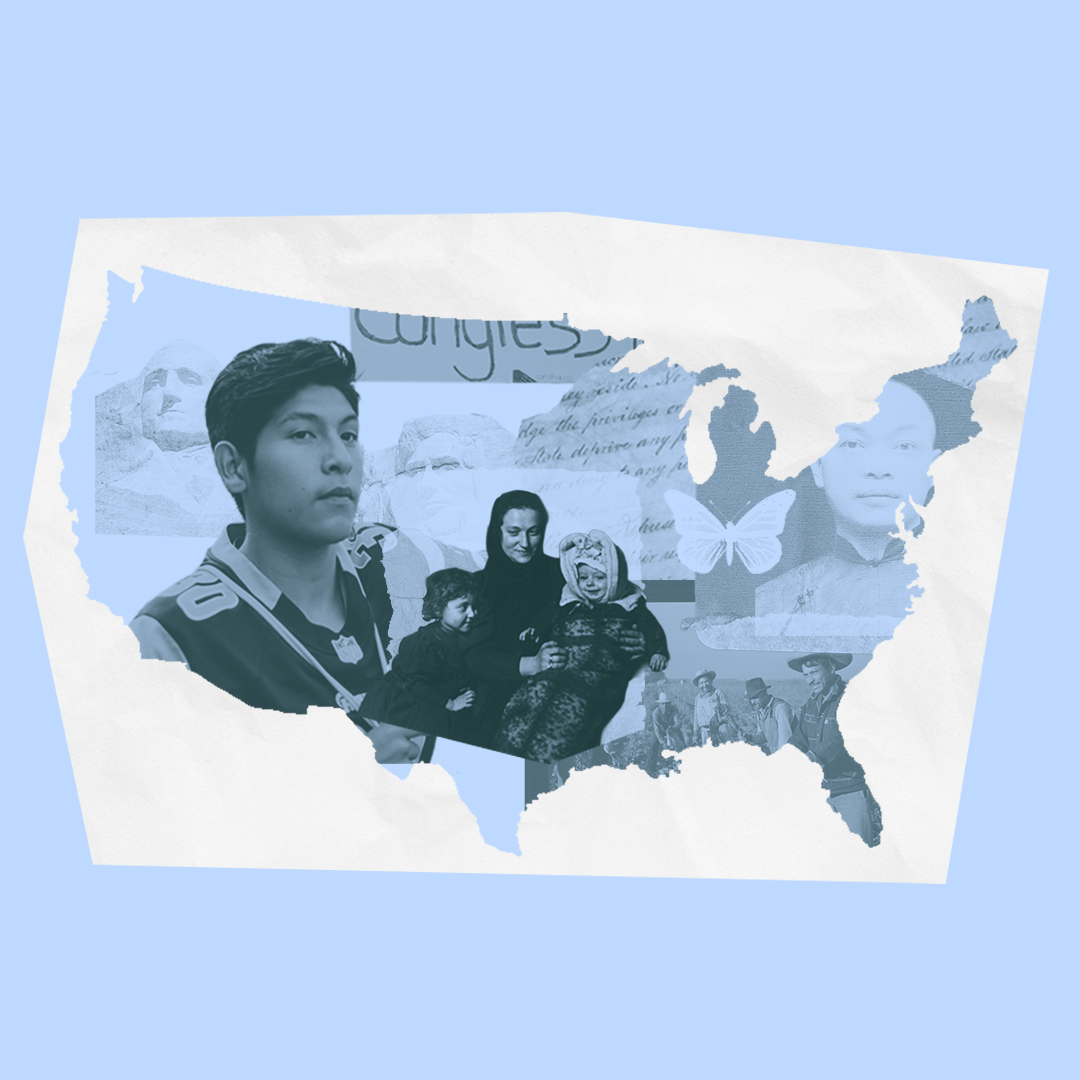
Immigration 101
Immigration in the United States is complex and ever-evolving. Start here to understand the fundamental aspects of immigration policy, its history, and its impact on both individuals and the country at large. Learn commonly used terms about immigration law and how the U.S. immigration system is designed. Explore layered topics like how and whether immigrants can become citizens, as well as what individual protections look like under the law.
How the United States Immigration System Works
- How the Immigration System Works
- June 24, 2024
U.S. immigration law is very complex, and there is much confusion as to how it works. This fact sheet provides basic information…
Read More
Birthright Citizenship in the United States
- Birthright Citizenship
- September 8, 2026
This fact sheet explains birthright citizenship, the Fourteenth Amendment, and its interpretations. Who is…
Read More
Asylum in the United States
- Asylum
- August 27, 2014
Asylum seekers must navigate a difficult and complex process that can involve multiple government…
Read More
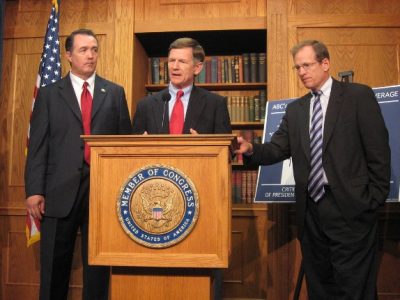
Restrictionists Misrepresent Data on Immigration Enforcement
Some members of Congress are intent on portraying the Obama administration as “weak” on immigration enforcement, and they aren’t going to let facts get in their way. Yesterday, for example, the Congressional Research Service (CRS) released new data on individuals who had been identified through Secure Communities (S-Comm) but against whom ICE had not taken enforcement action. House Judiciary Chair Lamar Smith characterized the data as proof that the Obama administration has used prosecutorial discretion “recklessly and to the detriment of the American people.” However, a close look at the data reveals that Smith’s sweeping allegations do not hold water. By misusing terms like “recidivism,” and by failing to distinguish between arrests and convictions, Smith intends to paint immigrants as criminals—a link that has been disproven over and over again. Read More
Chicken Little in the Voting Booth: The Non-Existent Problem of Non-Citizen Voter Fraud
A wave of restrictive voting laws is sweeping the nation. The Brennan Center for Justice at New York University School of Law counts “at least 180 restrictive bills introduced since the beginning of 2011 in 41 states.” Bills requiring voters “to show photo identification in order to vote” were signed into law in Alabama, Kansas, Rhode Island, South Carolina, Tennessee, Texas, Wisconsin, and Pennsylvania. Adding insult to injury, Alabama, Kansas, and Tennessee went a step further and required voters to present proof of U.S. citizenship in order to vote. In addition, Florida, Colorado, and New Mexico embarked upon ultimately fruitless “purges” of their voter rolls for the ostensible purpose of sweeping away anyone who might be a non-U.S. citizen. All of these actions have been undertaken in the name of preventing voter fraud, particularly illegal voting by non-citizens. Proponents of harsh voter laws often assert, without a shred of hard evidence, that hordes of immigrants are swaying election results by wheedling their way into the voting booth. However, repeated investigations over the years have found no indication that systematic vote fraud by non-citizens is anything other than the product of overactive imaginations. Fighting Phantoms: No Evidence of Widespread or Systematic Vote Fraud by Non-Citizens Read More
Why Human Trafficking Cases are Falling Through the Cracks
Human trafficking is a big yet commonly overlooked problem in the United States and abroad. Each year, roughly 600,000 to 800,000 people are trafficked across international borders, according to the Department of State, with about 17,500 into the United States. Despite an uptick in laws aimed at addressing this problem, U.S. law enforcement and state prosecutors haven’t identified or prosecuted as many cases as expected given the large number of cases, leaving many to question why. In a recent report, however, experts at the Urban Institute and Northeastern University shed some light on why so many cases seem to be falling through the cracks. Read More
DHS’s NSEERS Program, While Inactive, Continues to Discriminate
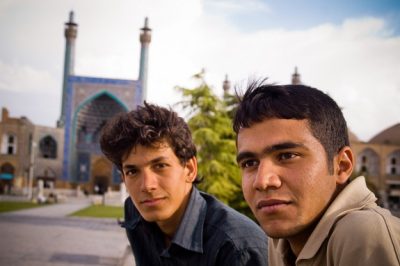
For a long time after 9/11, immigration reform was only discussed as a national security issue, and many policies were put in place aimed at stopping terrorists from entering the country. Unfortunately, some of these policies—such as the National Security Entry-Exit Registration System (NSEERS) program—targeted particular ethnic groups, promoted profiling, and resulted in discrimination and civil rights violations. In recent years, the Obama administration has made efforts to end the NSEERS program, but NSEERS still exists and the impact of these policies is still being felt in immigrant communities. In fact, the Rights Working Group, a coalition of civil rights organizations, recently released a report, The NSEERS Effect: A Decade of Racial Profiling, Fear, and Secrecy, which analyzes the continuing impact of this post-9/11 policy. Read More
African Immigrants in America: A Demographic Overview
Immigrants from Africa constitute a highly diverse and rapidly growing group in the United States. As Census data demonstrate, the African foreign-born population doubled in size between 2000 and 2010. Nearly half of African immigrants are naturalized U.S. citizens, and seven-in-ten speak only English or speak it “very well.” Just under three-quarters of African immigrants are black, while roughly one-fifth are white. The largest numbers of African immigrants are found in California, New York, Texas, Maryland, and Virginia. The top countries of origin for African immigrants are Nigeria, Ethiopia, Egypt, Ghana, and Kenya. Two-fifths of African immigrants have at least a bachelor’s degree, and more than one-third work in professional jobs. Read More

Does the Supreme Court Think Most Immigrants are Criminals?
Even as the Supreme Court struck down three provisions of Arizona’s anti-immigrant law (SB 1070), the Justices appeared to embrace a major falsehood of nativist ideology: that immigrants are more likely to be criminals than the native-born. On page six of the majority opinion, the Court maintains that unauthorized immigrants are “reported to be responsible for a disproportionate share of serious crime” in Arizona’s Maricopa County. The source cited for this bold statement is a 2009 report from the Center for Immigration Studies (CIS)—a deeply flawed report which attempts to overturn a century’s worth of research demonstrating that immigrants are less likely than the native-born to commit violent crimes or end up behind bars. Read More
New Data Reveals Immigrants’ Voting Potential at the Local Level
Newly obtained data from the DHS Office of Immigration Statistics provide another indication that immigrants in the United States hold untapped electoral power. There are 8.1 million legal immigrants who arrived in this country between 1985 and 2005 and who are likely eligible to become naturalized U.S. citizens with the power to vote. If these immigrants were already U.S. citizens, and if they registered to vote at the same rate as other naturalized citizens (61%), counties across the nation would see their voter registration rolls jump dramatically. Read More
Lawmakers Attempt to Gut Census by Defunding American Community Survey
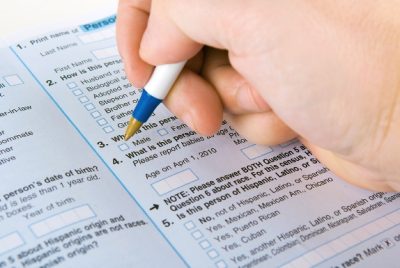
How can you make good policy in the absence of good information? That seems to be a question that some Republicans in the House and Senate have not asked themselves. In recent months, these lawmakers have proposed that funding for the Census Bureau’s annual American Community Survey (ACS) be cut entirely from the federal budget, or that the ACS be scaled back to a “voluntary” program. Given that the data generated by the ACS is used to guide the distribution of more than $400 billion in federal funding each year, this would be an ill-advised move. Read More

Anti-Immigration Group Blames Students for Maryland’s Budget Gap
In a case of very creative accounting, the nativist Federation for American Immigration Reform (FAIR) is blaming students for Maryland’s fiscal woes. In a new report, FAIR lumps together students who are unauthorized immigrants with U.S.-born students who have unauthorized parents and claims that they are all costing Maryland taxpayers astronomical sums in educational expenditures. However, the report (entitled The Cost of Illegal Immigration to Marylanders) mistakenly treats the education of these students as nothing more than a “cost” attributable to unauthorized immigration. In reality, the educational expenses targeted by FAIR are an investment in the future U.S. workforce and tax base; an investment that will pay off later as students become taxpayingattr workers. Read More
Michigan Pushes Plan to Welcome Immigrants and their Revitalizing Power to State
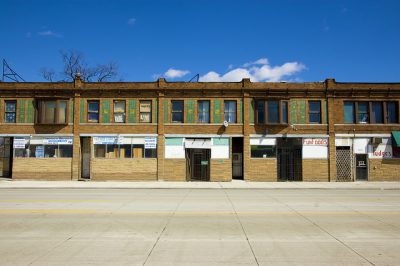
While some states pushed for punitive immigration measures over the last year—measures designed to drive immigrants away —others, like those in Michigan, were busy putting together a plan that welcomes immigrants and their revitalizing power to the state. This month, leaders in Michigan—including state Rep. Rashida Tlaib (D-Detroit) and U.S. Rep. Hansen Clarke (D-Detroit)—helped launch “Welcoming Michigan,” a statewide initiative that seeks to welcome immigrants and their entrepreneurial talents to Michigan. Read More
America's story is an immigrant story.