Immigration 101
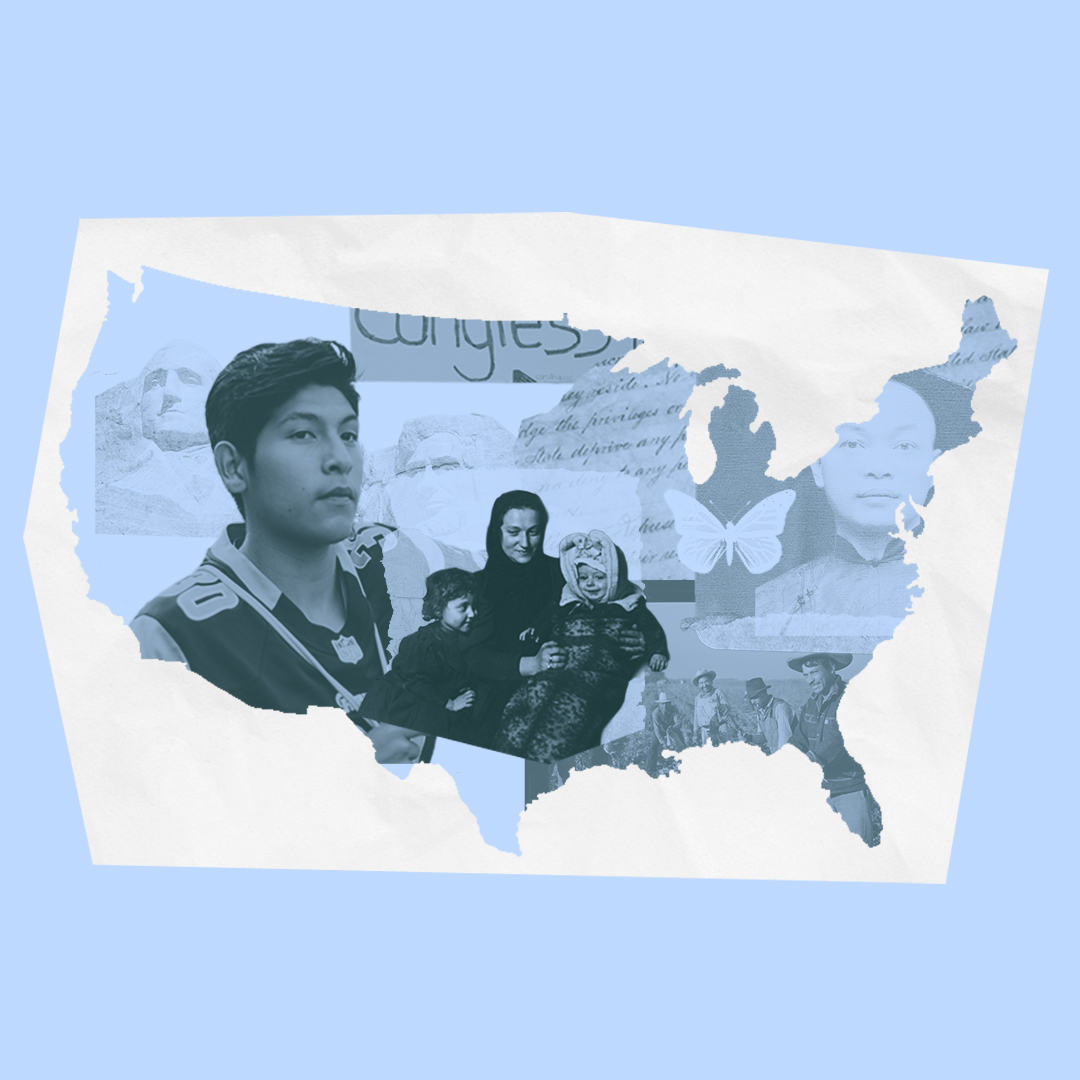
Immigration in the United States is complex and ever-evolving. Start here to understand the fundamental aspects of immigration policy, its history, and its impact on both individuals and the country at large. Learn commonly used terms about immigration law and how the U.S. immigration system is designed. Explore layered topics like how and whether immigrants can become citizens, as well as what individual protections look like under the law.

How the United States Immigration System Works
- How the Immigration System Works
- June 24, 2024
U.S. immigration law is very complex, and there is much confusion as to how it works. This fact sheet provides basic information…
Read More
Birthright Citizenship in the United States
- Birthright Citizenship
- September 8, 2026
This fact sheet explains birthright citizenship, the Fourteenth Amendment, and its interpretations. Who is…
Read More
Asylum in the United States
- Asylum
- August 27, 2014
Asylum seekers must navigate a difficult and complex process that can involve multiple government…
Read More
Back to the Future: The Impact of Legalization Then and Now
While there are many facets to an intelligent immigration reform package, one thing is clear: legalization for undocumented immigrants helps all of us. Most economists recognize that legalization has worked in the past. After a significant percentage of the undocumented population legalized under the Immigration Reform and Control Act of 1986 (IRCA), information on IRCA applicants was used to assess the legislation’s impact. My own research has shown that IRCA provided immediate direct benefits by successfully turning formerly clandestine workers into higher-paid employees. Other researchers have shown that IRCA provided unexpected indirect benefits to the communities where legalized immigrants resided. After legalization, fewer of these immigrants sent money back to their home countries, and those who sent back money sent back less. More of their earnings were spent in their communities in the United States. Research also showed that the legalized population became participating community members—nearly two out of five people who legalized under IRCA were U.S. citizens by 2001. What we learned from IRCA gives us a bird’s eye view into what we can expect to happen with a new legalization program. By examining three areas of concern: work, family, and community, we can see what economic and social benefits would be derived from a legalization program in 2013. By Sherrie A. Kossoudji, Ph.D. Read More

A Clash of Conservatives in Kansas
Anti-tax crusader Grover Norquist came to Topeka this week to serve as a counterweight to Kansas Secretary of State Kris Kobach in the national debate over immigration reform. Norquist, the president of Americans for Tax Reform, is best known for persuading congressional Republicans to sign his anti-tax pledge. However, he is also an opponent of restrictive and punitive immigration policies. Kobach, on the other hand, has used his perch as Kansas Secretary of State to travel the country touting the evils of unauthorized immigration and drafting various and sundry state laws that crack down on anyone who looks like an unauthorized immigrant. Read More

Immigrants Add Billions to the Arkansas Economy
A perennial question in the immigration debate is whether or not immigrants contribute more to the economy than they cost. That is, do they add more economically as workers, taxpayers, consumers, and entrepreneurs than they “consume” in public education, public healthcare, and public benefits? In some ways, this question is misleading. Education and healthcare are social investments that pay future dividends; they are not merely fiscal expenses. Nevertheless, it is a useful exercise to take the question at face value and do the math. The result, contrary to the convoluted arithmetic of anti-immigrant activists, is overwhelmingly positive. Immigrants add far more to the economy than they take away. And given the aging of the native-born population, the contributions of immigrants (and their children) will only increase over time. Read More

Reasons for Cautious Optimism on Immigration Reform
There is considerable debate at the moment over the prospects for immigration reform this year. On the one hand, an electorally chastened Republican Party seems to be reevaluating its long-standing support for deportation-only immigration policies. On the other hand, it looks as though the White House and Congress are embarking upon lengthy debates over gun control and tax-and-spending policies; debates which might leave little room for a rational discussion of U.S. immigration laws. Nevertheless, reports from the White House indicate that President Obama is ready to forge ahead on immigration reform. It remains to be seen, however, what form that will take. Will the President opt for a truly comprehensive solution, or will he adopt a more piecemeal type of reform that targets only some subsets of the immigrant population? Let us hope that the comprehensive approach prevails. The fates of millions of people have been hanging in the balance for far too long. Read More

New ICE Detainer Guidance Too Little, Too Late
On the Friday before Christmas, U.S. Immigration and Customs Enforcement (ICE) released new guidance on immigration “detainers,” the lynchpin of agency enforcement programs involving cooperation with local police. In the new guidance, ICE Director John Morton instructed agency employees to only file detainers against immigrants who represent agency “priorities.” Unfortunately, as with prior agency memos on prosecutorial discretion, the detainer guidance is so riddled with loopholes that it could have little—if any—practical effect. Read More

America’s Aging Crisis Will Only Grow Worse With Declining Immigration
As a recent story in The Economist notes, the conventional wisdom has long been that “because Americans have so many babies and welcome so many immigrants, they had more room to deal with the coming burden of pensions and health care for the elderly.” But that is no longer the case. The story goes on to point out that “the savage recession of 2007-09 and its aftermath…have weakened those demographic advantages. America’s fertility rate has been falling since 2007, as has net immigration.” In other words, there are going to be fewer working-age, tax-paying adults to support the rapidly growing number of elderly Americans. Read More

Federal Judges Remind Government to Consider Prosecutorial Discretion
Prosecutorial discretion is the authority of a law enforcement agency or officer to decide whether and to what degree to enforce the law in particular cases. The Deferred Action for Childhood Arrivals (DACA) initiative continues to be a successful example of prosecutorial discretion in the immigration context. However the Department of Homeland Security (DHS) often ignores other non-DACA-related cases where prosecutorial discretion would be equally appropriate. Read More

A Much-Needed Spotlight on Families Ripped Apart by Deportations
On December 12, dozens of children delivered thousands of letters to Capitol Hill, calling upon lawmakers to stop the senseless division of families that is caused by the deportation of mothers and fathers who are not a threat to anyone. The event was part of “A Wish for the Holidays,” a campaign with a simple but powerful message: “Every day, families across the country are separated by deportations and immigrant detentions. 5.5 million children live with the fear that a parent could be deported, and these policies threaten the fabric of all of our communities. It just isn’t right.” Read More

America: Start-Up Nation of Immigrants
AOL co-founder Steve Case brought an important message to the National Strategy Session on Immigration in Washington, D.C. this week: America is a start-up nation. Over the last 200 years, America has built the most dynamic economy in the world through the hard work and innovation of its entrepreneurs. Read More

Immigrants May Hold the Key to Urban Renewal in Baltimore
In an attempt to reverse decades of population decline, Baltimore Mayor Stephanie Rawlings-Blake has launched a high-profile effort to attract “new Americans” to the city. The theory is that these new Americans—that is, immigrants—will bring the skills, entrepreneurship, and tax base needed to revitalize blighted neighborhoods that are now full of boarded-up buildings rather than thriving businesses and family homes. The available evidence suggests that immigration can indeed be a powerful force for urban renewal. But most immigrants will not be drawn to a new city simply by a welcome sign. It is likely that they look for some signs of revitalization before they take the risk of uprooting their families and moving to a new place. Read More
America's story is an immigrant story.