Entrepreneurship & Innovation

Business and Religious Leaders Come Together to Champion Immigration Reform
Immigration reform is an undertaking of such importance that it should transcend partisanship. That was the fundamental message of the business and religious leaders who gathered together yesterday at a press conference organized by the National Immigration Forum. The press conference was part of a campaign called Forging a New Consensus on Immigrants and America, which describes itself as “a growing and diverse constituency of conservative, moderate and progressive leaders that is determined to go beyond the rhetoric and find common ground for practical solutions.” The event comes on the heels of an announcement late last week by Thomas Donohue, President of the U.S. Chamber of Commerce, that a broad coalition of business, labor, religious, law enforcement, and ethnic organizations has coalesced around the cause of immigration reform. Read More

Lawsuit Uncovers USCIS’ Double Standards in H-1B Program
For the past several years, U.S. Citizenship and Immigration Services’ (USCIS) H-1B visa review and processing procedures have caused confusion and concern among U.S. businesses that turn to highly-skilled temporary foreign workers in specialty occupations to operate successfully. In newly-uncovered documents, it appears that instead of supporting small businesses that attempt to hire highly-skilled foreign workers, in many cases, USCIS discourages their success by subjecting them to a near presumption of fraud. Read More

The U.S. Economy Still Needs High-Skilled Immigrant Workers
With the U.S. economy in the midst of a prolonged slump, it’s hard to believe that a labor shortage exists anywhere in the country. But that is precisely the case when it comes to the high-tech industries which depend upon highly skilled scientists and engineers. The United States has long faced a dilemma in this respect: the U.S. educational system is not producing high-tech professionals in numbers that are sufficient to meet labor demand. That is one reason so many U.S. scientists and engineers are immigrants. And it is one of the reasons that even more U.S. scientists and engineers would be immigrants if not for the arbitrary limits imposed by the U.S. immigration system. For the sake of the U.S. economy’s recovery and long-term competitiveness, lawmakers should revise the antiquated rules that currently govern how many and which high-tech professionals from abroad are allowed to work in the United States. Read More

America: Start-Up Nation of Immigrants
AOL co-founder Steve Case brought an important message to the National Strategy Session on Immigration in Washington, D.C. this week: America is a start-up nation. Over the last 200 years, America has built the most dynamic economy in the world through the hard work and innovation of its entrepreneurs. Read More
Immigrants May Hold the Key to Urban Renewal in Baltimore
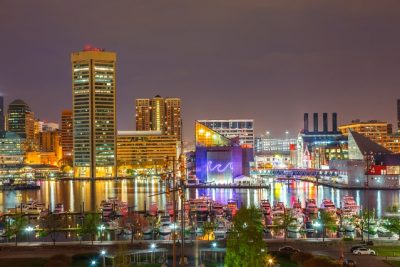
In an attempt to reverse decades of population decline, Baltimore Mayor Stephanie Rawlings-Blake has launched a high-profile effort to attract “new Americans” to the city. The theory is that these new Americans—that is, immigrants—will bring the skills, entrepreneurship, and tax base needed to revitalize blighted neighborhoods that are now full of boarded-up buildings rather than thriving businesses and family homes. The available evidence suggests that immigration can indeed be a powerful force for urban renewal. But most immigrants will not be drawn to a new city simply by a welcome sign. It is likely that they look for some signs of revitalization before they take the risk of uprooting their families and moving to a new place. Read More

Foreign Students Add Billions of Dollars to the U.S. Economy Each Year – And That’s Just the Beginning
Most people don’t think of foreign students as an economic resource, yet that is precisely what they are. Each year, students from other countries spend billions of dollars in the U.S. economy, pumping money not only into the colleges and universities they attend, but the surrounding businesses as well. In addition, many foreign students go on to become highly innovative scientists, engineers, and entrepreneurs who add value to the U.S. economy in myriad ways that are often difficult to quantify. Given the economic value of the education they receive in U.S. universities, it is unfortunate that so many foreign students are forced by our nonsensical immigration policies to return to their home countries rather than putting their knowledge to use in this country. Read More
Understanding the Important Symbolism of the Maryland DREAM Act Victory
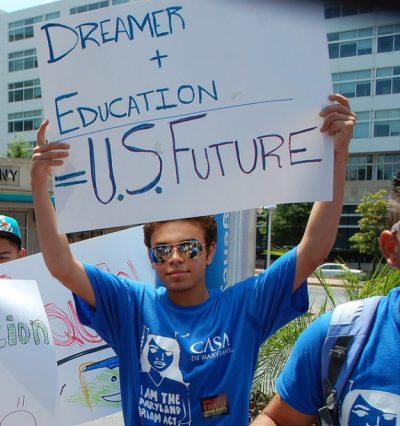
While much of last week’s energy was focused on Latino voter turnout in the Presidential race— and the subsequent recognition that immigration reform was all but inevitable—there was another major victory for immigration policy that came out of Maryland. Voters in the state supported through referendum their legislature’s decision to provide in-state tuition to undocumented students. This was the first vote of its kind in the nation and one where African-American voters were an important voting bloc in support of the measure. Read More
Nativist Group Releases Hopelessly Flawed Report on Immigrants and Job Creation
By Patrick Oakford, Research Assistant for the Economic Policy Team at the Center for American Progress. Last week the Center for Immigration Studies (CIS) released a shocking report claiming that most new jobs created under President Obama have gone to immigrants. Aside from the sheer incorrectness of the claim, being founded on flawed methodologies, CIS perpetuates a hateful “us versus them” discourse at a time when we should be focused on creating more and longer-lasting jobs. Read More

Immigrant Entrepreneurs: Creating Jobs and Strengthening the Economy
There is widespread agreement across a number of key economic planning groups that immigrant entrepreneurs create jobs and strengthen the economy. Yet, the U.S. immigration system often forces out immigrant entrepreneurs, driving them to other countries that are competing for international talent. Although many people recognize the giants of immigrant entrepreneurship, such as Sergey Brin of Google and Pierre Omidyar of eBay, thousands of other science and technology businesses are quietly making a difference by creating almost half a million jobs for Americans and generating revenue of more than $50 billion. The depth and breadth of immigrant entrepreneurs extend across the spectrum of enterprises, including neighborhood, growth, and transnational businesses. Expansion of employment-based visas would allow companies’ access to high-potential foreign individuals who are graduates of U.S. universities. Businesses, cities, and states across the country should support changes in visa policy and work to develop partnerships with immigrant entrepreneurs to create jobs and strengthen the economy. The report features profiles of immigrant entrepreneurs and shines a light on some of the difficulties they face. Current immigration laws make it difficult for many immigrant entrepreneurs to contribute to the nation’s growth. The report contains administrative and legislative proposals that taken together could create an atmosphere that fosters growth. Read More
Our American Immigrant Entrepreneurs: The Women
When Americans picture an immigrant entrepreneur, they likely imagine a man who began the migration of his family, later bringing his wife over to become a volunteer assistant in the shop. This image is straying farther and farther from reality as more women open their own enterprises. Yet the idea that immigrant women might be the owners and originators of some of our restaurants, motels, Silicon Valley hi-tech firms, local real-estate agencies, or other entrepreneurial ventures has yet to become conventional wisdom. Today, immigrant women entrepreneurs abound in every region of the United States. In 2010 for example, 40 percent of all immigrant business owners were women (1,451,091 immigrant men and 980,575 immigrant women). That same year, 20 percent of all women business owners were foreign-born. These numbers indicate that there is a quiet revolution of immigrant women’s business ownership that is organically growing, but is going relatively unnoticed in the culture at large. In this report, we asked women from a range of business sectors in several cities to tell us why and how they started their ventures, what challenges they faced, what their businesses mean to them, and what contributions they are making. Read More