Economic Impact
Immigrants are essential to the U.S. economy, filling roles from high-skilled tech sectors to agricultural labor and driving economic growth. They also contribute to the tax base and consumer spending. We champion reform that will maximize this effect and create a more diverse and competitive workforce.
New Study Finds Low-Skilled Immigration Has Negligible Impact on Wages of Native-Born
Earlier today, Public Policy Professor at Georgetown University Harry J. Holzer presented his new report, Does Low-Skilled Immigration Hurt the US Economy? Assessing the Evidence. Contrary to the myth that “immigrants steal American jobs,” Prof. Holzer concludes that low-skilled immigration likely has little to no effect on most U.S. workers, though changes in immigration policy would obviously alter the effect. While admitting that wage depression is an issue for low-skilled native-born workers, Holzer insisted that immigration contributed very little, if at all, to this effect, and that “we’ve been scapegoating [low-skilled] immigrants for little reason.” Read More
State Legislators Attack Fundamental Constitutional Values
Washington, D.C. – Today, State Legislators for Legal Immigration (SLLI), a coalition of state legislators, revealed their plan to challenge the 14th Amendment and the Constitutional definition of citizenship. Claiming that they need to correct a “monumental misapplication of the 14th Amendment” and protect their states from the “illegal alien… Read More
State Lawmakers from Critical States Speak Out in Favor of DREAM Act
Washington D.C. – Today, a group of state legislators from Colorado, Massachusetts, Maine, Texas, and Utah participated in a briefing to share their support for federal legislation know as the DREAM Act. The bi-partisan DREAM Act passed the House of Representatives and awaits a final vote in the Senate in… Read More
White House to Award Latino Civil Rights Advocate, Sylvia Mendez
Each year, the White House awards the Presidential Medal of Freedom—“the Nation’s highest civilian honor, presented to individuals who have made especially meritorious contributions to the security or national interests of the United States, to world peace, or to cultural or other significant public or private endeavors.” Among the recipients for the 2011 Medal of Freedom is civil rights activist Sylvia Mendez, whose story of strength and perseverance in the face of discrimination and bigotry is a tale from which everyone can take heart—especially DREAM Act students who face an uphill battle this month. Read More
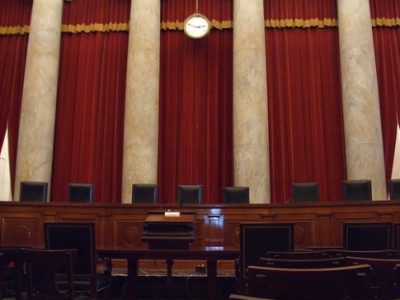
Win, Lose or….Draw? The Supreme Court Tackles Arizona’s Employer Sanctions Law
Those following the Obama Administration’s legal challenge to Arizona’s SB 1070 have likely heard about “preemption”—the legal concept governing when state laws conflict with, and are therefore superseded by, acts of Congress. The heart of the dispute over SB 1070 is whether states have a right to provide assistance that the federal government does not want. No one knows if or how the Supreme Court will ultimately answer that question. But a number of hints may emerge when the Justices issue a ruling in Chamber of Commerce v. Whiting, a case testing the legality of a different law known as the Legal Arizona Workers Act. Passed in 2007, the act imposed new requirements to prevent employers from hiring unauthorized workers, as well as harsh consequences for doing so. While the Justices’ questions during Wednesday’s oral argument offered reason for hope among immigrants’ rights advocates on one part of the law, they left the fate of the other unresolved. Read More
Investing in the American DREAM
Each year, tens of thousands of undocumented immigrant students graduate from American high schools and embark on uncertain futures. Their inability to legally work and receive financial aid stalls, detours, and derails their educational and economic trajectories. Most importantly, at any time, they can be deported to countries they barely know. The Development, Relief, and Education for Alien Minors (DREAM) Act is a federal bill aimed at providing immigration relief to these young people. The passage of this bill would grant many undocumented youth access to legal residency and federal financial aid—thus removing legal and economic barriers to higher education and increasing their contributions to America and the likelihood of upward mobility. Read More
New DHS Data Highlights Benefits of Integration Requirements
We want legal permanent residents (LPRs) to become U.S. citizens and fully participate in civic life—and research shows they are, in fact, doing just that. DHS recently presented new data on two programs for legal permanent residence (LPR) status—one that required immigrants to learn English and U.S. history, and one that did not. They found that those who were required to learn English and history (which are also requirements for U.S. citizenship) are naturalizing at higher rates. Read More
The DREAM Act: Creating Economic Opportunities
There are an estimated 1.9 million undocumented children and young adults in the United States who might be eligible for legal status under the Development, Relief, and Education for Alien Minors Act (DREAM) Act. For many of these young people, the United States is the only home they know and English is their first language. Each year, tens of thousands of them graduate from primary or secondary school, often at the top of their classes. They have the potential to be future doctors, nurses, teachers, and entrepreneurs, but they experience unique hurdles to achieving success in this country. Through no fault of their own, their lack of status may prevent them from attending college or working legally. The DREAM Act would provide an opportunity for them to live up to their full potential and make greater contributions to the U.S. economy and society. Read More
New Report Describes Peril Immigrant Women Face in U.S. Food Industry
The Southern Poverty Law Center (SPLC) released a new report called Injustice on our Plates: Immigrant Women in the U.S. Food Industry which looks at the conditions under which immigrant women work. It documents and personalizes the stories of women who have made the dangerous journey to the U.S. seeking a better life for themselves and their families, only to end up working long hours under extremely difficult and dangerous conditions. Read More
Remembering Our Immigrant Veterans: An Incalculable Contribution
Whenever restrictionist groups calculate the cost of an immigrant, they inevitably overlook the contributions of immigrant veterans who fight and die on behalf of Americans every single day. Immigrants have voluntarily served in all branches of the U.S. military from the beginnings of our great nation. In fact, without the contributions of immigrants, the military could not meet its recruiting goals and could not fill the need for foreign-language translators, interpreters, and cultural experts. Read More
America's story is an immigrant story.