Economic Impact
Immigrants are essential to the U.S. economy, filling roles from high-skilled tech sectors to agricultural labor and driving economic growth. They also contribute to the tax base and consumer spending. We champion reform that will maximize this effect and create a more diverse and competitive workforce.
Improving the Naturalization Process: Better Immigrant Integration Leads to Economic Growth
Anyone who has ever attended a naturalization ceremony cannot help but be moved by the power of the moment. The participants enter as men, women, and children of diverse countries, but leave the room as citizens of one—the United States. For many, the path to that naturalization ceremony has been long and arduous, irrespective of whether they entered the United States as wealthy entrepreneurs or as refugees with nothing but the clothes on their backs. The process of obtaining lawful permanent resident (LPR) status, and ultimately U.S. citizenship, is often daunting. A new country, new rules, high costs, and little targeted support for new immigrants makes what should be a journey of exploration and opportunity one that may be frustrating and lonely. Consequently, in order to focus on ways to improve the naturalization process itself, we must take a step back and consider the nature of immigrant integration in the United States. The better our integration policies—and the sooner they begin—the more likely we are to improve the rate of naturalization. Read More

Lamar Smith’s E-Verify Arguments Defy Logic and Lack Evidence
Facing opposition from the left and the right, Rep. Lamar Smith appears to be willing to do and say just about anything to pass his “Legal Workforce Act,” (H.R. 2885), which would make E-Verify mandatory for all U.S. businesses. Smith continues to tout E-Verify as a magic bullet that will create jobs for millions of American workers despite all evidence to the contrary. Read More
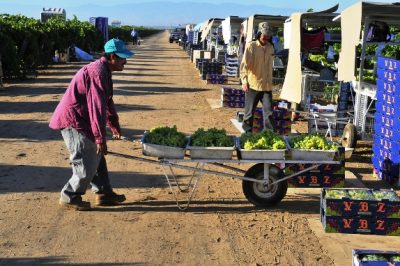
Lamar Smith Introduces New Agricultural Twist to His Anti-Immigrant Agenda
Rep. Lamar Smith (R-TX), Chairman of the House Judiciary Committee, has added a novel new twist to his anti-immigrant agenda: letting more immigrant workers into the country. In defiance of logic, the man who believes that immigrants merely steal jobs from U.S. citizens now wants to import migrant agricultural workers. At a hearing today of the House Subcommittee on Immigration Policy and Enforcement, Rep. Smith rolled out his latest legislative proposal, called the “American Specialty Agriculture Act” (H.R. 2847). The bill would create a new “H-2C” visa for temporary agricultural workers to replace the existing H-2A program, and would allow growers to bring in up to 500,000 of these workers each year. Read More

California Passes Other Half of DREAM Act Package
While many applauded Governor Jerry Brown’s recent efforts to make college more affordable for all of California’s students, others insisted the state didn’t go far enough. Back in July, Gov. Brown signed AB 130—a bill that allows undocumented students enrolled in California’s public colleges and universities to receive privately-funded university scholarships from non-state funds. At the time, however, its companion bill, AB 131—which would allow undocumented students to apply for state-sponsored financial aid—was stuck in California’s Senate Appropriations Committee. Last week, despite opposition from immigration restrictionists, both California’s State Assembly and Senate approved AB 131 which is now on its way to Gov. Brown’s desk. Many predict Gov. Brown will sign the measure based on promises he made during his campaign. Read More

Immigrant Laborers Continue to Strengthen American Workforce, Economy
This Labor Day, we reflect on the many contributions workers make to the U.S.—including those of immigrant workers. While immigration restrictionists have long tried to demonize immigrant workers and blame them for high unemployment rates and other economic woes, the facts make it clear that immigrants actually create jobs and businesses and boost the wages of native-born workers. Research shows time and time again that immigration levels are positively correlated with economic output and growth. Read More

What the New Budget Law Could Mean for Immigrant and Refugee Programs
BY ERIC SIGMON, LUTHERAN IMMIGRATION AND REFUGEE SERVICE* On August 2, after a number of press conferences and late-night negotiation sessions, President Obama signed into law the Budget Control of Act of 2011, legislation that prevented the U.S. government from defaulting on its debt and requires deep cuts into future federal spending. While deficit cutting laws may not sound very interesting to the average reader, this new law will decrease the size and role of the federal government over the next decade. Over the next four months, Congress will have to make decisions that will shape the government’s capacity to provide protection and life-saving assistance to refugees, adjudicate immigration benefits, and enforce U.S. immigration laws along the border and in the interior (apprehensions, detentions, deportations). Read More
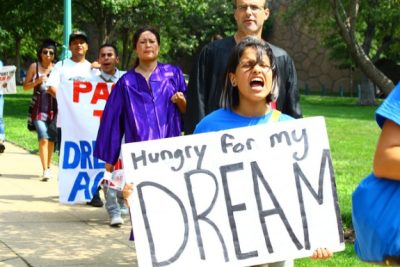
What’s the Value of Keeping Undocumented Youth in the Shadows?
The real life psychological ramifications of young immigrants struggling with their unauthorized status are often glossed over in the larger immigration debate. In a recent journal article, Learning to Be Illegal: Undocumented Youth and Shifting Legal Contexts in the Transition to Adulthood, University of Chicago professor Roberto G. Gonzales uses 150 interviews with young Latino adults to examine how unauthorized youth deal with their legal status as they come of age. Gonzales finds that as unauthorized immigrant children transition into adulthood, many “learn to be illegal,” figuring out how to exist in a society that was once welcoming, but now prohibits their participation. Read More

Washington Farmers Fear Economic Impact of National E-Verify Bill
Much like farmers in Georgia who are experiencing labor shortages due to HB 87—the state’s new immigration law which mandates use of E-Verify—growers in Washington state fear that a similar, national E-Verify bill will have a devastating economic impact on the state’s agricultural workforce. This week, the Washington Growers League said that a national E-Verify law would prohibit many of the state’s current farm workers from harvesting crops, which would in turn devastate the industry, slashing production and forcing consumers to buy produce out of state. Rep. Lamar Smith (R-TX) introduced the mandatory E-Verify bill (the Legal Workforce Act or H.R. 2164) back in June. Read More
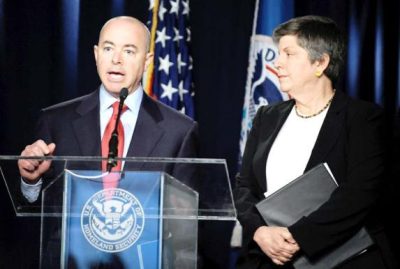
DHS Acknowledges that U.S. Immigration Policy Needs to Spark Economy and Attract Entrepreneurs
By PAUL ZULKIE, PRESIDENT OF THE AMERICAN IMMIGRATION COUNCIL Yesterday, Department of Homeland Security (DHS) Secretary Janet Napolitano and U.S. Citizenship and Immigration Services (USCIS) Director Alejandro Mayorkas announced a series of policy initiatives designed to “fuel the nation's economy and stimulate investment” by attracting foreign entrepreneurs who can invest in fields of high unemployment, create jobs, and form startup companies. It is encouraging that USCIS recognizes that immigrant entrepreneurs and innovators are a key to continued growth and to maintaining America’s competitive edge into the 21st century. It’s important that the agency keep this recognition in mind as it adjudicates visa petitions and applications. Read More

Restrictionist Group Strikes Out in Latest Report on Children of Diplomats
BY MARGARET D. STOCK, COUNSEL TO THE FIRM, LANE POWELL PC The Center for Immigration Studies (CIS) has been known for coming out with some odd reports over the years—but their latest is notable for its factual and legal flaws—and for argument that we should expand several different government bureaucracies to chase down the dozen or so children born in the U.S. each year to diplomats with immunity. The CIS report, “Birthright Citizenship for the Children of Diplomats?,” is about the one group of people that everyone agrees is exempted from birthright citizenship—the children born to foreign diplomats. It claims that, even though these people are not U.S. citizens, they are de facto citizens because they are able to receive Social Security numbers. If you look at the facts, their argument doesn't hold water. Read More
America's story is an immigrant story.