Economic Impact
Immigrants are essential to the U.S. economy, filling roles from high-skilled tech sectors to agricultural labor and driving economic growth. They also contribute to the tax base and consumer spending. We champion reform that will maximize this effect and create a more diverse and competitive workforce.
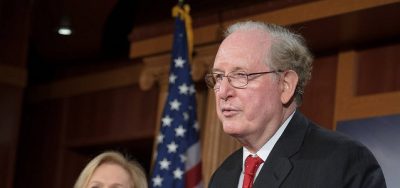
The Important Role of Immigrants in America’s Innovation Economy
This week, the U.S. Senate Committee on Commerce, Science, and Transportation weighed in on immigration reform with a hearing on the role of immigrants in America’s innovation economy. Remarks from Sens. Rockefeller (D-WV) and Thune (R-SD) noted the contributions of immigrant innovators and entrepreneurs. Immigrants in the United States were named as inventors or co-inventors on 25.6 percent of international patent applications filed from the U.S. in 2006. Furthermore, temporary workers and permanent residents made contributions to over half of the international patents filed by several large, multi-national companies. Temporary and permanent foreign-born workers represent at least 24 percent of the nation’s scientists and 47 percent of engineers with doctoral degrees. Read More

Social Security Administration Says Immigration Reform Will Increase Tax Revenue, Boost Economy
Will the immigration reform bill create millions of jobs, boost GDP, and help balance the budget? A new report by the Social Security Administration says that it will, by putting undocumented immigrants on the tax rolls and allowing them to participate fully and legally in the U.S. economy. Read More

How to Accurately Estimate the Economic Impact of the Senate Immigration Reform Bill
One of the most important questions being asked about the Senate immigration reform bill (S. 744) is how it will impact the economy. There is already a broad consensus among economic experts that immigration reform would be a net economic benefit in terms of jobs, wage levels, tax revenue, and Gross Domestic Product (GDP). As reported in Politico on May 8, for instance, a new study by the Social Security Administration estimates that “by 2024, the immigration bill will have created 3.22 million jobs, and boost GDP by 1.63 percent.” However, the most widely awaited estimate is that of the Congressional Budget Office (CBO), which will soon be “scoring” the bill in terms of its fiscal consequences. Read More
Adding it Up: Accurately Gauging the Economic Impact of Immigration Reform
With immigration reform legislation now making its way through Congress, it is imperative that we estimate as accurately as possible the full range of potential economic costs and benefits associated with any particular bill. It is especially important to establish the proper criteria for a complete, robust, and accurate fiscal scoring of any bill by the Congressional Budget Office (CBO). To that end, we should consider the growing consensus of the economic literature on the strongly positive benefits of immigration in general and of the various aspects of immigration reform in particular, as calculated using a variety of different methodologies. The CBO would be well-advised to keep this consensus literature in mind as it establishes the criteria it will use for scoring immigration reform legislation. More and more research demonstrates the economic benefits of immigration reform. The last few years have witnessed a burst in economic research showing the strongly positive net impacts of immigration in general and comprehensive immigration reform (CIR) in particular. Broad agreement has emerged as to not only the net economic and fiscal benefits of immigration and CIR, but the acceleration of those benefits over time. Moreover, these conclusions have been arrived at in studies utilizing a variety of different methodological approaches. It is important to point out that each of these different approaches is limited by a focus on separate aspects of immigration reform (Table 1). A complete methodological framework accounting for all of the components of CIR produces the largest-scale benefits. Read More
Bloated Estimate of Legalization Costs Ignores Immigration Reform’s Broader Economic Benefits
Washington D.C. – Today, the Heritage Foundation released a report which attempts to assess the fiscal costs associated with legalizing the 11 million unauthorized individuals living in the United States. The new report is similar to a 2007 study, which was widely criticized at the time of publication and continues… Read More

Keeping U.S. High-Skilled Temporary Worker Visa Programs Workable
When analyzing higher-skilled guest worker visa programs, such as the H-1B and L-1 programs, critics often fail to acknowledge the very different and important purposes that these programs were designed to serve, and the complicated requirements already in place to protect against abuse or exploitation. There is no denying that we can and should improve these programs and the strategies used to enforce them. However, given the well-established economic benefits of these programs, and the challenges employers face finding highly skilled workers, particularly in technical fields, it is essential that any proposed reforms not impose restrictions that may make these programs completely unworkable. Read More

Immigration Activists Take to the Streets in May Day Rallies Around the Nation
Tens of thousands of people across the country—from New York to Vermont to California and Arizona—gathered at rallies and marches yesterday to demand immigration reform. Immigrants and advocates joined with labor groups, lawmakers, and other organizations for the May Day, also known as International Worker’s Day, demonstrations in dozens of cities. And their message was clear: Congress must pass immigration reform. Read More

High-Skilled Immigration and Entrepreneurship in the Senate’s Immigration Bill
On the road to reform, the Senate’s Border Security, Economic Opportunity, and Immigration Modernization Act contains several changes and new provisions for skilled immigration and entrepreneurship. Specifically, the bill provides balanced reforms to the H-1B nonimmigrant visa for high-skilled individuals, various provisions for highly skilled individuals through permanent employment-based immigration, and a new INVEST visa for entrepreneurs. Read More

Senate Hearing Reinforces Why Congress Needs To Pass Comprehensive Immigration Reform
For more than seven hours on Monday, the Senate Judiciary Committee listened to testimony from almost two dozen people about the immigration reform bill a bipartisan group of senators introduced last week. From visas for farm workers and other foreign workers to the mandatory E-Verify system included in the bill, senators debated and questioned the witnesses about all aspects of immigration reform. Read More
Details Begin to Emerge on New Immigration Bill
Ahead of the expected release of a comprehensive immigration reform bill in the Senate this week, details were released outlining the broad strokes of the bill. The “Gang of Eight”—a bipartisan group of senators who have been working to develop the proposal—delayed a press conference that had been planned for today about the bill out of respect for the victims of the Boston Marathon bombing. The Senate group could announce the final measure tomorrow Read More
America's story is an immigrant story.