Economic Impact
Immigrants are essential to the U.S. economy, filling roles from high-skilled tech sectors to agricultural labor and driving economic growth. They also contribute to the tax base and consumer spending. We champion reform that will maximize this effect and create a more diverse and competitive workforce.

Three Ways Immigration Reform Would Make the Economy More Productive
By David Dyssegaard Kallick, Director of the Fiscal Policy Institute’s Immigration Research Initiative. A report just released by the Fiscal Policy Institute, Three Ways Immigration Reform Would Make the Economy More Productive shows that legalization of undocumented immigrants, done right, would do three things to increase economic productivity in the United States. Read More

How the Immigration Reform Bill Could Help Undocumented Farmworkers and Growers
Approximately 11 million undocumented immigrants could become eligible for legal status under S. 744, the immigration reform bill the Senate is considering, including millions of undocumented farmworkers. The importance of finding a way to create a legal workforce within the agriculture industry is critical, as undocumented farmworkers make up an estimated 53 percent of agriculture workers. Read More

Medicare’s Health and Well-Being Depends on Immigrants
Immigrants’ access to affordable health care is one of the most contested issues in the current immigration reform debate. Most advocates of comprehensive immigration reform point to the need to ensure that aspiring citizens have opportunities to access appropriate health care since such access will impact their ability to learn, to work, and to contribute to their communities. On the other end of the spectrum, anti-immigration groups tend to inaccurately emphasize that newly legalized immigrants would represent an excessive fiscal burden. This prediction is based on a misleading characterization of immigrants as “takers”—in other words, as disproportionate consumers of public resources. Several studies have shown that this is just not the case. In fact, non-citizens use public benefit programs at a lower rate than similar low-income native-born citizens. With regard to medical expenditures in particular, immigrants tend to use less health care than their U.S.-born counterparts. Read More
Gendered Paths to Legal Status: The Case of Latin American Immigrants in Phoenix, Arizona
This special report by Cecilia Menjívar and Olivia Salcido for the Immigration Policy Center looks at immigration law, which on its face appears gender neutral, but actually contains gender biases that create barriers for many women trying to gain legalization within the current immigration system. These inequalities appear across immigration law, and even as new laws are put into place, stereotypes and assumptions remain unchallenged. Ironically, even laws written specifically to protect women, such as the Violence Against Women Act (VAWA), continue to play out in practice along gender-biased lines. As immigration reform is being debated, our findings point to the need that any pathway to citizenship and integration be open, affordable, and accessible to all immigrant women, including those whose work is unpaid, and those employed in the informal economy. In order for this to occur, there should be more and stronger open channels for women to access the legalization process without having to rely on a principal visa holder to petition on their behalf. Listen to the teleconference. Read More

How Immigrant Entrepreneurs Fare in the New Immigration Bill
With the Senate Judiciary Committee’s vote last week to pass S.744 on to the Senate floor, a new proposal for spurring immigrant entrepreneurship and innovation will be before Congress. Title IV, Subtitle H of the bill creates the INVEST visa (Investing in New Venture, Entrepreneurial Startups, and Technologies) for immigrant entrepreneurs. This new visa program would allow immigrant entrepreneurs to come to the United States, start businesses, and create jobs in America. There would be two types of INVEST visas. A nonimmigrant INVEST visa would be renewable provided certain initial investment, annual revenue, and job creation criteria are met within an initial three-year period. The immigrant version of the INVEST visa would have basically the same criteria just at higher thresholds. The committee also adopted an amendment that permanently authorizes the EB-5 Regional Center Program, which has created tens of thousands of American jobs and attracted over $1 billion in investments since 2006. Read More

Experts from Left and Right Agree on Economic Power of Immigration Reform
In recent years, study after study has demonstrated a simple yet economically powerful truth about broad-based immigration reform: workers with legal status earn more than workers who are unauthorized—and these extra earnings generate more tax revenue, as well as more consumer spending, which creates more jobs. As a new report from the Center for American Progress (CAP) points out, this fact implies that states with appreciable unauthorized populations stand to gain economically from immigration reform that includes a legalization program for the unauthorized. Moreover, a new open letter to Congressional leaders released by the conservative American Action Forum illustrates that it is not only liberal advocacy groups like CAP which recognize the economic potential of immigration reform. Read More

How the Senate Bill Seeks to Deter Future Waves of Unauthorized Immigration
The Senate Judiciary Committee continues to consider amendments to Title II of the “Border Security, Economic Opportunity, and Immigration Modernization Act’’ (S.744) today. For many, Title II is the bill’s core as it deals with the legalization of the undocumented population already living here and lays out the rules concerning future immigration, among other issues. Read More

The W Visa: Why the Economy Benefits from A Robust New Worker Program
The Senate Judiciary Committee returns to its task of marking up S. 744 tomorrow, taking up, among other things, possible amendments to the W visa program for new nonimmigrant workers. This new program, blessed by both business and labor, is an effort to acknowledge the need for a more flexible system for meeting the demand for workers in certain occupations and industries that require less-skilled workers. At Tuesday’s hearing, several Senators challenged the idea that the American workforce needed to be supplemented with immigrant labor, but the evidence is overwhelming that there is both a need and an economic benefit to having a flexible and responsive program in place to bring in new workers where they are most needed. Read More
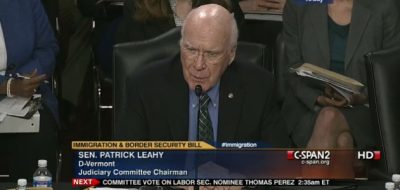
Day Two of Senate Immigration Mark-Up Continues With Temporary Employment Visas
On the second day of the Senate Judiciary Committee’s mark-up of S. 744, the “Border Security, Economic Opportunity, and Immigration Modernization Act,” the senators tackled most of the amendments to Title IV after finishing debate on a few border security amendments. The fourth section addresses the majority of non-immigrant temporary visas including those for high and less- skilled immigrant workers, entrepreneurship and innovation programs, as well as a range of miscellaneous visitor visas. Read More

What Do You Think About Immigration Reform?
As the Senate continues to shepherd a comprehensive immigration reform bill through the legislative process (day two of mark-up in the Senate Judiciary Committee begins tomorrow), it becomes clear how many issues are at stake in reform and how interconnected they are. It’s also overwhelming at times. That’s why the American Immigration Council is attempting to divide the issues into smaller discussions on our wiki, ThinkImmigration.org. Read More
America's story is an immigrant story.