Economic Impact
Immigrants are essential to the U.S. economy, filling roles from high-skilled tech sectors to agricultural labor and driving economic growth. They also contribute to the tax base and consumer spending. We champion reform that will maximize this effect and create a more diverse and competitive workforce.

An Unnecessary Pre-Emptive Strike Against Young Undocumented Immigrants
This week, the Center for Immigration Studies (CIS) issued a criticism of the Kids Act, a bill not yet released by House leadership. The thrust of their argument is that any legalization program the bill could propose would be an “amnesty,” no matter what the requirements, and that… Read More

Justice Department’s Losing Battle Over Deportation Waivers for Permanent Residents
For more than five years, the Department of Justice (DOJ) has defended a policy that deprives long-term lawful permanent residents (LPRs) of the opportunity to apply for a waiver that would allow them to remain in the United States. The waiver—known as the 212(h) waiver (referring to section 212(h)… Read More

Mayors Agree, Immigrants Make Their Cities More Economically Competitive
“Mayors are looking for a fix,” said Mayor Scott Smith of Mesa Arizona, President of the U.S. Conference of Mayors. “The status quo is not acceptable. It's as simple as that.” In a January 31 letter to Members of Congress, the United States Conference of Mayors urged expeditious action on immigration reform in 2014. As the letter stated: “Fixing our nation’s broken immigration laws is among the most important issues of interest to America’s mayors currently before the U.S. House of Representatives. We believe strongly that maintaining the status quo will further damage the economic, political and social structure of our cities and our country. As Mayors, we have a ground-level understanding of the pressing economic and moral imperatives that necessitate changing our national immigration system, and we urge the House to expeditiously bring legislation to the floor.” Read More
Health Worker Shortages & the Potential of Immigration Policy
Foreign-born and foreign-trained professionals play an important role in the delivery of health care in the United States. This report examines the important role of immigrant doctors and nurses – many of whom have received their training abroad – in the U.S. health industry, using new Census Bureau data as well as information from numerous interviews with health industry experts. Read More

Without Citizenship, Immigration Reformers Could be Leaving Dollars on the Table
While President Obama’s State of the Union Address will reportedly focus on income inequality in the United States, it is also a likely bet that he will address the economic benefit of immigration reform even as Republicans are finalizing their immigration principles. As conversations around immigration reform proposals forge ahead, the economic benefits of citizenship versus simply providing legal status should not be overlooked. According to a new Center for American Progress (CAP) report, The Economic Case for a Clear, Quick Pathway to Citizenship, there is an important citizenship premium that should be factored in to economic calculations of reform. According to the report, the premium is “the bump to a country’s economy that arises after immigrants become citizens. This bump comes in the form of higher wages and more tax revenue collected from naturalized citizens, all of which spurs more overall economic activity.” Read More

Senator Jeff Sessions Has Erroneously Blamed Immigrants for U.S. Income Inequality
Despite the formal end of the recession in 2009, unemployment in the United States remains high, wages are still stagnant, and economic indices of all kinds are looking grim. A crisis of this magnitude requires bold action by U.S. lawmakers to realign U.S. economic policies in ways that promote the growth of both jobs and wages. Economists across the political spectrum agree that immigration reform—including a pathway to legal status for unauthorized immigrants already living here—should be a central part of any such effort to boost the economy. Nevertheless, Sen. Jeff Sessions (R-AL) thinks he knows better. In his opinion, what we need to do to alleviate the nation’s economic woes is to derail immigration reform. Apparently, if we can hang on to our broken immigration system a little longer, there will be brighter days ahead for the U.S. economy. Read More
Michigan to Immigrants: You’re Welcome Here
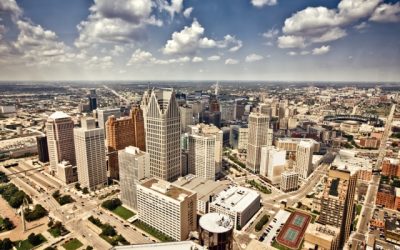
It is clear that Michigan Gov. Rick Snyder understands that immigration can be a potent boost to his state’s economy. It’s also an important component of economic revitalization for a city such as Detroit. Improving the nation’s broken immigration system could have enormous economic benefits for Michigan and states across the country, so Snyder joined former New York City Mayor Michael Bloomberg and former Secretary of Commerce Carlos Gutierrez, in Washington Friday to continue urging lawmakers to overhaul the U.S. immigration system. As Gutierrez explained, “Our laws aren’t serving our economy.” And Bloomberg noted that it is terrible economic policy to turn away foreign born entrepreneurs and innovators while also making it difficult for foreign-born graduates to remain in the country after earning degrees from our colleges and universities. State leaders recognize this as well, but they also know upgrading immigration laws requires congressional action. “We need comprehensive immigration reform. Bottom line,” Snyder said Friday. “To be blunt, we have a dumb system.” Read More

Why 2013 Was the Year of Positive State Immigration Measures
States took the lead on immigration reform in 2013, and compared to previous years, the majority were positive measures to help integrate and improve the day-to-day lives of immigrants in their respective states. According to the National Conference of State Legislatures’ (NCSL) 2013 Immigration Report, 45 states passed 184 immigration-related laws in 2013 and adopted 253 resolutions. The number of immigration measures in 2013 is a 64 percent increase over 2012, a year when many states were waiting to see the Supreme Court’s decision on Arizona’s SB 1070. Also in 2012, the Department of Homeland Security began offering temporary legal status to young undocumented immigrants under the Deferred Action for Childhood Arrivals policy sending a message to states that the federal government was serious about finding ways to normalize the status of the nation’s undocumented population. Read More

Immigrant Entrepreneurs Driving Growth in America’s Heartland
When Jordi Carbonell, originally from Spain, and his wife Melissa Fernandez opened their Cafe Con Leche coffee shop several years ago in southwest Detroit, the couple founded their business on the idea that the neighborhood needed a central gathering place to create a strong community. Today,… Read More

16 Representatives Stuck in Reverse on Immigration
Despite the failure of the House to act on immigration reform last year, there was no doubt that the majority of Americans—and even the majority of Members of Congress—understood that immigration reform was an important component in creating economic opportunity for all. Last Friday, House Majority Leader Eric Cantor reiterated that support during an exchange on the House floor when he said Republicans were working on an “appropriate path forward” on immigration policies. “Immigration reform could be an economic boon to this country. We’ve got to do it right,” Cantor said. Read More
America's story is an immigrant story.