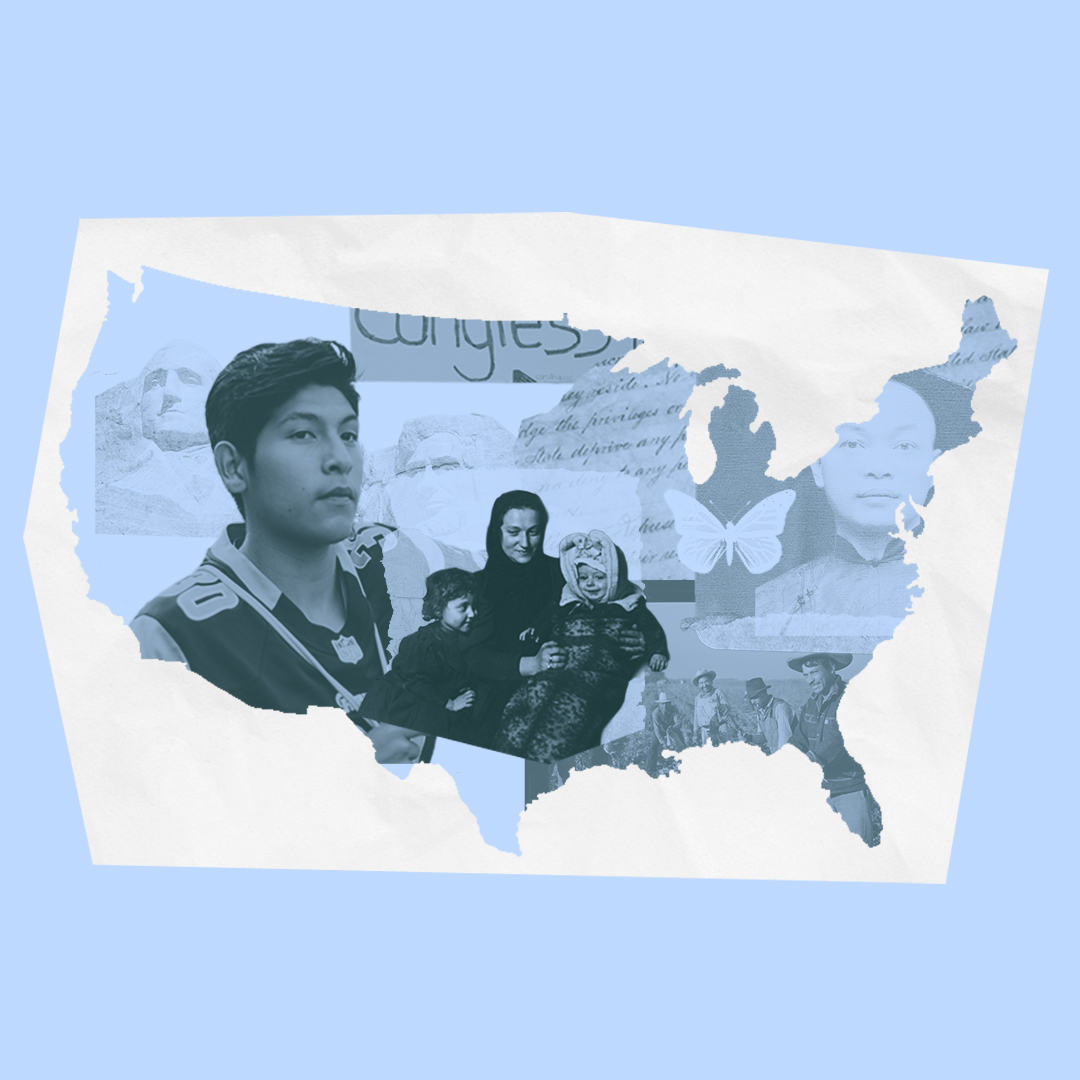
Due Process and the Courts
What does the constitution say about due process?
The Fifth Amendment to the Constitution says clearly that no person shall be deprived of life, liberty, or property without the due process of law. Note that this says person, not citizen, and over the years the Supreme Court has consistently ruled that the Due Process Clause applies to all people in the United States.Do non-citizens have the right to due process in the U.S.?
Yes. The Constitution guarantees due process rights to all "persons," not just citizens. This means non-citizens, including undocumented immigrants, are entitled to fair treatment under the law. This includes the right to defend themselves in court. But recent Trump administration policies that speed up deportations and limit access to legal representation make it harder for non-citizens to get their fair day in court.- Access to legal representation Access to legal counsel is an essential part of our justice system and our democracy. In the criminal justice system, anyone facing even one day in jail gets a lawyer if they can't afford one. But immigrants facing deportation usually don't get that chance.The research is clear – the most effective way to ensure some level of due process for people navigating our complicated immigration system is for them to have trained attorney at their side.But Trump administration is now working to strip attorneys from as many people as possible, all in the name of increasing its deportation numbers. This attempt to eliminate basic due process will hurt people who already have few options.
- Fair day in court Due process guarantees that individuals have the opportunity to defend themselves in court. This includes non-citizens facing deportation.
Why is due process important?
We are seeing right now the importance of due process when it comes to President Trump's actions to carry out the so-called Alien Enemies Act, a 1798 wartime law that permits people to be deported outside of the normal framework of immigration law. President Trump has alleged that this law allows him to simply point at any person, declare them to be an alien enemy, and kick them out of the country without ever having a chance to see a judge. Thankfully, the Supreme Court said that is not true, and in a unanimous decision, ruled that people can challenge the Trump administration's invocation of the Alien Enemies Act. That is why due process is so important, because it means that no person can be rounded up and sent to another country without a chance to go to court and make the government prove their case.How is the American Immigration Council working to protect due process?
- We serve thousands of individuals in immigration detention centers through the Immigration Justice Campaign, our initiative with the American Immigration Lawyers Association. The Justice Campaign provides free legal services for immigrants who would otherwise have to navigate our complicated immigration system without a lawyer.
- We use the courts to demand a fair process for immigrants. Our litigation team is fighting back against the Trump administration’s blatant disregard for due process including filing a lawsuit challenging their illegal detention of immigrants in El Salvador’s notorious Terrorism Confinement Center (CECOT).

At Supreme Court, Arizona Gets Help from the Usual Suspects
Following the filing last week of Arizona’s brief defending SB 1070, the Supreme Court has received a barrage of briefs supporting the notorious immigration law from a none-too-surprising array of suspects. As might be expected, the arguments range from the predictable (that the Obama Administration fails to enforce the immigration laws) to the provocative (that states can carry out all immigration functions short of deportation) to the preposterous (that the Constitution allows Arizona to wage war against an “invasion” of immigrants). Of course, while neither Arizona nor their lawyers can be held responsible for the arguments of outside organizations, the briefs still offer a revealing look at the identities and motivations of SB 1070’s most ardent supporters. Read More
In Fight Over SB 1070, Arizona Makes an All-Too-Familiar Case to the Supreme Court
The Supreme Court case involving Arizona SB 1070 has officially entered the home stretch. On Friday, the Justices announced that oral arguments will take place on the fourth Wednesday in April, making it the final case to be heard this term. Yesterday, Arizona filed its much-anticipated brief at the Supreme Court, laying out its legal defense of the four provisions currently blocked by a preliminary injunction. To make its case to the Court, Arizona retained renowned attorney Paul Clement, a former Solicitor General who is simultaneously handling the legal challenge to the Affordable Care Act. But while the state may have brought in new lawyers, much of its brief reads like an all-too-familiar “study” from an anti-immigration organization. Read More
En Banc Court Reverses Adverse Holding, Says Immigrants Can Pursue Cases from Outside U.S.
Washington, D.C.- Today, an en banc panel of the U.S. Court of Appeals for the Tenth Circuit rejected the government’s attempt to bar noncitizens from seeking to reopen their cases from outside the United States. This is the seventh appellate court to find the “departure bar”—a regulation barring noncitizens from… Read More
Access to Counsel Before CBP
The American Immigration Council, with co-counsel Dorsey & Whitney LLP, filed a lawsuit against the Department of Homeland Security (DHS) and U.S. Customs and Border Protection (CBP) to compel the release of records relating to noncitizens’ access to counsel. Read More

It’s Time to Improve Noncitizens’ Access to Counsel
In the United States, most immigration decisions impacting noncitizens are made by immigration officials in informal proceedings far from a courtroom. While the right to an attorney (at the noncitizens’ own expense) in immigration court proceedings is widely recognized, the right to counsel in administrative settings outside of a courtroom is often overlooked or explicitly not recognized. As a result, many noncitizens are forced to navigate the immigration process alone. For those noncitizens that are represented, the Department of Homeland Security (DHS) often restricts their access to their lawyers. Read More
USCIS Takes Steps to Improve Noncitizens’ Access to Legal Counsel
Washington D.C. – During its nine-year history, issues have arisen with respect to restrictions on counsel by the Department of Homeland Security’s immigration agencies. Tuesday, in response to calls from the American Immigration Council and the American Immigration Lawyers Association, the U.S. Citizenship and Immigration Services (USCIS) issued immediate,… Read More
LAC Urges Fifth Circuit to Permit Removal Cases to Continue from Outside the United States
Washington, D.C.—The Legal Action Center, along with the National Immigration Project of the National Lawyers Guild (NIPNLG), filed an amicus brief yesterday urging the Fifth Circuit Court of Appeals to reject the departure bar, a regulation that the Board of Immigration Appeals (BIA) interprets as barring it from reviewing cases… Read More

Federal Judge Blocks Yet Another Provision of Alabama’s Extreme Anti-Immigrant Law
As if people needed more proof that Alabama’s extreme anti-immigrant law, HB 56, is bad for the state, a federal judge temporarily blocked enforcement of yet another provision of the law this week. U.S. District Court Judge Myron Thompson temporarily enjoined enforcement of Section 30 that, as applied, requires mobile home owners to provide proof of lawful status before renewing their registration. Judge Thompson’s ruling, in which he calls Alabama’s law “discriminatorily based,” is the latest in a series of blows to the harsh law—a law that even Alabama’s own attorney general and governor find problematic. Read More
Supreme Court to Weigh in on Injunctions Against Arizona SB 1070
Earlier today, the Supreme Court announced what many supporters and opponents of Arizona SB 1070 long expected: that the Justices will themselves have the final word on the validity of the injunctions entered shortly after the law was enacted last year. Technically, the question before the Justices is simply whether four of the law’s provisions should be temporarily blocked pending resolution of a larger legal challenge. In addition, the Court will not consider claims raised in a separate lawsuit by numerous immigrants’ and civil rights groups. But in the decision it ultimately issues, the Supreme Court may well provide broad guidance about what role, if any, local police may play in enforcing federal immigration law—which could in turn affect legal challenges to copycat laws in other states, such as Alabama. Read More
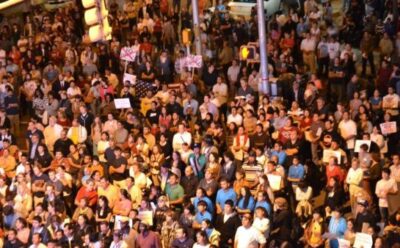
Thousands Rally for Repeal of Alabama’s Extreme Anti-Immigrant Law
Thousands gathered outside the historic 16th Street Baptist Church in Birmingham, Alabama yesterday to demand the repeal of the state’s harsh anti-immigration law, HB 56. Religious, community and civil rights leaders, as well as a special Congressional delegation, urged state legislators to bring an end to Alabama’s immigration law—a law which continues to slow state businesses, separate families and drive immigrants from the state. The Congressional delegation also held an ad hoc hearing at Birmingham City Hall to hear how the controversial law is effecting state residents, especially the Latino and immigrant communities where, according to Rep. Luis Gutierrez, “the feeling of danger and despair is palpable.” One Congressional member, Rep. Al Green of Texas, commented that the law "deserves to be placed on the trash heap of history." Read More
America's story is an immigrant story.