Due Process and the Courts
What does the constitution say about due process?
The Fifth Amendment to the Constitution says clearly that no person shall be deprived of life, liberty, or property without the due process of law. Note that this says person, not citizen, and over the years the Supreme Court has consistently ruled that the Due Process Clause applies to all people in the United States.Do non-citizens have the right to due process in the U.S.?
Yes. The Constitution guarantees due process rights to all "persons," not just citizens. This means non-citizens, including undocumented immigrants, are entitled to fair treatment under the law. This includes the right to defend themselves in court. But recent Trump administration policies that speed up deportations and limit access to legal representation make it harder for non-citizens to get their fair day in court.- Access to legal representation Access to legal counsel is an essential part of our justice system and our democracy. In the criminal justice system, anyone facing even one day in jail gets a lawyer if they can't afford one. But immigrants facing deportation usually don't get that chance.The research is clear – the most effective way to ensure some level of due process for people navigating our complicated immigration system is for them to have trained attorney at their side.But Trump administration is now working to strip attorneys from as many people as possible, all in the name of increasing its deportation numbers. This attempt to eliminate basic due process will hurt people who already have few options.
- Fair day in court Due process guarantees that individuals have the opportunity to defend themselves in court. This includes non-citizens facing deportation.
Why is due process important?
We are seeing right now the importance of due process when it comes to President Trump's actions to carry out the so-called Alien Enemies Act, a 1798 wartime law that permits people to be deported outside of the normal framework of immigration law. President Trump has alleged that this law allows him to simply point at any person, declare them to be an alien enemy, and kick them out of the country without ever having a chance to see a judge. Thankfully, the Supreme Court said that is not true, and in a unanimous decision, ruled that people can challenge the Trump administration's invocation of the Alien Enemies Act. That is why due process is so important, because it means that no person can be rounded up and sent to another country without a chance to go to court and make the government prove their case.How is the American Immigration Council working to protect due process?
- We serve thousands of individuals in immigration detention centers through the Immigration Justice Campaign, our initiative with the American Immigration Lawyers Association. The Justice Campaign provides free legal services for immigrants who would otherwise have to navigate our complicated immigration system without a lawyer.
- We use the courts to demand a fair process for immigrants. Our litigation team is fighting back against the Trump administration’s blatant disregard for due process including filing a lawsuit challenging their illegal detention of immigrants in El Salvador’s notorious Terrorism Confinement Center (CECOT).
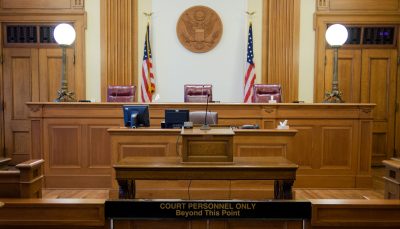
Immigration Court Backlog Shows No Sign of Shrinking
The latest figures show that the number of cases pending in immigration court continue to grow. According to the Transactional Records Access Clearinghouse (TRAC), there were 486,206 cases in the backlog as of the end of March. This is almost 30,000 more pending cases than Executive Office of Immigration… Read More

What Are the Next Steps at the Supreme Court in U.S. v. Texas?
The oral arguments in U.S. v. Texas are now complete and dozens of news articles and analyses have attempted to predict what the Court will decide. However, all that truly matters is the final decision rendered by the eight sitting Justices. This begs the questions of when and… Read More

Understanding Justice Kennedy’s “Upside Down” Argument in U.S. v. Texas
On April 18, the United States Supreme Court heard oral arguments in United States v. Texas, a case brought by 26 states to challenge President Obama’s frozen deferred action programs, known as Deferred Action for Childhood Arrivals Plus (expanded DACA) and Deferred Action for Parents of Americans and… Read More
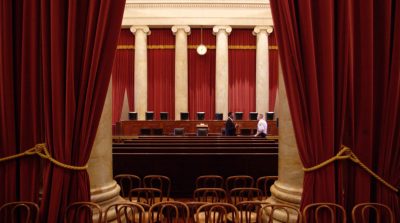
Digesting the Argument in U.S. v. Texas: What Is Lawful Presence and Why Does It Not Mean What It Sounds Like?
The oral argument in United States v. Texas shined a light on the confusion between the term “lawful presence” and what it means to have a legal immigration status in the United States. Early in the argument, Chief Justice Roberts noted that in its brief, the United States asserted… Read More
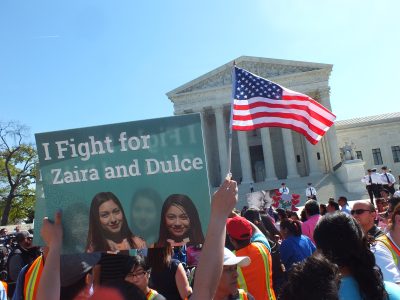
Supreme Court Considers President’s Executive Actions on Immigration While Thousands Rally Outside
The Supreme Court heard oral arguments in United States v. Texas. While lawyers presented their arguments before the eight Justices inside, on the outside families, advocates, immigrants, faith groups, and a wide range of civil rights and community organizations gathered to demonstrate support for the President’s initiatives. The… Read More

What You Need to Know About the DAPA and Expanded DACA Case Before the Supreme Court
In the spring of 2016, the U.S. Supreme Court will consider United States v. Texas, a politically charged lawsuit about the legality of some of President Obama’s executive actions on immigration. The oral argument will take place on Monday, April 18 before the eight sitting justices. The initiatives in… Read More
Defending DAPA and Expanded DACA Before the Supreme Court
This guide provides brief answers to common questions about United States v. Texas, including what is at stake in the case, how the litigation began, what the contested issues are, and the impact the case may have on our country. Read More
Comments on the Immigration Adjudication Draft Report by the Administrative Conference of the United States (ACUS) (Feb. 13, 2012)
Addressing representation, stipulated removal orders , prosecutorial discretion, video hearings, and the asylum clock. Read More
Comments on Streamlining and Improving the U.S. Immigrant and Nonimmigrant Visa Systems
The Council submitted comments in response to a request by DHS and the Department of State (DOS) for input on streamlining and improving the U.S. immigrant and nonimmigrant visa systems. In the comments, the Council recommended that DHS amend 8 C.F.R. § 292.5(b) to ensure that individuals in secondary inspection are provided with a regulatory right to counsel during their examinations, and that DOS promulgate regulations in 22 C.F.R. Part 40 to provide for meaningful access to counsel during interviews at consular posts. Read More
Testimony submitted to the Senate Judiciary Committee for May 18, 2011 hearing, “Improving Efficiency and Ensuring Justice in the Immigration Court System.”
Addressing access to counsel, effective assistance of counsel, protections for noncitizens lacking mental competency, the employment authorization employment clock, and the departure bar to motions to reopen. Read More
America's story is an immigrant story.