Demographics
Immigrants are a vital, dynamic part of the U.S. population—especially when it comes to the workforce. 77.1% of immigrants are of working age (16–64), compared to just 62.0% of U.S.-born residents, making them key contributors to the economy as both taxpayers and consumers.
- 22.9 million immigrants are active in the U.S. workforce
- 74% of foreign-born residents are proficient in English
- 89.4% of all undocumented immigrants are of working age
- 5.2 million U.S. citizen children living with at least one undocumented family member
- Only 4.9% of immigrants are under 15, compared to 20.3% of U.S.-born residents
- 18% of immigrants are 65+, nearly identical to the 17.7% of U.S.-born seniors
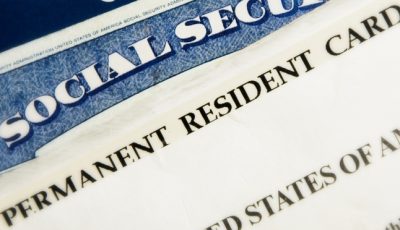
Why Should We Support a Legalization Program for Unauthorized Immigrants?
As the immigration debate heats up in Congress, the central question for much of the American public will be whether or not to create a pathway to legal status for the 11 million unauthorized immigrants now living in the United States. In formulating an answer to that question, however, it is necessary to ask two others. First, exactly who are the unauthorized immigrants who would be attaining legal status? Secondly, what would the impact be on the U.S. economy were so many unauthorized immigrants to be legalized? The answer to the first question is relatively simple: unauthorized immigrants are just like everybody else; they are adults and children, mothers and fathers, homeowners and churchgoers. The short answer to the second question is that legalization would be a stimulus to the U.S. economy. Workers with legal status earn higher wages, and these extra earnings generate more tax revenue for federal, state, and local governments, as well as more consumer spending, which sustains more jobs in U.S. businesses. Read More
Legalize Who?: A Portrait of the 11 Million Unauthorized Immigrants in the United States
As the immigration debate heats up in Congress, the central question will be what to do about the 11 million unauthorized immigrants now living and working in the United States. The media often portrays this population as barely literate young men who pour over the southern border and live solitary lives, rather than providing a nuanced understanding of who the 11 million really are: adults and children, mothers and fathers, homeowners and churchgoers who are invested in their communities. This fact sheet attempts to provide a basic understanding of who the unauthorized are as people: where they live, where they’re from, how long they have been here, and what family and community ties to the United States they have. Data from the U.S. Census Bureau and other sources provide this very necessary social context to the immigration debate. And what the data reveal are that most of the unauthorized have been here for over a decade. While they are concentrated in California, Texas, Florida, and New York, there are sizeable unauthorized populations in other states across the country. Three-fifths of unauthorized immigrants come from Mexico, but significant numbers also come from Central America and the Philippines. Nearly half of all adult unauthorized immigrants have children under the age of 18, and roughly 4.5 million native-born U.S.-citizen children have at least one unauthorized immigrant parent. More than half of unauthorized immigrant adults have a high-school diploma or more education. Nearly half of longtime unauthorized households are homeowners. And approximately two-fifths of unauthorized immigrant adults attend religious services every week. In other words, most unauthorized immigrants are already integrating into U.S. society not only through their jobs, but through their families and communities as well. Read More

Immigrants Add Billions to the Arkansas Economy
A perennial question in the immigration debate is whether or not immigrants contribute more to the economy than they cost. That is, do they add more economically as workers, taxpayers, consumers, and entrepreneurs than they “consume” in public education, public healthcare, and public benefits? In some ways, this question is misleading. Education and healthcare are social investments that pay future dividends; they are not merely fiscal expenses. Nevertheless, it is a useful exercise to take the question at face value and do the math. The result, contrary to the convoluted arithmetic of anti-immigrant activists, is overwhelmingly positive. Immigrants add far more to the economy than they take away. And given the aging of the native-born population, the contributions of immigrants (and their children) will only increase over time. Read More

Reasons for Cautious Optimism on Immigration Reform
There is considerable debate at the moment over the prospects for immigration reform this year. On the one hand, an electorally chastened Republican Party seems to be reevaluating its long-standing support for deportation-only immigration policies. On the other hand, it looks as though the White House and Congress are embarking upon lengthy debates over gun control and tax-and-spending policies; debates which might leave little room for a rational discussion of U.S. immigration laws. Nevertheless, reports from the White House indicate that President Obama is ready to forge ahead on immigration reform. It remains to be seen, however, what form that will take. Will the President opt for a truly comprehensive solution, or will he adopt a more piecemeal type of reform that targets only some subsets of the immigrant population? Let us hope that the comprehensive approach prevails. The fates of millions of people have been hanging in the balance for far too long. Read More

America’s Aging Crisis Will Only Grow Worse With Declining Immigration
As a recent story in The Economist notes, the conventional wisdom has long been that “because Americans have so many babies and welcome so many immigrants, they had more room to deal with the coming burden of pensions and health care for the elderly.” But that is no longer the case. The story goes on to point out that “the savage recession of 2007-09 and its aftermath…have weakened those demographic advantages. America’s fertility rate has been falling since 2007, as has net immigration.” In other words, there are going to be fewer working-age, tax-paying adults to support the rapidly growing number of elderly Americans. Read More

America: Start-Up Nation of Immigrants
AOL co-founder Steve Case brought an important message to the National Strategy Session on Immigration in Washington, D.C. this week: America is a start-up nation. Over the last 200 years, America has built the most dynamic economy in the world through the hard work and innovation of its entrepreneurs. Read More

Immigrants May Hold the Key to Urban Renewal in Baltimore
In an attempt to reverse decades of population decline, Baltimore Mayor Stephanie Rawlings-Blake has launched a high-profile effort to attract “new Americans” to the city. The theory is that these new Americans—that is, immigrants—will bring the skills, entrepreneurship, and tax base needed to revitalize blighted neighborhoods that are now full of boarded-up buildings rather than thriving businesses and family homes. The available evidence suggests that immigration can indeed be a powerful force for urban renewal. But most immigrants will not be drawn to a new city simply by a welcome sign. It is likely that they look for some signs of revitalization before they take the risk of uprooting their families and moving to a new place. Read More

This Week’s Immigration Proposals: Old News, Old Ideas
If you follow immigration, but are returning from a month-long, news-free vacation, there’s only one conclusion you would draw from the legislation Republicans offered up this week in Congress: Mitt Romney must have won the presidential election. After all, the ACHIEVE Act, introduced yesterday by retiring Senators Jon Kyl (R-AZ) and Kay Bailey Hutchison (R-TX), which offers temporary legal status but no path to citizenship to DREAMers, is surely the bill they were preparing to offer in the event that a Romney Administration was in the wings. And on the House side, a slightly revised version of the STEM Jobs Act—which failed on the suspension calendar before the election—is back on the floor at the end of this week without changing any of the problems that led to its defeat before. Surely, this suggests that the predictions that immigration would play a decisive role in the presidential election didn’t pan out and that self-deportation as an immigration reform strategy worked. Except, none of this is true. Read More

Talking Turkey on Immigration 2012
After cheers for football, some of the loudest shouting at many Thanksgiving feasts will come from political discussions gone awry. You might think that you can take it easy on the immigration issue this year, as the political chatter is now heavily in favor of immigration reform. But the… Read More

In Presidential Election, “Self-Deportation” Goes Down to Defeat
It did not become certain until late Tuesday night that President Obama would win re-election. But for Mitt Romney, the campaign may have been lost during the Republican primary, when he cited “self-deportation” as the solution to our nation’s immigration problems. With the post-election dust now settled, it has become increasingly clear that supporting the idea is not only bad as a matter of policy, but also a losing political strategy. Read More
America's story is an immigrant story.