Business and the Workforce
Immigrants not only bring diverse skills and perspectives to the U.S. workforce, they often fill employment gaps in crucial fields. We advocate for expanded work visas and related programs so our labor force can continue to benefit from immigrant workers and remain competitive in the global economy
Immigration made U.S. world’s best startup
The Fresno Bee Immigration is pure entrepreneurship. You leave behind everything familiar to start somewhere new. To succeed, you need to develop alliances. You must acquire skills. You will have to improvise on occasion. It’s a bold proposition. Immigration is also fundamental to the U.S. national identity — as the… Read More

Immigrant Entrepreneurs Grow Industries and Create Jobs
As you might suspect, immigrant entrepreneurs are key drivers in the transportation, food and building services industries. And a recent report from the Immigrant Learning Center (ILC) shines a spotlight on immigrant entrepreneurship in these industries, with a particular geographic focus on Massachusetts, New York, and Pennsylvania. Concerning the three industry areas, the ILC study – through an analysis of public data and interviews with immigrant business owners and industry representatives – finds the following: Read More
Why VCs and Foreign Founders Want the ‘Entrepreneur Visa’
Wall Street Journal June 5, 2013 Immigration challenges plague foreign entrepreneurs who want to build startups in the U.S. Beyond worrying about individual visa status, a founder has to worry about tax laws in the U.S., and for example, predict how a requirement to repatriate proceeds may impact a company’s… Read More

How the Immigration Reform Bill Could Help Undocumented Farmworkers and Growers
Approximately 11 million undocumented immigrants could become eligible for legal status under S. 744, the immigration reform bill the Senate is considering, including millions of undocumented farmworkers. The importance of finding a way to create a legal workforce within the agriculture industry is critical, as undocumented farmworkers make up an estimated 53 percent of agriculture workers. Read More

How Immigrant Entrepreneurs Fare in the New Immigration Bill
With the Senate Judiciary Committee’s vote last week to pass S.744 on to the Senate floor, a new proposal for spurring immigrant entrepreneurship and innovation will be before Congress. Title IV, Subtitle H of the bill creates the INVEST visa (Investing in New Venture, Entrepreneurial Startups, and Technologies) for immigrant entrepreneurs. This new visa program would allow immigrant entrepreneurs to come to the United States, start businesses, and create jobs in America. There would be two types of INVEST visas. A nonimmigrant INVEST visa would be renewable provided certain initial investment, annual revenue, and job creation criteria are met within an initial three-year period. The immigrant version of the INVEST visa would have basically the same criteria just at higher thresholds. The committee also adopted an amendment that permanently authorizes the EB-5 Regional Center Program, which has created tens of thousands of American jobs and attracted over $1 billion in investments since 2006. Read More
These Three Facts Prove That America Needs More Immigrants
Business Insider May 22, 2013 By Somesh Dash America finally has an opportunity to establish a sensible immigration policy in the coming months. The effects of the policy will have far reaching ramifications in terms of both economic and social implications for the country in years to come. Read More
The W Visa: Why the Economy Benefits from A Robust New Worker Program
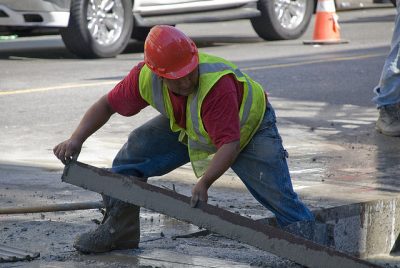
The Senate Judiciary Committee returns to its task of marking up S. 744 tomorrow, taking up, among other things, possible amendments to the W visa program for new nonimmigrant workers. This new program, blessed by both business and labor, is an effort to acknowledge the need for a more flexible system for meeting the demand for workers in certain occupations and industries that require less-skilled workers. At Tuesday’s hearing, several Senators challenged the idea that the American workforce needed to be supplemented with immigrant labor, but the evidence is overwhelming that there is both a need and an economic benefit to having a flexible and responsive program in place to bring in new workers where they are most needed. Read More

Facts About H-1B Workers and the Innovation Economy
While widespread research documents a critical need for skilled workers in the United States to maintain and strengthen our innovation industry, myths exist in opposition to programs designed to help alleviate that shortage. In particular, the H-1B visa program for high-skilled foreign-born workers, primarily used for science, technology, engineering, and mathematics (STEM) fields, is a routine recipient of critical ire. As the Senate Judiciary Committee discusses H-1B reforms in Title IV of S.744, here we dispel some of the common myths associated with the H-1B high-skilled visa program. Read More
Fueling the Recovery
How High-Skilled Immigrants Create Jobs and Help Build the U.S. Economy With the U.S. economy still recovering, it may seem counterintuitive to believe that any industry would benefit from having more workers. But that is precisely the case when it comes to those industries which depend upon highly skilled workers. The United States has long faced a dilemma in this respect: the U.S. economy is, in general, absorbing more high-skilled professionals than the U.S. educational system produces or that are available in our workforce. That is one reason so many highly skilled workers in the United States are immigrants. For instance, in “STEM” occupations (science, technology, engineering, and mathematics), the foreign-born account for 26.1 percent of workers with PhDs and 17.7 percent of those with master’s degrees. However, arbitrary limits imposed by the U.S. immigration system, particularly the inadequate supply of green cards and H-1B visas, have restricted the ability of the U.S. to compete in the global battle for talent and ideas. Given that highly skilled professionals tend to create jobs through their innovative work, such limits are economically self-defeating. High-skilled immigrant workers create new jobs. Read More
Rebuilding Local Economies
Innovation, Skilled Immigration, and H-1B Visas in U.S. Metropolitan Areas Although immigration policy is debated at the national level, its impact is most often felt in local and regional communities. This is certainly true for the H-1B program, which is routinely studied at the national level, but cannot be fully understood without driving down to examine the role of H-1B workers at the metropolitan and local levels. New research at this more specific level of analysis suggests that current H-1B policies must be made both flexible and nuanced. There is no “one size fits all” approach to the recruitment, hiring, and retention of high-skilled foreign workers. As lawmakers consider changes to the H-1B program, including the creation of a High Skilled Jobs Demand Index, it is essential to remember that demand for H-1B workers in many metropolitan areas is high, varies by industry, and has ripple effects throughout a regional economy. Thus, predicting and calculating the need for H-1B workers requires an understanding of the dynamics at the metropolitan level. Metropolitan Area Demand for High-Skilled Workers is High, Especially in Innovation Industries Innovation-intensive metropolitan areas tend to have higher rates of patenting, lower unemployment rates, and higher demand for high-skilled workers since patenting growth is correlated with job growth, population growth, and increases in educational attainment. Read More
America's story is an immigrant story.