Border Enforcement
Migration at the border is a multifaceted issue, challenging the U.S. to secure our borders while upholding the human rights of individuals seeking safety and better opportunities. Balancing national security with compassion and our legal obligations to asylum seekers presents intricate dilemmas, and we collaborate with policymakers to advance bipartisan, action-oriented solutions.

Beyond A Border Solution
- Asylum
- May 2, 2023
America needs durable solutions. These concrete measures can bring orderliness to our border and modernize our overwhelmed asylum system. Read…
Read More

A Mandatory Employment Verification System without Reform is a Recipe for Disaster
Unabashed promoters of E-verify have had a busy week, moving from hearings in the Senate and House to Rep. Heath Shuler's (D-NC) pep rally for the 2009 version of his fatally flawed SAVE Act—a bill that continues to promote the deportation-only version of immigration reform. Step back from all this activity, however, and two things are clear: 1) serious problems continue to plague a wide-scale implementation of an electronic employment verification system (EEVS); and 2) those problems won't be tackled except in the context of comprehensive immigration reform. Read More

New Yorker Profile of Joe Arpaio is Not a Pretty Picture
The July 20th issue of The New Yorker paints a detailed portrait of Maricopa County, Arizona’s Sheriff Joe Arpaio—and it is not a pretty picture. The profile of “Sheriff Joe” that emerges from the story by journalist William Finnegan is that of a man obsessed with publicity and self-promotion, who has a deep streak of sadism and little regard for the U.S. Constitution, civil rights, actual crime-fighting, or protecting the safety of the public he ostensibly serves. While Arpaio persists in his personal crusade against unauthorized immigrants, serious crimes go unsolved, emergency-response times climb, and the rights of native-born Americans and immigrants alike are routinely trampled in the process. The most remarkable aspect of this story is that Arpaio is still legally permitted to carry a badge and a gun after more than a decade and a half of egregiously abusing his power. Read More
New Yorker Profile of Joe Arpaio is Not a Pretty Picture
Photo by TheRagBlog. The July 20th issue of The New Yorker paints a detailed portrait of Maricopa County, Arizona’s Sheriff Joe Arpaio—and it is not a pretty picture. The profile of “Sheriff Joe” that emerges from the story by journalist William Finnegan is that of a man obsessed with publicity and self-promotion, who has a deep streak of sadism and little regard for the U.S. Constitution, civil rights, actual crime-fighting, or protecting the safety of the public he ostensibly serves. While Arpaio persists in his personal crusade against unauthorized immigrants, serious crimes go unsolved, emergency-response times climb, and the rights of native-born Americans and immigrants alike are routinely trampled in the process. The most remarkable aspect of this story is that Arpaio is still legally permitted to carry a badge and a gun after more than a decade and a half of egregiously abusing his power. Read More

Senate Hearing on Employment Verification System Leaves Many Questions Unanswered
Today the Senate Immigration Subcommittee held a hearing addressing electronic employment verification. While today’s hearing acknowledged that employment verification is an important element of comprehensive immigration reform, serious questions remain about how a mandatory employment verification system should be designed. Today’s momentum building must be paired with serious analysis of the many serious issues involved with a large, mandatory employment verification system. While employment verification is viewed as an immigration enforcement tool, it is a program that affects every person working in the U.S.—including U.S. citizens. Before moving forward, several things must be addressed: Read More

CIS Proposes Unique Approach to Union Organizing
What’s the best way to help workers form a union in a workplace where managers have spent years wantonly violating labor laws by threatening and intimidating workers into resisting unionization? If you’re the Center for Immigration Studies (CIS), the answer would seem to be “get rid of the workers.” At least, that is one of the main recommendations contained within a rather confusing new CIS report on the aftermath of the January 2007 immigration raids conducted by Immigration and Customs Enforcement (ICE) agents at the Smithfield pork plant in Tar Heel, North Carolina. Holding up Smithfield as a prototype for the nation, the CIS report vaguely suggests that destructive immigration raids and a flawed electronic employment-verification system will not only succeed in draining millions of unauthorized immigrants from the United States, but bolster unionization for American workers, too. These are fanciful notions at best. Read More
Policy or Politics? DHS Changes and Expands 287(g) Program
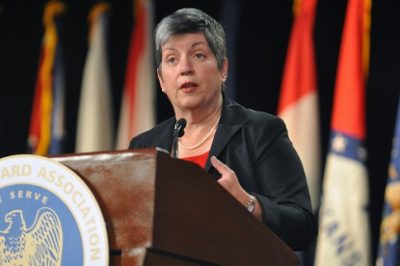
Last Friday, Department of Homeland Security (DHS) Secretary Janet Napolitano announced changes to the controversial 287(g) program—a program which allows state and local police agencies to partner with ICE to enforce federal immigration laws. DHS also announced that, rather than waiting for the new policies to be implemented and tested, it has expanded the problematic 287(g) program with 11 new Memoranda of Agreement (MOAs). The 287(g) program has been broadly criticized by immigrant and civil rights advocates, religious leaders, elected officials and the police themselves. Numerous reports from think tanks, academics, community organizations and police associations have shown that the 287(g) program costs valuable resources, results in mistakes and racial profiling, does not effectively control illegal immigration, and makes it more difficult for the police to serve and protect their communities. Even the government found fault with how the program was being implemented. A March 2009 report by the Government Accountability Office (GAO) found the 287(g) program did not have clear goals and objectives and lacked consistent supervision. Read More

Large Immigrant Populations Keep Cities Safe, Just Ask El Paso, TX
El Paso, Texas, is a relatively poor, Hispanic, gun-friendly city and home to many undocumented immigrants. Yet although El Paso is adjacent to a violence-riddled Mexican city, it’s actually counted among the safest big cities in the U.S. Why is El Paso so safe? A recent article in Reason Online dispels some of the myths associated with immigrants and crime. Many Americans believe that immigrants—especially illegal immigrants—are associated with high levels of crime. However, according to criminologist Jack Levin, El Paso is safe because of its immigrant population. Read More
Council on Foreign Relations Urges Congress to “Get Our Immigration Policy Right”
Today, the Council on Foreign Relations, one of the oldest and most respected non-partisan foreign policy think tanks in America, issued a sweeping report on U.S. immigration policy. Developed by an independent task force comprised of bi-partisan leaders, including former Florida Governor Jeb Bush and Former Clinton White House Chief of Staff Thomas "Mack" McLarty, the report finds that the passage of comprehensive immigration reform is vital to the national interests of the United States. Read More

Community Backlash Over Utah’s Flawed Immigration Law
Utah’s “get tough on immigration” legislation, Senate Bill 81 (SB81), went into effect last week on July 1st. The litany of protests from faith groups, local police, and conservatives, however, demonstrates the futility of trying to solve a federal immigration problem through state law. Even Utah Gov. Jon Huntsman Jr. hesitated before signing SB81 into law back in March 2008, hoping the federal government would intervene with a national immigration reform bill before the July 1st implementation date. Read More
Major City Police Chiefs Just Say No To Immigration Enforcement
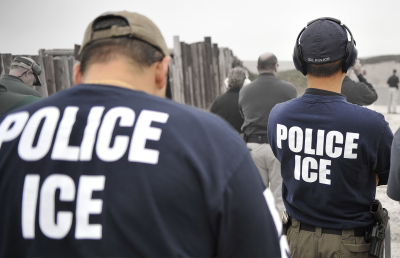
Tired of spending scant time and resources on immigration enforcement, major city police chiefs called on Congress, Wednesday, to move on comprehensive immigration reform. Like most law enforcement officers across the country, chasing down undocumented immigrants proves to be too much of a strain when faced with real priorities… Read More
America's story is an immigrant story.