Agriculture
Agriculture and farming is a cherished part of American identity and remains an important part of the American economy. In 2020, the agriculture, fishing, and forestry industries contributed more than $175 billion to U.S. GDP and supported more than 2.3 million workers. The health of America's farms and the agriculture industry, however, is tied directly to immigration. Farmers frequently worry about finding enough workers as few Americans seem willing to take on the most difficult and physical farm jobs—particularly those harvesting fresh fruits and vegetables. Yet the H-2A visa, the only agricultural visa currently available to American farms, is too expensive and cumbersome to work for many U.S. growers. We explore this issue—and the way it costs our economy—below.
Iowa officials, Farm Bureau run ad urging congress to act on immigration
The nation’s largest farm group and Iowa officials were among those unveiling a nationwide ad Thursday calling on Congress to pass immigration reform – an effort that so far has been bogged down by partisan wrangling in Washington. The ad was released by the American Farm Bureau Federation and the… Read More
Top business leaders, farm group urge Congress to act on immigration
What happens when American farmers don’t have enough workers to harvest crops? Bernie Thiel, who operates his family’s Sunburst Farms near Lubbock, Texas, says in a new ad urging passage of an immigration bill that he had to destroy 10 acres of squash last year because of a shortage of… Read More
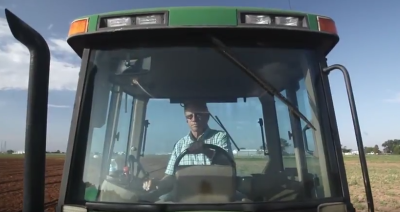
Shredding Opportunity
Texas farmer Bernie Thiel has had to destroy acres of his own crops because he’s been unable to find the workers he needs to harvest. When this happens, Bernie is not the only one impacted—additional jobs are lost down the supply chain, and American families are let down at… Read More
Immigrants key to state’s economic success
Despite a relatively small immigrant population, Wisconsin’s foreign-born residents are making important contributions to our economy. We must acknowledge that immigrants play a key to the future economic success of Wisconsin’s dairy industry. According to the Partnership for a New American Economy, 40 percent of workers in Wisconsin’s $26 billion… Read More
Prominent Oklahoma Republicans push for immigration reform
Citing billion-dollar losses in agriculture labor shortages, a group of current and past Oklahoma Republican leaders has asked the state’s congressional delegation to support approval of immigration reform. A letter sent Tuesday includes 13 signatures including former Gov. Frank Keating, former Tulsa… Read More
Oklahoma Republicans urge immigration reform
OKLAHOMA CITY (AP) – A group of current and former Oklahoma Republican elected officials is urging Congress to pass an immigration reform measure this year, saying the current system isn’t working for the state’s business owners and farmers. In a letter Tuesday to the state’s five U.S. Read More
Farm business needs immigration reform: column
As a member of both the agricultural and business community in Wisconsin, the Wisconsin Agribusiness Council and its members have witnessed first-hand the benefits of new business generation in our great state. New business generation is inherently the best catalyst to driving job creation, especially in Wisconsin. Read More
Utah legislators urge immigration reform
Some big-name Utah Republican legislators joined in a letter Tuesday urging the state’s congressional delegation to pass immigration reform this year — and said broad support for such action exists in the GOP. Senate President Wayne Niederhauser, House Speaker Becky Lockhart, House Majority Leader Brad Dee… Read More
Republican legislators, ex-senator call on U.S. House to pass immigration reform
SALT LAKE CITY — Leaders of the Utah House and Senate and former Sen. Jake Garn, R-Utah, are calling on Utah’s congressional delegation to pass immigration reform this year. “The current system is broken, and the United States cannot afford to wait any longer to fix… Read More
Immigration reform is essential to our economy
People like myself all over the country are asking Congress to pass substantive immigration or guest worker reform this year. The chorus of voices continues to expand. Recently the Tea Party Express even endorsed reform. Sal Russo, their co-founder, said “Congress must pass legislation that will fix our broken system. Read More
Immigrants and American Farms
In 2019, more than half of all hired farmworkers in the United States were immigrants, or roughly 450,000 workers. In many states known for their fresh produce, immigrant farm laborers make up large shares of miscellaneous agriculture workers—the occupation that includes those hand picking crops in the field.
Share of Miscellaneous Agricultural Workers in Crop Production, Undocumented, 2019
Farm Labor Shortages
In recent years, the number of new immigrants arriving in the country to work in agriculture has fallen by 75 percent. Rising wages indicate this has led to a major labor shortage on U.S. farms—making it difficult for many growers to stay in business or expand their operations. The workers left are also aging rapidly, meaning shortages will likely worsen as they retire.
Decline in Key States
The Aging of Foreign-Born Farm Workers
The Cost of Our Farm Labor Shortage
Because agriculture is intertwined with so many other industries in our economy—such as transportation, packing, and irrigation—a shortage of farm workers hurts the U.S. economy more broadly. We estimate U.S. growers would have produced $3.1 billion more in fresh fruits and vegetables per year by 2014 had farm labor not been an issue. The table in this section shows the costs to the U.S. economy for failing to meet this target.
Rising Imports
In recent years, there has been a dramatic increase in the amount of fresh fruits and vegetables Americans eat that is imported. Although many factors play into this phenomenon, we estimate labor shortages alone explain 27 percent of the market share decline experienced by U.S. growers from 1998-2000 to 2010-2012. Had growers maintained their hold on the domestic market, an estimated 89,300 additional U.S. jobs would have been created by 2012.
Jobs Americans Won’t Do
U.S. fresh produce growers have long said that few, if any, American workers are willing to take on the most arduous farm jobs. We studied this issue in North Carolina, examining how many American workers actually applied for heavily advertised farming positions in 2011, a period when the country was still recovering from the recession. The table in this section shows the results.
The H-2A Visa
The H-2A visa program, the only visa currently available to bring in temporary agriculture workers, is too cumbersome and unworkable for many farms. Farmers desperate for workers frequently go through the application process only to receive their laborers late, resulting in crop loss.
Sources:
1 “Why Domestic Agriculture Needs New, Workable Farm Labor Alternatives Now,” National Council of Agricultural Employers, 2011. Available online.
2Ibid.
3Ibid.
America's story is an immigrant story.
