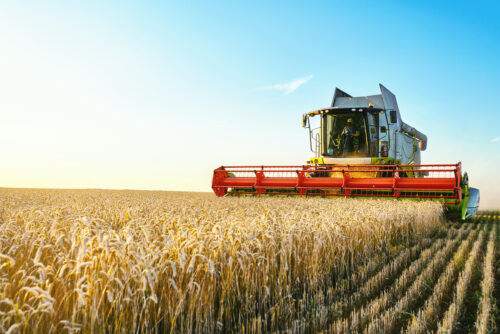
New research from the American Immigration Council underscores the crucial role that immigrants play in Texas’ food sectors, including agriculture. The new report, From Field to Fork: The Economic Impact of Immigrants on Texas’ Food Industry, was prepared in partnership with Texans for Economic Growth, a statewide 160+ member business coalition powered by the American Immigration Council. The report focuses on the state of Texas with a spotlight on the Houston Metro Area.
Key Findings
- Across the Texas food sector, 400,500 immigrant workers make up nearly one-quarter (24.9 percent) of the workforce, contributing to industries including, agriculture, food processing, food wholesale trade, food retail trade, and food services. Beyond farms and ranches, immigrants are essential across the broader food supply chain. These interconnected industries rely on immigrant labor to move food from production to consumers.
- Immigrant workers in Texas’ hold a wide range of immigration statuses. About one-fifth of workers in the food sector are naturalized citizens, while 14.5 percent were undocumented, including 20,100 DACA-eligible individuals. The state’s reliance on workers with a range of immigration statuses across the food industry means that shifts in immigration policy acutely affect workforce stability and the continuity of food production and distribution.
- In 2024, agriculture, food processing, and food services generated $102.6 billion in economic output in Texas. The state exports $6.5 billion worth of agricultural commodities annually and is responsible for a sizable share of the United States’ agricultural exports.
- Immigrant workers fill key occupations across the food sector. They comprised 47.8 percent of miscellaneous agricultural workers, 31.7 percent of cooks, and 24.6 percent of cashiers. Farms, restaurants, and grocery stores rely on immigrants to staff key frontline positions.
- In 2024, agriculture and food services generated approximately $2.7million in GDP in the Houston Metropolitan Area, and immigrants comprised over one-third (34.3 percent) of the workforce in the food sector.